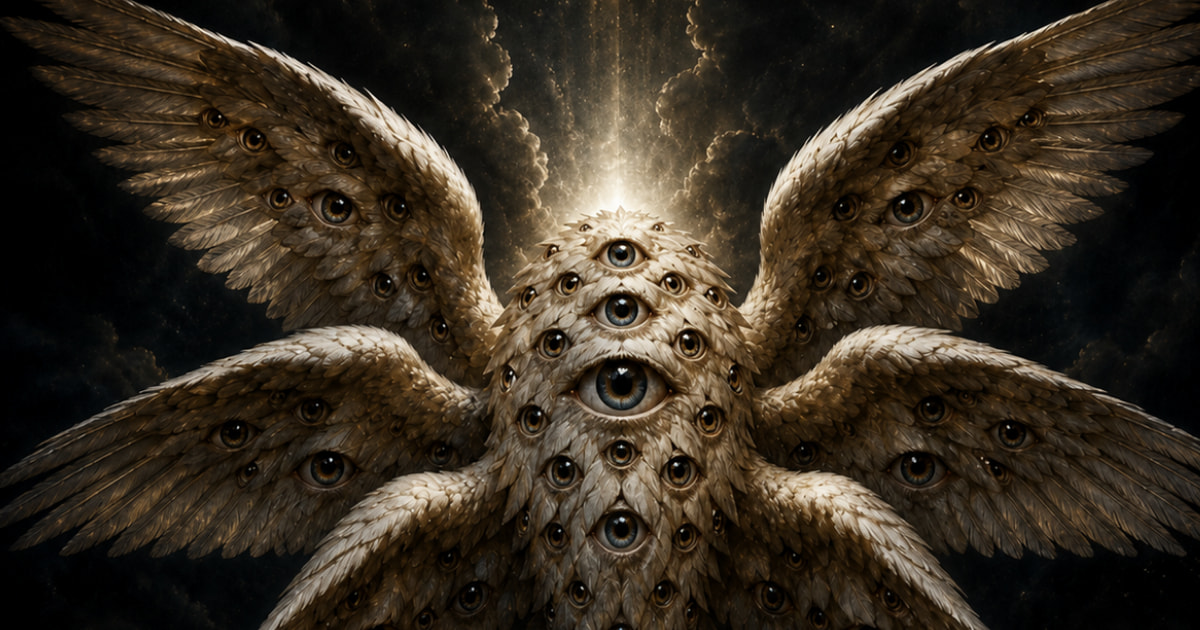
Why do you think our modern image of angels is so different from what we read in the Bible?
Angels are often depicted as beautiful people with flowing robes and wings, or sweet, chubby babies. But then you read passages like Isaiah 6, where the seraphim have six wings, or other encounters where angels inspire fear and awe.
How did we get from the biblical descriptions to the angels we see in paintings, decorations, and popular culture? And also, do you think it matters how we picture them?
Each of the four living creatures had six wings and was covered with eyes all around, even under its wings. Day and night they never stop saying: “ ‘Holy, holy, holy is the Lord God Almighty,’who was, and is, and is to come.” Revelation 4:8
Scripturally, angels are definitely portrayed as more powerful and with more authority than the typical cultural view gives to them. (Which I actually think is comforting if we believe they are God’s messengers, sent to do his will for the good of humans).
While I am no expert on supernatural beings, I do want to point out one fact that should be considered when speaking of “angels”. That is, the word “angel” in both the first and second testament is simply the English substitute for the original word “messenger”, or “envoy”. The same original Hebrew or Greek word is often simply translated “messenger” when indicating a human envoy (i.e. Genesis 32:3), but the English word “angel” is used when the messenger is a heavenly being. You would help your own understanding of scripture if you read “messenger from God” whenever you encounter the word angel.
Also, not all heavenly beings are messengers, that is, not all supernatural beings are angels. The term “angel” is often employed in modern parlance when speaking of any supernatural being, but that is inaccurate. There are other beings, such as “principalities and powers”, (Rom 8:38, Ephesians 3:10 & 6:12), Seraphim (Isaiah 6), Cherubim (Gen 3), and as the OP reminded us, the “living creatures” mentioned in Ezekiel 1, and in Revelation 4, 5, 6, 7, 8, 14, 15, & 19 which are not called messengers (angels). These heavenly beings seem to have roles other than being messengers of God. Cherubim have wings and many other strange features. Two carved Cherubim covered the Ark of the Covenant, and God is said to “dwell between the Cherubim” (i.e. Ps 80 & 99). Michael is the name given to the Chief Angel, and Gabriel is the name of a special messenger who spoke with Daniel (Dan 8 & 9), Zacharias (Luke 1:19), and the virgin Mary (Luke 1:26). Even “the dragon” has angels (Rev 12).
I think we will be in awe of the complexity and variety of celestial beings we will one day encounter, some angels, and some not. We will all meet them when we are all changed—“in a moment, in the twinkling of an eye, at the last trumpet”, when the dead are raised incorruptible, and we are all changed; when this corruptible puts on incorruption, and this mortal puts on immortality; when we finally sing with our new voices ““O Death, where is your sting? O Hades, where is your victory?” (1 Corinthians 15:51-55)
The short answer is that the lack of direct Bible reading and the influence of popular media, like Hollywood, greeting cards, and pop culture, are major drivers behind modern misconceptions. People naturally absorb cultural imagery through movies and art far more readily than they sit down to study biblical text.
However, the shift from “scary, multi-eyed heavenly beings” to “glowing winged humans and chubby babies” actually has a deep history that predates Hollywood by hundreds of years. Cultural forces gradually transformed the imagery over two millennia through distinct phases.
In the early days of Christianity, angels were depicted simply as men in white robes, without wings. By the 4th century (around the time Christianity became the official religion of the Roman Empire), Christian artists began adapting classical pagan imagery. Nike / Victoria: The Roman goddess of victory was always depicted as a woman with large wings. Artists borrowed this visual shortcut so everyday people would instantly recognize an angel as a divine messenger from heaven.
Then you have Hermes / Mercury: The messenger god provided the prototype for swift, human-like divine messengers.
During the Renaissance, artists like Raphael, Michelangelo, and Botticelli began looking back to ancient Greek and Roman art for aesthetic ideals. In the Bible, Cherubim are intimidating, four-faced hybrid creatures (Ezekiel 1) guarding God’s throne. However, Renaissance painters replaced them with putti, chubby, winged infants borrowed from Roman art (which originally represented Cupid/Eros or spirits of nature). Over time, the word “cherub” shifted in popular language from a terrifying guardian to a cute baby angel.
Renaissance humanism prioritized human beauty, symmetry, and grace. Painting a giant wheel covered in eyes (an Ophanim from Ezekiel 1) or a creature with six wings and four faces was seen as bizarre or visually unappealing, so artists favored serene, beautiful humans with swan wings.
In the 19th century, the Victorian era leaned heavily into sentimentality. Angels became popular motifs on Christmas cards, grave markers, and household decor. Angels were increasingly feminized, softened, and depicted as comforting guardians watching over children.
The terrifying elements of biblical encounters, where the very first thing an angel almost always has to say is “Do not be afraid,” were completely stripped away in favor of comforting, domestic aesthetics.
Hollywood simply inherited and amplified these historical tropes. Movies and TV shows (It’s a Wonderful Life, Touched by an Angel, Lucifer, or standard fantasy films) require human actors to portray angelic figures, solidifying the idea that angels are essentially human beings who died and got their wings (another major unbiblical myth).
You asked if the visual representation actually matters, and there is a strong theological argument that it does. When angels are reduced to cute babies or gentle spirit guides, their biblical purpose as powerful, formidable executioners of God’s will and guardians of His holiness is lost.
The popular culture view often leads people to believe humans become angels when they die, whereas the Bible presents angels as an entirely separate, created order of heavenly beings. The terrifying, strange appearances of biblical angels (Seraphim, Cherubim, Ophanim) are meant to reflect the absolute holiness, power, and unapproachable glory of the God they serve. Taming the angels visually often ends up taming people’s perception of God Himself.