Father, Son, and Holy Spirit: How Do You Understand the Godhead?

John 14 presents a powerful and Spirit-breathed revelation of Jesus’ identity and His promise to be present with His people even after His physical departure. In verses 16–17, Jesus states, “I will pray the Father, and he shall give you another Comforter, that he may abide with you for ever; Even the Spirit of truth…” This is often cited as evidence of a distinct third person in the Trinity. However, the very next verses dismantle that assumption if read with spiritual eyes and within the greater context of Jesus’ self-revelation. In verse 18, Jesus declares plainly: “I will not leave you comfortless: I will come to you.” He equates the coming of the Comforter with His own return—not another divine person, but the same Jesus returning in another form: Spirit.

This aligns perfectly with John 14:17, where Jesus says the Comforter is the Spirit of truth—“whom the world cannot receive, because it seeth him not, neither knoweth him: but ye know him; for he dwelleth with you, and shall be in you.” The only One who was dwelling with them at that time was Jesus Himself. So when He says “He dwelleth with you,” He is clearly identifying Himself as that same Spirit who shall be in them after the resurrection and Pentecost. This is not an introduction to a new person of the Godhead but a prophetic promise of His own indwelling Spirit returning to them after Calvary.

Furthermore, in 2 Corinthians 3:17, Paul removes all ambiguity when he says, “Now the Lord is that Spirit: and where the Spirit of the Lord is, there is liberty.” Jesus is not merely sending a representative—He is returning in a new dimension, as the indwelling Spirit. That’s why Colossians 1:27 describes the believer’s hope as “Christ in you, the hope of glory.” The Comforter is not a separate divine person beside Jesus, but Jesus Himself—the omnipresent Spirit form of the glorified Christ—coming back to His church.

Therefore, John 14 is not Trinitarian in structure; it is Oneness in revelation. It unveils the mystery of how Jesus, who was bodily among them, would soon be spiritually within them. He came as the Son in flesh, and He would return as the Holy Spirit in power. One God, not three persons—manifested, not divided. The Comforter, then, is not someone else—it is the risen, glorified Jesus coming to dwell in His people by His Spirit.

Peace to all,

Confusion becomes to man not seeing the woman. Not able to see God truly who He is as One in being The Family. Failed mortal through all of the finite powerful disciplines know to mankind, mankind missing on not using simple logic and Not able to see from powers of the Family Conceived through the flesh for all, all short sighted, not truly thinking taking the path of less energy by talking and saying over and over “no women” in The Trinity, only persons, Stephen is wrong.

Catholicism says there is no woman in the Trinity why cannot the others see The Woman then someone logically will have the Trinity genderly correct and see the Holy Spirit Family, all genders and as becoming again in all The One Holy Spirit Family One God in being? Which The Family always has been, Logically.

Strategies of Rhetoric, logically we already know.

From the cross, Jesus was dead? where did all of the blood and water even come from? No He is alive, through the Family of God.
Surly you will never die? Both a lie and The Fulfilled logical truth in One Line, what a liar? Yet, again, No lie, Your go girl, Eve, What a truthful spirit.
To me, The Comforter is The Holy Family He left behind for all becoming again from the cross where from the real blood and water rebirth and salvation for all became, the earth logically and really shook, gates reopened for all even the angels, now saved through flesh. Do you get it now?

How about a Hallelujah, God is Great Amen, brothers and sisters.

Peace always,
Stephen

You are proposing that confusion stems from mankind not recognizing a woman in the Godhead, suggesting that our failure to acknowledge the Trinity as a family with both male and female elements reflects a lack of logic or spiritual insight. But this perspective is entirely foreign to the Scriptures.

Nowhere in the Bible are we taught that the Trinity is a human-like family unit composed of gendered persons. God has revealed Himself as Father, Son, and Holy Spirit—three distinct persons, one divine essence—not as a father, a mother, and a child. These titles express eternal relationships within the Godhead, not gender roles or family hierarchies based on human categories. To import the idea of a female divine person into the Trinity is to impose a human social model onto the eternal and uncreated God.

When you say that people repeatedly claim “no women” in the Trinity, you are reacting to a strawman. The issue is not the exclusion of women, but faithfulness to how God has revealed Himself. Scripture says God is Spirit, not male or female, and He is utterly beyond the limitations of created distinctions. In Isaiah 40:18, the question is asked, “To whom then will you liken God?” That rhetorical challenge alone should caution us from fashioning God into any image after our own.

The vision of Stephen in Acts 7, which you mention indirectly, strengthens orthodox Trinitarian doctrine rather than undermines it. He sees Jesus standing at the right hand of God—not as a member of a human family but as the exalted Son in glory with the Father. This moment in Scripture affirms the relational distinction between the Father and the Son, without suggesting any lack or incompleteness in the divine identity.

As for the maternal metaphors in Scripture, such as Isaiah 49:15 where God’s compassion is compared to that of a nursing mother, these are similes. They highlight God’s care and tenderness, not His ontology. These poetic descriptions do not imply the existence of a feminine divine person any more than calling God a rock or a shepherd implies that He is literally geological or agrarian in being.

If you are arguing that God must include a female person in order to be complete, then you are saying that God is deficient unless He conforms to a human model of family. That reverses the created order. We are made in the image of God, but God is not made in the image of us. His triune nature is perfect and sufficient, not dependent on biological balance or sociological symmetry.

The God of the Bible is one. He is Father, Son, and Holy Spirit. This is not a metaphor or an evolving set of divine roles. It is how He truly is from all eternity. Anything else, however well-intentioned or imaginative, is not revelation. It is speculation.

God defines Himself by His Word, not by our constructs.

You are presenting a mystical reconstruction of the Trinity that blends gender theory, rhetorical symbolism, and speculative theology in a way that bears no resemblance to the revelation given in Scripture. You are asking why others cannot see “The Woman” in the Trinity, implying that unless the Godhead includes both male and female expressions, it is incomplete or misunderstood. But this is not what God has revealed about Himself in the Scriptures.

The Trinity is not a human family model extended upward into the divine. God is not a man, nor is He a woman. He is Spirit, as Jesus says plainly in John 4:24. The names Father and Son do not describe gendered beings, but eternal relationships within the one divine essence. The Holy Spirit is not a “female person” added to balance a divine family unit. That idea comes not from Scripture but from importing human concepts of family into the nature of God.

Your statement that someone must one day see the “Holy Spirit Family” as having all genders misunderstands both the nature of personhood in the Trinity and the biblical usage of gendered language. The Spirit is not described with gender. The Greek word for Spirit, pneuma, is neuter. That is not a theological statement about gender but a grammatical one. The Spirit is a divine person, not a feminine balancing principle within a cosmic household. The unity of the Godhead does not require gender complementarity, because God is not composed of parts that must be balanced. He is one in essence, three in person, complete in Himself from all eternity.

You then move to poetic and disjointed rhetoric about the cross, blood, water, Eve, and the Comforter, but your logic collapses under the weight of its own confusion. The blood and water from Christ’s side, mentioned in John 19:34, have rich theological meaning, pointing to cleansing and new birth, but Scripture does not say the Holy Spirit is the blood or water or a feminine figure emerging from them. Nor is Eve portrayed as speaking a “truthful spirit” when she repeated the serpent’s lie. That interpretation directly contradicts Genesis 3, where Eve is deceived, not enlightened.

As for the Comforter, Jesus said in John 14:26 that the Comforter is the Holy Spirit, whom the Father will send in His name. The Spirit is not the “Holy Family” left behind, nor is the Trinity made up of a male, female, and child. That model comes from ancient pagan tritheism, not biblical monotheism.

God does not become again. He is eternal, unchanging, and complete. The gates of salvation are opened by Christ alone, not by speculative ideas of gendered divinity or reinterpretations of the cross rooted in poetic license. Revelation is not a riddle to be decoded by rhetorical strategies. It is light made known in the Word of God, faithfully preserved, plainly declared, and wholly sufficient.

If you are trying to elevate womanhood, there are far more beautiful and scriptural ways to do so. The dignity of women is affirmed in creation, in redemption, in the ministry of Christ, and in the promises of the gospel. But altering the nature of God to include a divine feminine person is not elevation, it is distortion. It turns our eyes from the glory of the Triune God to a god of our own making.

That is not logic. That is confusion.

Johann.

2 Likes

Peace to all,

Thanks Johann, logic is being revised to coorelate to scriptures, thanks for the spiritual advice through your true Faith in Christ, I will update with respect to the Bible.

Peace always,
Stephen

No problem brother.

Let’s abide by what the Scriptures reveal, not by speculative philosophical ideologies that reinterpret the nature of God according to modern constructs. God has not left us to guess who He is. He has spoken definitively through His Word.

You suggested that the Trinity includes “The Woman” or some form of feminine divine person to complete the Godhead as a family. But nowhere in Scripture is the Holy Spirit referred to as a female person or “The Mother.” Scripture consistently refers to God as He, not because God is male in the human sense, but because He has chosen to reveal Himself using masculine personal pronouns and relational titles.

Jesus says in John 4:24, “God is spirit, and those who worship Him must worship in spirit and truth.” This tells us God is not a man or a woman, but pure Spirit, and yet He reveals Himself relationally as Father, Son, and Holy Spirit. Matthew 28:19 commands baptism “in the name of the Father and of the Son and of the Holy Spirit.” This is not a family structure of male, female, and child. This is one God, three Persons, co-equal, co-eternal.

The Holy Spirit is not described in feminine terms. In John 14:26, Jesus says, “But the Helper, the Holy Spirit, whom the Father will send in My name, He will teach you all things.” The Spirit is He, not she. The Greek word Paraklētos (Comforter or Advocate) is masculine. This is consistent throughout the New Testament.

You also mentioned Eve and the serpent, implying that Eve somehow expressed truth or insight. Yet Genesis 3:13 says plainly, “The serpent deceived me, and I ate.” The New Testament confirms this: “And Adam was not deceived, but the woman was deceived and became a transgressor” (1 Timothy 2:14). Scripture does not portray Eve as delivering spiritual insight but as the first to fall through deception.

The blood and water that flowed from Jesus’ side (John 19:34) do signify powerful truths about salvation—cleansing and rebirth—but they do not symbolize a feminine divine being. The Apostle John references this in 1 John 5:6, “This is He who came by water and blood—Jesus Christ; not by the water only but by the water and the blood. And the Spirit is the one who testifies.” There is no indication that a new feminine person emerges from these elements. Instead, they confirm the reality of Christ’s humanity and the sufficiency of His atoning work.

As for Jesus’ death, John 19:30 states, “When Jesus had received the sour wine, He said, ‘It is finished,’ and He bowed His head and gave up His spirit.” Jesus truly died. The resurrection was not symbolic but literal, as 1 Corinthians 15:3–4 declares: “Christ died for our sins in accordance with the Scriptures, that He was buried, that He was raised on the third day.”

Finally, God is unchanging. Malachi 3:6 says, “For I the Lord do not change.” God does not become again. He is the same yesterday, today, and forever (Hebrews 13:8). Salvation is not a reconfiguration of gender identity in the Godhead. It is the work of the Triune God—Father sending, Son accomplishing, Spirit applying—bringing redemption to sinful humanity.

Rather than trying to locate human categories like gender within the Trinity, let us worship God as He has revealed Himself in Scripture, not according to speculative logic or rhetorical constructions. “The secret things belong to the Lord our God, but the things that are revealed belong to us and to our children forever” (Deuteronomy 29:29).

Shalom.

Johann.

I would ask you to humor me for a moment. I want you to look at these text you give and try and look at it from the perspective I’ve been presenting, where regeneration and faith are linked together:

“Everyone who believes that Jesus is the Christ has been born of God.”

“Did you receive the Spirit by works of the law or by hearing with faith?”

“In Him you also, when you heard the word of truth, the gospel of your salvation, and believed in Him, were sealed with the promised Holy Spirit.”

Everyone who believes has been born of God, receiving the Spirit by hearing with faith, sealed with the promised Holy Spirit when you heard the word of truth and believed in Him.

Everyone who believes (has faith) has been born of God. To have faith is to be born of God.

Receiving the Spirit by hearing [the Gospel] with faith. Faith does not earn me the Spirit, faith and the Spirit are together.

Sealed with the promised Holy Spirit when you heard the word of truth and believed in Him. Again, the Holy Spirit and faith are together.

This is not a sequence of “First you have to do X” where X = faith, “and then God responds by giving the Spirit and regenerating”. It’s when the word is preached and is heard something happens: Faith and the receiving of the Spirit. One cannot have faith without being born again, and one cannot be born again without faith. These are simultaneously intertwined things. We cannot divorce them from one another. Faith is what happens when we are made new and have the Holy Spirit, not sequentially not as a prerequisite, but because being made new, having that new humanity, being that new creation, means believing in Christ–because it is in Christ that we are new, and it is faith that puts us in Christ. We are in Christ, and so we have faith; we have faith, and so we are in Christ. We are in Christ and so we have the Holy Spirit, we have the Holy Spirit and so we are in Christ. We have faith and so we have the Holy Spirit, we have the Holy Spirit and so we have faith. Etc. These are all together. This is regeneration: To believe, to be in Christ, to have the Spirit, to be a new person, a new creation, to have died to the old man, to have been given the resurrected life of the Risen Jesus, to be justified by God’s grace having received the alien righteousness of God’s Son.

And the passages you are offering say this. This is the text as it is written down.

and those who did not were condemned for unbelief (John 3:18)

Right. And who are the condemned? Romans 3:23, Romans 11:32. Everyone, all of us, in our sin are dead, condemned, consigned universally to disobedience in order that God might have mercy on all. Both Jew and Greek, slave and free, male and female, we are all of us universally condemned in our sin, because of Adam’s disobedience which we have received from our mortal father (Romans 5:12) and so all are universally, unequivocally guilty. The charge, the condemnation: Guilty. I am guilty, and the sentence is death.

And so who did Christ come to save? Who are the ones Christ died for on His cross? All. Everyone. Every guilty and condemned sinner. For this reason there is, objectively on Mt. Calvary justification for all men (Romans 5:18). For Christ did not die in order that only some should be saved. Christ did not die in order that only some should believe. Christ died in order that all should be saved and all should be saved. But do, indeed, all believe? Are all saved? And the answer is no. Why? Because God says that salvation is a goal I must attain by my own effort? Not at all, but because as you have already noted in John 3:18, they did not believe. But Jesus goes further,

“This is the judgment, that the Light has come into the world, and men loved the darkness rather than the Light, for their deeds were evil.” (John 3:19)

We are the ones responsible for our condemnation, we are the ones responsible for our unbelief. But we are not the ones who get the credit for our salvation, not even for our faith.

“For by grace you have been saved, through faith; and this is not of yourselves, it is the gift of God, not by works, so that none may boast.” (Ephesians 2:8-9)

I get zero credit, even when it comes to believing in Jesus. I do, however, get all the credit, when it comes to my non-belief in Jesus. I am guilty, culpable, sinful. God is good, loving, gracious, righteous, just, and saving me, a worthless and wretched sinner.

1 Like

“Seek the LORD while He may be found” (Isaiah 55:6) is addressed not to the righteous but to the wicked. Verse 7 continues, “Let the wicked forsake his way.” It is a call to the very people your system declares unable to respond. Yet God calls them to act.

It’s addressed to Israel. Isaiah’s ministry here is to Israel, to the Covenant people. In that it calls the unrighteous to righteousness, to turn from their wickedness and return back to God’s commandments–such is frequently the ministry of the Prophets.

This whole portion of Isaiah is a preaching of God’s promises to His people. Isaiah is not addressing Egypt, or Assyria, but Israel. This is not Jonah going to Nineveh, this is Isaiah to Israel. God is speaking to His people.

One question, if I may, @TheologyNerd. Do you lean toward what is commonly called Reformed theology?

There is, of course, nothing wrong with providing context for verse quotations–I am quite mindful of context myself.

To clarify, when I refer to Reformed theology, I specifically mean the system articulated by John Calvin in his Institutes of the Christian Religion.

Depending on your answer, we can then determine how best to proceed in discussing what stands written.

God bless.

Johann.

I think you and I are on the same page @TheologyNerd

Correct thus far brother.

Correct, no room for boasting.

Johann.

We can do it like this, if you want @TheologyNerd

Johann.

If Jesus is not God the father in flesh than these Scriptures He said are a lie.

  • Isaiah 43:11: “I, even I, am the LORD; and beside me there is no saviour.”
  • Isaiah 45:21: “Tell ye, and bring them near; yea, let them take counsel together: who hath declared this from ancient time? who hath told it from that time? have not I the LORD? and there is no God else beside me; a just God and a Saviour; there is none beside me.”
  • Hosea 13:4: “Yet I am the LORD thy God from the land of Egypt, and thou shalt know no god but me: for there is no saviour beside me.”

One question, if I may, @TheologyNerd. Do you lean toward what is commonly called Reformed theology?

Fair question. But the answer is no. I’m a Lutheran.

First things first! Prior to Jesus being born as a human as God’s only BEGOTTEN son, the essence of God sat on the throne in heaven. The Godhead was God, his highest arch angels, the underling angels, and other heavenly beings. This was the total of the Godhead. There was not a separate Holy Spirit, nor a son called Jesus; the scriptures tell us there is only one God, and he will not share this glory with other Gods. God is so immense that the heaven of heaven of heavens cannot contain him. No human has ever seen God and many have seen Jesus. Jesus as a human was born in time and not in eternity other than in God’s enormous wisdom (mind). There is not one verse in the entire Bible regarding a three person Trinity of God. The Trinity of God is a myth; In the year 325 at Nicene some humans began to call think Jesus was God; however, they did not even include a separate Holy Spirit at that time. The Catholics eventually brought that into being. The Hebrew nor Greek scriptures did not include any of this. When God declared that Adam had become as one of US to KNOW the DIFFERENCE between good and evil, The US were basically the angels. Adam had just been told by God that he was banning him from Eden; God was telling his angels that there was going to be a war in heaven to cast out the rebel angels and Adam. They would be cast into the cursed earth to live in it. God closed the entry gate to the Garden and Eden. How could anyone see what had just happened and create from the word US that it meant a Trinity of Gods? Baptizing in the name of the Father, son, and Holy Ghost is not found in the Hebrew or Greek scrolls. Actually, Christians were baptized ONLY in the name of Jesus.

Read the full article @The_Omega

Jesus is the Eternal Father but He is not God the Father!
The following verse is typically misused to refute the doctrine of the Trinity:

“For unto us a child is born, unto us a son is given, and the government shall be upon his shoulder. And his name shall be called Wonderful Counselor, Mighty God, Eternal Father (Abi Ad), Prince of Peace.” Isaiah 9:6 Modern English Version (MEV)

Oneness modalist heretics use this passage to prove that Jesus is the human manifestation of God the Father since this prophecy explicitly calls the Messiah the Eternal Father. Muslims, on the other hand, employ this text to show that this cannot be a prophecy of the Messiah since Trinitarians do not believe that Jesus is God the Father, and therefore cannot appeal to it as a prooftext for Christ’s divinity.

The problem with both of these objections lies in their understanding of the particular Hebrew phrase in question. The literal rendering of the expression Abi Ad is “Father of Eternity/Everlastingness,” just as we find in the following English versions:

“… and he will be given the name Pele-Yo‘etz El Gibbor Avi-‘Ad Sar-Shalom [Wonder of a Counselor, Mighty God, Father of Eternity, Prince of Peace],” Complete Jewish Bible (CJB)

“… and his name is called Wonderful, Counsellor, Mighty God, Father of Eternity, Prince of Peace.” DARBY

To better understand what this expression means in reference to the Messiah it would be helpful to see how the word Ad is employed elsewhere in Isaiah:

“For thus says the High and Lofty One (ram wa’nissa) who inhabits eternity (shoken ad), whose name is Holy: I dwell in the high and holy place and also with him who is of a contrite and humble spirit, to revive the spirit of the humble, and to revive the heart of the contrite ones.” Isaiah 57:15 MEV(1)

In this text, Yahweh is said to inhabit or dwell in eternity, which is simply another way of saying that Yahweh is eternal by nature. And because he is eternal, Yahweh lives forever and ever. This understanding of the term is reflected in the following translations:

“For the High and Exalted One, who lives forever…” Christian Standard Bible (CSB)

“The one who is high and lifted up, who lives forever…” Common English Bible (CEB)

“For thus says the High, Exalted One who lives forever…” CJB

“Our holy God lives forever in the highest heavens…” Contemporary English Version (CEV)

“God is high and lifted up. He lives forever…” Easy-To-Read Version (ERV)

“And this is the reason: God lives forever and is holy. He is high and lifted up [exalted]…” Expanded Bible (EXB)

“The High and Lofty One lives forever…” GOD’S Word Translation (GW)

“I am the high and holy God, who lives forever…” Good News Translation (GNW)

“God lives forever and is holy…” International Children’s Bible (ICB)

“For thus says the high and lofty one who resides forever…” Lexham English Bible (LEB)

“The High and Lofty One lives forever…” Names of God Bible (NOG)

“For thus says the high and lofty One, the One who dwells forever…” New American Bible Revised Edition (NABRE)

“For thus says the high and exalted One Who lives forever…” New American Standard Version (NASB)

“And this is the reason: God lives forever…” New Century Version (NCV)

“For this is what the high and exalted one says, the one who rules forever…” New English Translation (NET)

“The God who is highly honored lives forever…” New International Reader’s Version (NIRV)

“For this is what the high and exalted One says— he who lives forever…” NIV (New International Version)

“for thus says the High and Exalted One who lives eternally…” New Jerusalem Bible (NJB)

“For the high and honored One Who lives forever…” New Life Version (NLV)

“For this is what the High and Lofty One says, Who lives forever…” New World Translation (NWT)

“For thus saith the High and Exalted, Shokhen Ad (the One Who abideth forever, i.e., the Shekhinah)…” Orthodox Jewish Bible (OJB)

“For the Lord high, and enhanced, saith these things, that dwelleth in everlastingness…” Wycliffe (WYC)

With the foregoing in perspective, we can now better appreciate the point of the Messiah being the Father of Eternity/Everlastingness.

Since the Hebrew term for father can mean source/possessor/originator/author/progenitor etc., as any lexical source will easily confirm (Strong's Hebrew: 1. אָב (ab) -- father, fathers, father'szzz), this expression, therefore, conveys the fact that the Messiah is the possessor and source of eternity/everlastingness. Note how the following versions render the phrase:

“For unto us a yeled is born, unto us ben is given; and the misrah (dominion) shall be upon his shoulder; and Shmo shall be called Peleh (Wonderful), Yoetz (Counsellor), El Gibbor (Mighty G-d), Avi Ad (Possessor of Eternity), Sar Shalom (Prince of Peace).” OJB

“… His Name will be called Wonderful Counselor, Mighty God My Father of Eternity, Prince of Peace.” Tree of Life Version (TLV)

“… And He doth call his name Wonderful, Counsellor, Mighty God, Father of Eternity, Prince of Peace.” Young’s Literal Translation (YLT)

As such, the title is meant to convey the point of the Messiah being the One from whom eternity or everlasting life originates since he himself is Life and the Source of eternal life, which is precisely what the NT teaches about Christ:-----

https://answeringislamblog.wordpress.com/2019/06/29/jesus-is-the-eternal-father-but-he-is-not-god-the-father/#:~:text=Contact-,Jesus%20is%20the%20Eternal%20Father%20but%20He%20is%20not%20God%20the Father!,-The%20following%20verse

Shalom.

Johann.
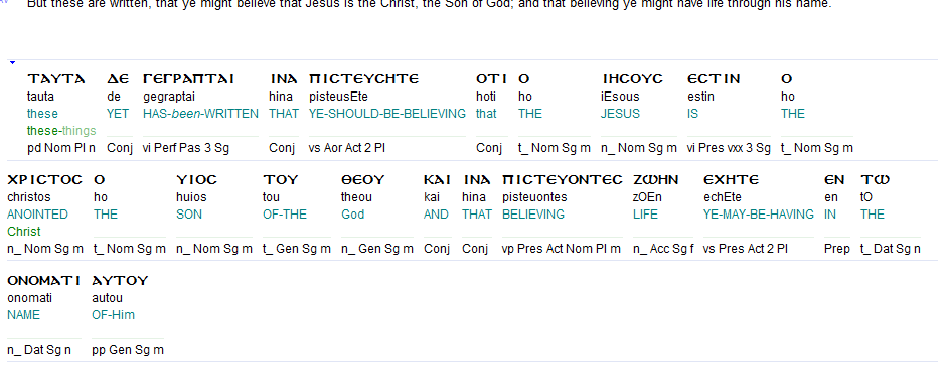
Thank you sincerely for engaging with both respect and depth—this is the kind of dialogue that matters. I understand the desire for a line in the sand, especially in a world of theological confusion. But the issue here is not whether a line must be drawn—it’s where and by whom that line is drawn. For me, the line must be Scripture, not a creed written over 300 years after the apostles by men entangled in imperial politics and Greek philosophy. I absolutely agree that not everyone who names “Jesus” preaches the same Jesus (2 Corinthians 11:4). But the answer is not to lean into Nicene formulations that speak of “eternal begetting” and co-equal persons—a concept never uttered by Peter, Paul, or Jesus Himself. Instead, the Word of God draws the line for us: “In Him dwelleth all the fulness of the Godhead bodily” (Colossians 2:9). That’s where I stand. I affirm with every fiber of my being that Jesus is the one true God manifested in the flesh (1 Timothy 3:16). That’s not Arianism, modalism, or any other label history tries to stick on it—that’s Scripture.

I’m not rejecting creeds because I lack reverence for Christ—I’m clinging to the name above every name (Acts 4:12) without adding man-made layers. I have dear friends who recite the Nicene Creed, and I don’t question their sincerity. But I cannot treat it as the test of faithfulness when Jesus never did. He pointed us to His words, not to future councils. The danger today isn’t that we have too few boundaries—it’s that we might confuse tradition with truth, and thereby miss the simple power of the gospel that says God Himself became flesh, not a second person, not an eternal Son sent by another, but the one God robed in humanity, reconciling the world unto Himself (2 Corinthians 5:19). I believe there’s still room for fellowship—not through man-made fences, but through God-breathed revelation. Let’s reason together from Scripture, not exclude one another based on formulas written centuries later.

The term “Life-Giving Lord” refers to a concept within Christian theology, specifically referring to God’s power to create and sustain life, both physical and spiritual. This idea is connected to the biblical narratives of creation, where God breathed life into Adam and Eve, and the later concept of eternal life through faith in Jesus Christ.

Peace to all,

“If you are arguing that God must include a female person in order to be complete, then you are saying that God is deficient unless He conforms to a human model of family. That reverses the created order. We are made in the image of God, but God is not made in the image of us. His triune nature is perfect and sufficient, not dependent on biological balance or sociological symmetry.” Johann.

So true, Johann.

To me, Johann, The Mother is The Power to sustain from Created by the Father and together with The Son “Born” conceived through the Family of The One God in being “Reborn” becoming The Christ in all mankind becoming in all Sons and Daughters of God in all mankind becoming again “Saved” in One Holy Spirit Family One God in being.

Peace always,
Stephen

The Nicene Creed refers to the Holy Spirit as “Lord and Giver of life”. There is no “mother” in the Trinity.

Peace to all,

To me, logically The Trinity is the Family of God The Father the Son and The Mother, in One Holy Spirit Family One God in being.

They have all missed the logic, leaving out the Mother and seeing in the Holy Spirit as a person and not The Family in Being One God.

Sorry, this is what they did.

Peace always,
Stephen

Stephen, I appreciate your sincerity, but what you’re saying isn’t grounded in Scripture. You mention “The Mother is The Power” and “The Christ in all mankind,” but none of that language appears anywhere in the Bible.

Jesus said, “Except a man be born again, he cannot see the kingdom of God” (John 3:3). That rebirth comes through the Spirit according to God’s Word, not through a divine family construct that includes a mother figure.

The Scriptures never speak of a “Mother” in the Godhead. They speak of the Father, the Son, and the Holy Spirit. Christ is not something that becomes all mankind—He is a distinct person, Jesus of Nazareth, whom the Scriptures declare to be “the man Christ Jesus” (1 Timothy 2:5).

Becoming sons and daughters of God is not something universal. It is conditional. “But as many as received Him, to them gave He power to become the sons of God, even to them that believe on His name” (John 1:12). That excludes those who reject Him.

If we want to talk about salvation, rebirth, and God’s family, we must use what God has revealed in His Word, not ideas that come from mystical or poetic expressions with no scriptural foundation.

Peace to you, Stephen–but let it be the peace that comes from knowing the truth found in God’s Word.

2 Likes

Peace to all,

True Johann,

We cannot see God logically until we see two natures becoming again in One Body, to me.

The Animal Sacrifice saved all spirits in the created souls from Sacrifice through Penance.
He promised eternal life to the descendants of Abraham, why then did He logically return?

Peace always,
Stephen