My son, who intellectually believes in God, has recently been reading the book of Thomas, and other such texts..Dead Sea Scrolls and such. He said that he read that the disciples asked Jesus why he kissed Mary (Magdelen) on the mouth. I haven’t read these texts..but I’m not going to lie..I’m curious.
Since I have ZERO theological training, I’m asking for sound, SIMPLE advice, explanations and guidance. And I mean SIMPLE. Not paragraphs with Greek, Hebrew or Aramaic words, long-winded word soup explanations, just simple, sound theological guidance and explanations.
I could easily do some internet searches but I find that even the “net” isn’t trustworthy as much as I used to believe.
Why were these books excluded? Did Jesus kiss Mary on the mouth? If I were to read these texts, how should I approach reading them?
And how do I respond to my son who is very stuck in this world, believing “good works” get us into God’s kingdom? My pastor at Easter Sunday told the congregation that there might be rapists, murderers, and even pedophiles in the kingdom because they repented, asked for forgiveness and proclaimed Jesus as Son of God, Living God?
Oh..and please..keep your debates simple. Again, please, no language translations or word soup. I really need guidance here. I feel that my son is at a spiritual cross road. Any information that might help me understand what he’s talking about, and how to discuss these topics with him would be greatly appreciated.
The books your son is reading, like the Gospel of Thomas or other Gnostic texts, were excluded because they do not faithfully reflect the teachings of Jesus or the witness of the apostles. Stories such as Jesus kissing Mary Magdalene on the mouth appear only in late, symbolic writings and have no basis in the canonical Gospels; there is no historical evidence that such an event occurred. These texts can be read as historical curiosities, but they are not authoritative for faith or doctrine. Salvation is not earned by good works; it is given by God to those who repent and trust in Jesus as Lord and Son of God. Good works are the natural fruit of faith, not a ticket into God’s kingdom. Even those who have committed great sins can be forgiven if they truly repent and believe. When reading these non-canonical texts, approach them with discernment and always measure them against Scripture, which is the reliable witness to Jesus’ life, teaching, death, and resurrection.
Also, I want to add that Gospel of Thomas is found in the Nag Hammadi Library and not in the Dead Sea Scrolls…
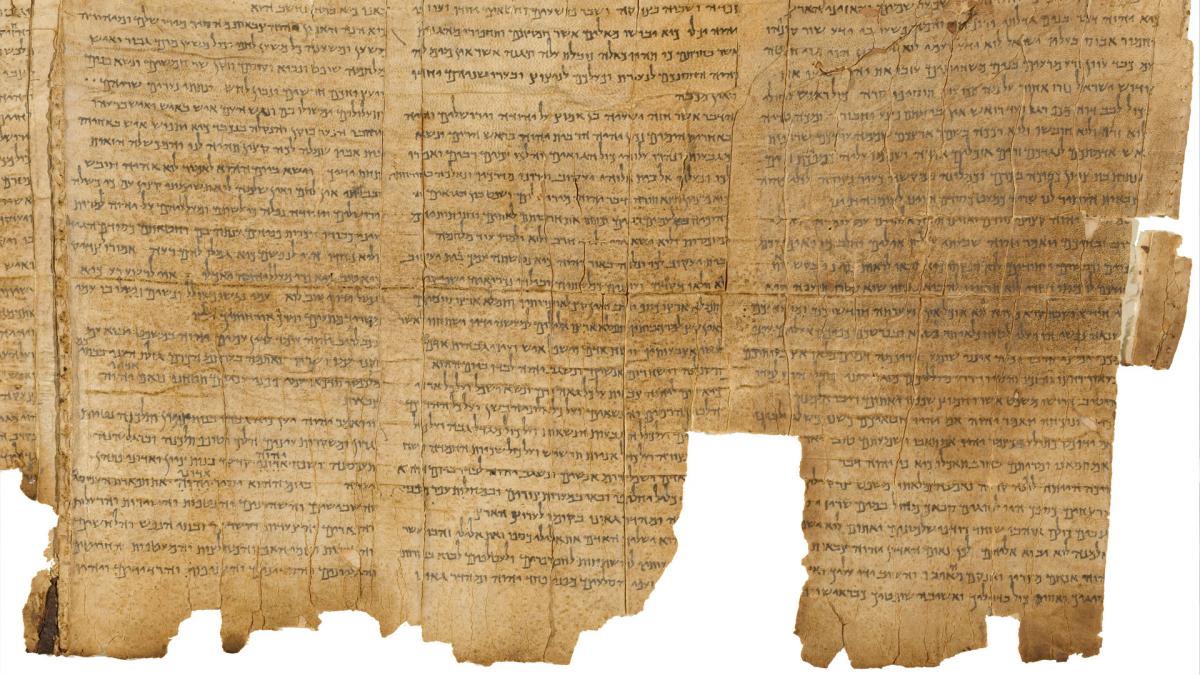
The Dead Sea Scrolls are ancient Jewish manuscripts discovered at Qumran near the Dead Sea, dated roughly from the 3rd century BC to the 1st century AD. They contain biblical texts, prayers, community rules, and commentaries written by a Jewish sect, most likely the Essenes. Most importantly, they include manuscripts of the Hebrew Scriptures that are over a thousand years older than our previous copies. When these scrolls were compared with the modern Old Testament text, the agreement was remarkable, word for word in many places and only minor variations in others, none affecting doctrine. This overwhelmingly supports the integrity and faithful preservation of Scripture and directly counters the claim that the Bible was later “changed” or “corrupted.”
By contrast, the Gospel of Thomas was not found among the Dead Sea Scrolls. It was discovered separately in the Nag Hammadi library in Egypt in 1945, alongside other Gnostic writings. Thomas belongs to a later, heterodox tradition that mixes Christian language with Gnostic metaphysics. It does not reflect the faith or canon of the early apostolic Church, and its content clearly departs from the theology and historical continuity evident in both Scripture and the consistent witness of the Church.
Early Gnosticism often combined Christian ideas with pagan and demonic elements, creating spiritually dangerous distortions. For example, some Gnostic sects claimed that the God of the Old Testament was an inferior or even malevolent being and that salvation required secret knowledge to escape the material world, which they regarded as evil. This falsely undermined God’s creation and the historical reality of Jesus’ life, death, and resurrection. The Church, through leaders like Irenaeus and Tertullian, carefully exposed these errors, showing that salvation comes through faith in Christ, repentance, and God’s grace.
I highly recommend the BibleHub online for the Q&A which covers everything about everything in simple non-johan languge. I read some of the apocryphyl writings and it set off alarm bells in my spirit
Thank you! I’ve had alarm bells going off as well since my son told me he’s reading these texts. I’m actually going to read them, and look for scripture that argues them. I’ll also use that reference..I’ve used it before and forgot about it. My brain is really busy right now lol. Only so much space in this hard drive lol.
Thank you. I pray the Lord comforts you and is with you where you are. Regardless of your circumstances I sense a quiet joy in you. I can’t imagine how you feel but the fact that you are here, sharing, encouraging and being honest about your circumstances speaks volumes of your heart in Christ.
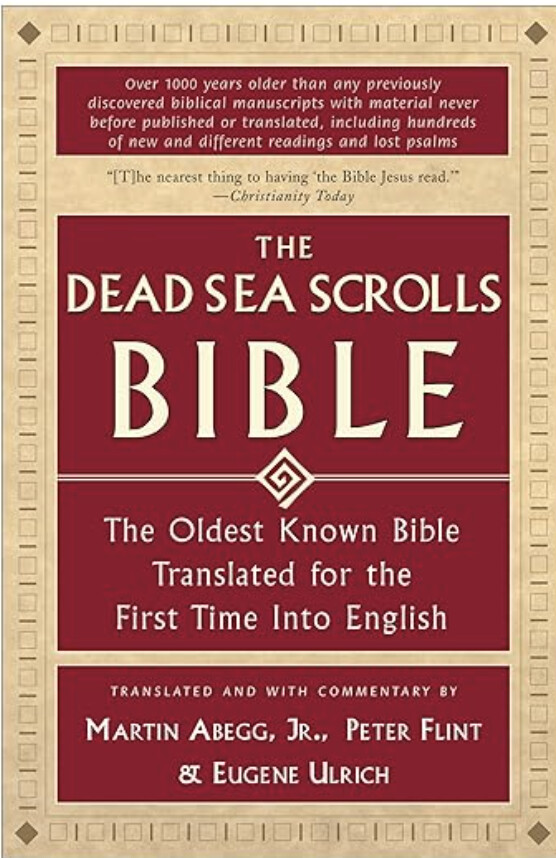
Yes, it is absolutely okay to read the Dead Sea Scrolls. You can even buy published editions today. These scrolls date from roughly 300 BC to 100 AD, which means you are looking at biblical manuscripts from the time period before Jesus and during the life of the early Church. For example, when you read Deuteronomy in the scrolls, you are reading essentially the same text that the prophet Isaiah would have known and quoted.
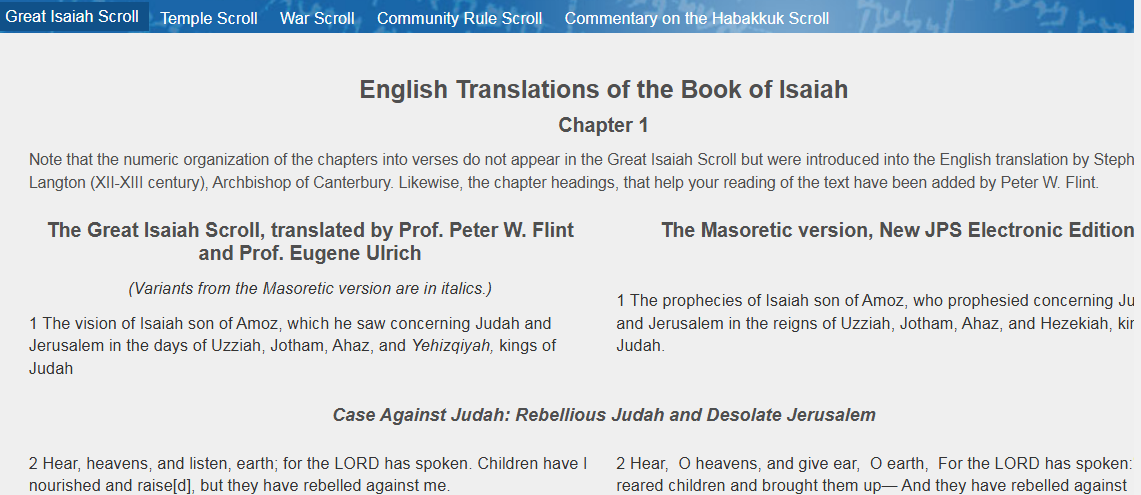
Many critics claim that the Bible was corrupted between the 1st and later centuries—especially between 100 AD and 600 AD. But when the Dead Sea Scrolls were discovered, scholars compared them to our modern Bible and found that the text is virtually the same. The wording, structure, and meaning match with remarkable consistency. So the question becomes: if corruption happened, when did it happen? The scrolls prove that the message of Scripture before Christ is the same message we have today. It is one of the strongest evidences for the preservation of Scripture.
The reason most Christians do not regularly read the Dead Sea Scrolls isn’t because they are rejected; it is simply because we already have the Bible itself. Before the scrolls were found, Christians used the Septuagint, the KJV, and other faithful manuscripts. The scrolls only confirmed that what we already had was reliable. But yes, if you are curious and want to explore them, you certainly can.
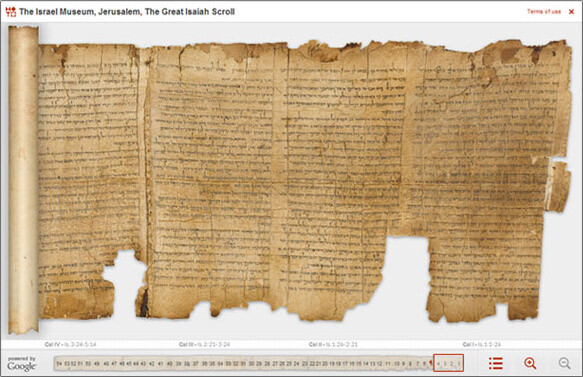
P.S. I actually was privleged to view the actuall “Dead Sea Scrolls”, (the’re tiny, much smaller than I expected) at The Ronald Regan Presidential Library, as a partial exibit passed near where I was at the time. It was facinating, but I could not read them,