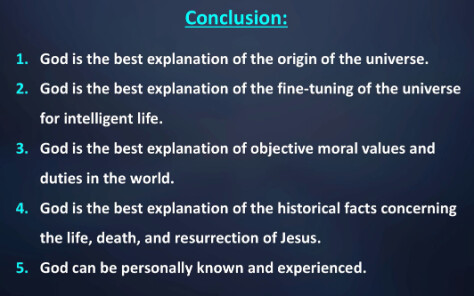
I Built an Argument Attempting to Prove God Exists Using Astronomy, Mathematics, Ontology, Physics and Neuroscience.
I built this argument by asking what kind of ultimate reality is sufficient to explain all five fields together.
I. Physical reality is mathematically intelligible. Fundamental interactions are described through structures such as the Yang–Mills framework, while the Planck length is about 1.616 × 10⁻³⁵ metres. Mathematical relations have no mass, charge, temperature, or volume, yet reality is expressible through them with extraordinary precision.
Astronomy adds further constraint. The cosmological constant problem contains a discrepancy approaching 10¹²⁰ between naïve Planck-scale vacuum-energy estimates and observation. Penrose’s estimate of the universe’s extraordinarily low-gravitational-entropy initial state is about 10⁻¹⁰¹²³.
Together these establish a mathematically ordered universe within extraordinarily constrained conditions. “Chance” does not explain that, because chance already presupposes laws and probability structure.
II.
In holographic settings, the Ryu–Takayanagi relation connects quantum entanglement entropy with spacetime geometry, showing that geometry and information can be structurally related.
The Borde–Guth–Vilenkin theorem establishes that an on-average expanding spacetime is past-geodesically incomplete under its conditions. It does not prove creation from nothing, but it shows inflation alone cannot provide an indefinitely complete past explanation.
A multiverse does not remove the problem. Any generator would itself require fields, states, potentials, laws, and mathematical structure. A quantum vacuum is not nothing. A field is not nothing. A metric is not nothing. Moving the machinery backwards only moves the explanatory burden.
III.
The Bekenstein bound limits the entropy and ordinary information capacity of a finite physical system. Landauer’s Principle establishes that logically irreversible erasure of one bit has a minimum thermodynamic cost of kBT ln 2.
Abstract mathematics is not itself energy, while physically instantiated information processing is thermodynamically constrained. The second law states that entropy in an isolated system does not decrease. It does not explain the universe’s low-entropy initial condition; it makes it more significant.
Physics describes how an existing system evolves, not why the system, its laws, state space, and initial conditions exist.
IV.
The universe is contingent. If contingent realities depend upon other contingent realities, multiplying dependent members never transforms dependence into independence. An infinite chain of borrowed existence is still borrowed existence.
The ultimate ground therefore cannot be another contingent physical object or be self-caused, because self-causation would require prior existence. It must be necessary, uncaused, non-contingent, and non-derivative.
V.
Neuroscience introduces conscious rational subjectivity. A neural state may correlate precisely with a conscious subjective state, but correlation does not itself establish identity.
A description of neural activity associated with pain is not itself painful. Neural activity associated with seeing red is not the first-person experience of redness. The physical account gives us ions, electrical potentials, neurotransmitters, and networks. The subject gives us experience, meaning, thought, understanding, intentionality, and rational inference.
Gödel’s incompleteness theorems establish formal limits on sufficiently expressive consistent systems. The Lucas–Penrose argument applies those limits to computational accounts of human mathematical understanding. Its stronger conclusion is disputed. The narrower point remains: formal systems have internal limits, while rational minds can examine and reason about those limits.
DNA adds another layer. Its four-symbol nucleotide alphabet is translated through transfer RNA, aminoacyl-tRNA synthetases, ribosomes, and associated machinery into functional proteins. This is organized information-processing and translation.
VI.
Mathematics gives us intelligibility. Astronomy gives us extraordinary physical constraint. Physics gives us lawful structure, information limits, and cosmological boundaries. Ontology gives us the necessity of a non-contingent ground. Neuroscience gives us conscious rational subjectivity.
These independent features progressively constrain what can ultimately explain reality.
The ultimate ground cannot be contingent, because then the question repeats. It must be necessary and non-derivative; sufficient for a mathematically ordered, physically lawful, information-bearing universe; and adequate to biological coding, consciousness, rationality, and understanding.
The brute-fact alternative leaves mathematical intelligibility, cosmological constants, low initial entropy, physical law, information structure, contingent existence, biological coding, consciousness, and rational understanding as separate unexplained facts.
That is not explanatory unification. It is explanation stopping repeatedly.
One necessary, non-contingent, transcendent, rational, and mind-like ground unifies what the brute-fact alternative leaves disconnected.
That is what I mean by God.
I began with reality and asked what must ultimately exist if all five fields are taken seriously at once.
My standard is whether the evidence is sufficient, the inferences follow, the structure is coherent, and the cumulative case reaches the standard of proof.
My conclusion is that it does.
Contingent reality cannot ultimately ground itself. Therefore a necessary, non-contingent, rational ground exists.
God is not inserted into the argument. God is where the evidence terminates.