I have grown up in a Christian church and family. Until now, I have always believed in God. Now I have so many questions. Anything helps. <3
2 Likes
If you need more reaffirmation, look at peoples testmonies, look at the sky, the birds, nature, see how beautiful this life is that alot of us take for granted.
God is everywhere, He is everything, we just have to open our eyes and see past what is in front of us, and take in everything.
I may not have scripture for you like others, but what I can do is reccomend viewing life with God in mind.
Personally every breath and every moment is a gift, without that gift He gave me which was a second chance to be alive, I wouldn’t be here. Embrace GOD
2 Likes
So true and natural as the majority of churches aren’t providing the proof but encouraging a leap in the dark. God is real for sure. When my daughter was young I was researching it as I wanted to lead her in the right way which drove me straight into the genre of apologetics, (derived from the greek to defend) and I LOVE IT! My favorites are: Dave Hunt, John Lennox, Ken Ham- Answers in Genesis, Willian Lane Craig, Frank Turek, Gary Habermas, the best bible expositor and in-depth examination is Jacob Prasch of Moriel TV. You could read “The Case for Christ” Lee Stroble and the rest of his books are fascinating defense backed w/ logic. I also love Christian scientist, James Tour, Stephen c. Meyer, Dr. Grady McMurtry, and on. Let your fingers do the walking there’s much to see but you should also know your bible to know what’s right. There are even non Christians that defend it like Denise Pragur - Pragur University online, -Many argue that he should just convert due to his in depth study and support. David Berlinski, mathematician, non believer who defends Christianity. There’s much to answer many questions. These are teachings that every parent should be teaching their children as they go off to the secular universities for athiest training.
3 Likes
Welcome to the forum, this is a good question, but can you answer the question why evidence is there to show there is no God?
Please follow this link:- Atheist responds to case for intelligent design in “The Story of Everything” movie | WINTERY KNIGHT
andsee some of the problems there are if there is no God!
1 Like
Sorry yet another link:-
If you like arguments and reasoning do follow these links and read them/investigate your questions using search on this site.
1 Like
First, welcome @Olivia-loves-Jesus. Glad you are here.
I’m not sure that there is a single “correct” way to answer, but rather several perspectives to consider
Look at a painting. Now, if you are like me, you know nothing of art. Very little. But when I look at a painting, I may not know the Artist. I may not know the why. I do know, though, without a doubt or hesitation, there is indeed an Artist.
Many look at the complexity and “fine-tuning” of the universe as evidence. This argument suggests that the precise laws of physics and the intricate design of biological life point toward an intelligent creator rather than random chance. In this view, the existence of a “first cause” is a logical necessity for the existence of everything else. Nothing can come from nothing.
“But ask the beasts, and they will teach you; the birds of the heavens, and they will tell you; or the bushes of the earth, and they will teach you; and the fish of the sea will declare to you. Who among all these does not know that the hand of the Lord has done this? In his hand is the life of every living thing and the breath of all mankind." Job 12:7-10
“O Lord, how manifold are your works! In wisdom have you made them all; the earth is full of your creatures. Here is the sea, great and wide, which teems with creatures innumerable, living things both small and great.” Psalm 104:24-25
I agree that the existence of objective morality, love, justice, and altruism points to something beyond material processes. If we were only products of matter, where would these deep-seated values come from?
For many, the “knowing” isn’t a matter of logic, but of experience. This includes things like answered prayer: Moments where circumstances align in ways that feel beyond coincidence.
Internal peace. A sense of presence or comfort during difficult times that feels external to one’s own mind.
Observing a radical, positive change in a person’s character or life path that they attribute to a divine encounter. Others that you have witnessed, for me, that includes me.
Historical and Scriptural evidence. Yes, there are many. Others point to historical events, such as the life and impact of figures like Jesus, or the longevity and consistency of sacred texts. They argue that the historical reliability of these accounts provides a rational basis for belief. I heard there are somewhere in the range of 25,000 sources out there.
May I ask you to treat this like an invitation? If you honestly seek a connection or signs, you should engage in practices like meditation, reading sacred texts, or simple conversation with the Divine to see what unfolds.
What kind of evidence would be most meaningful to you—logic and science, history, or a personal experience?" How do you usually like to approach these kinds of deep philosophical inquiries?
Remember the Word says this.
" For his invisible attributes, namely, his eternal power and divine nature, have been clearly perceived, ever since the creation of the world, in the things that have been made. So they are without excuse." Romans 1:20
Hope you find this useful.
Peter
2 Likes
It’s okay to have questions. A lot of believers in Scripture itself wrestled deeply with doubt, fear, and confusion too. God is not afraid of your questions. Keep seeking Him honestly, and don’t isolate yourself while you do it. Start with the Gospels and ask, “Who is Jesus really?” Praying for wisdom and peace for you. 
2 Likes
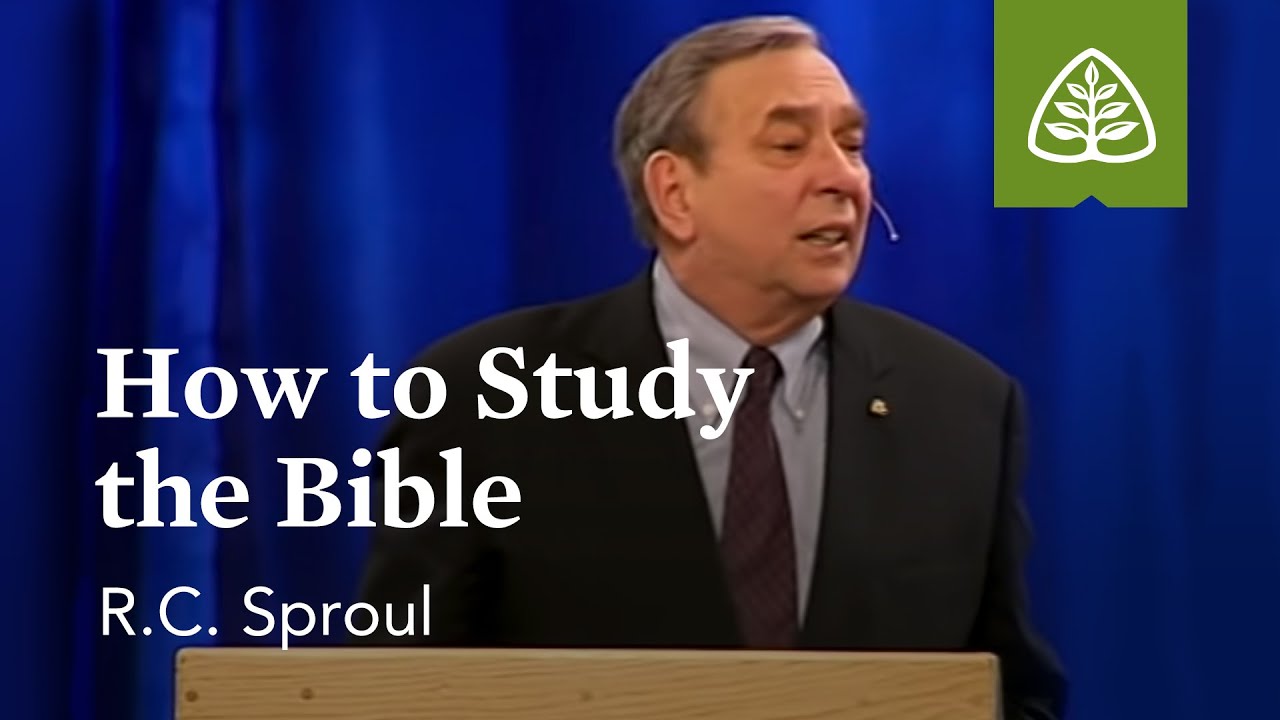
R.C. Sproul: How to Study the Bible
Another I would highly recommend is Bob Utley.
-
Can we know truth?
-
Where is it found?
-
Can we logically verify it?
-
Is there an ultimate authority?
-
Are there absolutes which can guide our lives, our world?
-
Is there meaning to life?
-
Why are we here?
-
Where are we going?
These questions—questions that all rational people contemplate—have haunted the human intellect since the beginning of time (Eccl. 1:13-18; 3:9-11). I can remember my personal search for an integrating center for my life. I became a believer in Christ at a young age, based primarily on the witness of significant others in my family. As I grew to adulthood, questions about myself and my world also grew. Simple cultural and religious clichés did not bring meaning to the experiences I read about or encountered. It was a time of confusion, searching, longing, and often a feeling of hopelessness in the face of the insensitive, hard world in which I lived.
Many claimed to have answers to these ultimate questions, but after research and reflection I found that their answers were based upon
-
personal philosophies
-
ancient myths
-
personal experiences
-
psychological projections
I needed some degree of verification, some evidence, some rationality on which to base my worldview, my integrating center, my reason to live.
I found these in my study of the Bible. I began to search for evidence of its trustworthiness, which I found in
-
the historical reliability of the Bible as confirmed by archaeology
-
the accuracy of the historical prophecies of the Old Testament
-
the unity of the Bible message over the sixteen hundred years of its production
-
the personal testimonies of people whose lives had been permanently changed by contact with the Bible. See five lectures on the trustworthiness of the Bible on my homepage (www.freebiblecommentary.org) in the first paragraph. Click on link.
Christianity, as a unified system of faith and belief, has the ability to deal with complex questions of human life. Not only did this provide a rational framework, but the experiential aspect of biblical faith brought me emotional joy and stability.
I thought that I had found the integrating center for my life—Christ, as understood through the Scriptures. It was a heady experience, an emotional release. However, I can still remember the shock and pain when it began to dawn on me how many different interpretations of this book were advocated, sometimes even within the same churches and schools of thought. Affirming the inspiration and trustworthiness of the Bible was not the end, but only the beginning. How do I verify or reject the varied and conflicting interpretations of the many difficult passages in Scripture by those who were claiming its authority and trustworthiness?
This task became my life’s goal and pilgrimage of faith. I knew that my faith in Christ had
-
brought me great peace and joy. My mind longed for some absolutes in the midst of the relativity of my culture
-
the dogmatism of conflicting religious systems (world religions)
-
denominational arrogance
In my search for valid approaches to the interpretation of ancient literature, I was surprised to discover my own historical, cultural, denominational and experiential biases. I had often read the Bible simply to reinforce my own views. I used it as a source of dogma to attack others while reaffirming my own insecurities and inadequacies. How painful this realization was to me!
Although I can never be totally objective, I can become a better reader of the Bible. I can limit my biases by identifying them and acknowledging their presence. I am not yet free of them, but I have confronted my own weaknesses. The interpreter is often the worst enemy of good Bible reading!
Let me list some of the presuppositions I bring to my study of the Bible so that you, the reader, may examine them along with me:
I. Presuppositions
I believe the Bible is the sole inspired self-revelation of the one true God. Therefore, it must be interpreted in light of the intent of the original divine author through a human writer in a specific historical setting.
I believe the Bible was written for the common person—for all people! God accommodated Himself to speak to us clearly within a historical and cultural context. God does not hide truth—He wants us to understand! Therefore, it must be interpreted in light of its day, not ours. The Bible should not mean to us what it never meant to those who first read or heard it. It is understandable by the average human mind and uses normal human communication forms and techniques.
I believe the Bible has a unified message and purpose. It does not contradict itself, though it does contain difficult and paradoxical passages. Thus, the best interpreter of the Bible is the Bible itself.
I believe that every passage (excluding prophesies) has one and only one meaning based on the intent of the original, inspired author. Although we can never be absolutely certain we know the original author’s intent, many indicators point in its direction:
the genre (literary type) chosen to express the message
the historical setting and/or specific occasion that elicited the writing
the literary context of the entire book as well as each literary unit
the textual design (outline) of the literary units as they relate to the whole message
the specific grammatical features employed to communicate the message
the words chosen to present the message
The study of each of these areas becomes the object of our study of a passage. Before I explain my methodology for good Bible reading, let me delineate some of the inappropriate methods being used today that have caused so much diversity of interpretation, and that consequently should be avoided:
J.
We need to be able to provide the reasons and logic behind our interpretations. The Bible is our only source for faith and practice. Sadly, Christians often disagree about what it teaches or affirms. The four reading cycles are designed to provide the following interpretive insights:
The first reading cycle
Read the book in a single sitting. Read it again in a different translation, hopefully from a different translation theory
(1) word-for-word (NKJV, NASB, NRSV)
(2) dynamic equivalent (TEV, JB)
(3) paraphrase (Living Bible, Amplified Bible)
Look for the central purpose of the entire writing. Identify its theme.
Isolate (if possible) a literary unit, a chapter, a paragraph or a sentence which clearly expresses this central purpose or theme.
Identify the predominant literary genre
(1) Old Testament
a) Hebrew narrative
b) Hebrew poetry (wisdom literature, psalm)
c) Hebrew prophecy (prose, poetry)
d) Law codes
(2) New Testament
a) Narratives (Gospels, Acts)
b) Parables (Gospels)
c) Letters/epistles
d) Apocalyptic literature
The second reading cycle
Read the entire book again, seeking to identify major topics or subjects.
Outline the major topics and briefly state their contents in a simple statement.
Check your purpose statement and broad outline with study aids.
The third reading cycle
Read the entire book again, seeking to identify the historical setting and specific occasion for the writing from the Bible book itself.
List the historical items that are mentioned in the Bible book
(1) the author
(2) the date
(3) the recipients
(4) the specific reason for writing
(5) aspects of the cultural setting that relate to the purpose of the writing
(6) references to historical people and events
Expand your outline to paragraph level for that part of the biblical book you are interpreting. Always identify and outline the literary unit. This may be several chapters or paragraphs. This enables you to follow the original author’s logic and textual design.
Check your historical setting by using study aids.
The fourth reading cycle
Read the specific literary unit again in several translations
(1) word-for-word (NKJV, NASB, NRSV)
(2) dynamic equivalent (TEV, JB)
(3) paraphrase (Living Bible, Amplified Bible)
Look for literary or grammatical structures
(1) repeated phrases, Eph. 1:6,12,14
(2) repeated grammatical structures, Rom. 8:31
(3) contrasting concepts
List the following items
(1) significant terms
(2) unusual terms
(3) important grammatical structures
(4) particularly difficult words, clauses, and sentences
Look for relevant parallel passages
(1) look for the clearest teaching passage on your subject using a) "systematic theology” books b) reference Bibles c) concordances
(2) look for a possible paradoxical pair within your subject. Many biblical truths are presented in dialectical pairs; many denominational conflicts come from proof-texting half of a biblical tension. All of the Bible is inspired, and we must seek out its complete message in order to provide a Scriptural balance to our interpretation.
(3) look for parallels within the same book, same author or same genre; the Bible is its own best interpreter because it has one author, the Spirit.
Use study aids to check your observations of historical setting and occasion
(1) study Bibles
(2) Bible encyclopedias, handbooks and dictionaries
(3) Bible introductions
(4) Bible commentaries (at this point in your study, allow the believing community, past and present, to aid and correct your personal study.)
IV. Application of Bible Interpretation
At this point we turn to application. You have taken the time to understand the text in its original setting; now you must apply it to your life, your culture. I define biblical authority as "understanding what the original biblical author was saying to his day and applying that truth to our day with the same power.”
Application must follow interpretation of the original author’s intent both in time and logic. We cannot apply a Bible passage to our own day until we know what it was saying to its day! A Bible passage should not mean what it never meant!
Your detailed outline, to paragraph level (reading cycle #3), will be your guide. Application should be made at paragraph level, not word level. Words have meaning only in context; clauses have meaning only in context; sentences have meaning only in context. The only inspired person involved in the interpretive process is the original author. We only follow his lead by the illumination of the Holy Spirit. But illumination is not inspiration. To say "thus saith the Lord,” we must abide by the original author’s intent. Application must relate specifically to the general intent of the whole writing, the specific literary unit and paragraph level thought development.
Do not let the issues of our day nor denominational distinctives interpret the Bible; let the Bible speak! This may require us to draw principles from the text. This is valid if the text supports a principle. Unfortunately, many times our principles are just that, "our” principles—not the text’s principles.
In applying the Bible, it is important to remember that (except in prophecy) one and only one meaning is valid for a particular Bible text. That meaning is related to the intent of the original author as he addressed a crisis or need in his day. Many possible applications may be derived from this one meaning. However, the application will be based on the modern recipients’ needs but must be related to the original author’s meaning.
J.
1 Like
My sister in law went through the same thing. For her, coming into faith felt like jumping off a cliff. She was determined to know the truth and her heart was open to knowing that truth.
I told her the story in the Bible about the man with a son who was having severe trouble. He said to Jesus, 'If you can do anything, please help."
Jesus answered, “If you can believe, all things are possible for him who believes.”
The father responded, “Lord I believe. Help my unbelief.” Mark 9
I took this to mean that the man had heard about Jesus and believed what he’d heard, but was still struggling in his belief.
I suggested to my sister in law that she should pray and ask God if He was real. He heart was open to the truth and she wanted the truth. She prayed and in a way I didn’t understand, God make Himself known to her and she became a Christian.
I have a friend who, as a new Christian, struggled with rectifying the God of the old Testament with the God of the new. So she prayed for understanding, and in time, God answered her prayer.
In a nutshell, I’m suggesting that you take your questions to the Author Himself. In here you will get many different opinions and an opinion is not what you want. As long as your heart is open and as long as you’re His child, He will give you the answers. They may not come in a way you expect and He may have other things to show you first, but you will be in God’s hands and that is where truth is found.
2 Likes