this is totally AI GENERATED … sad we cant type the bible out on our own
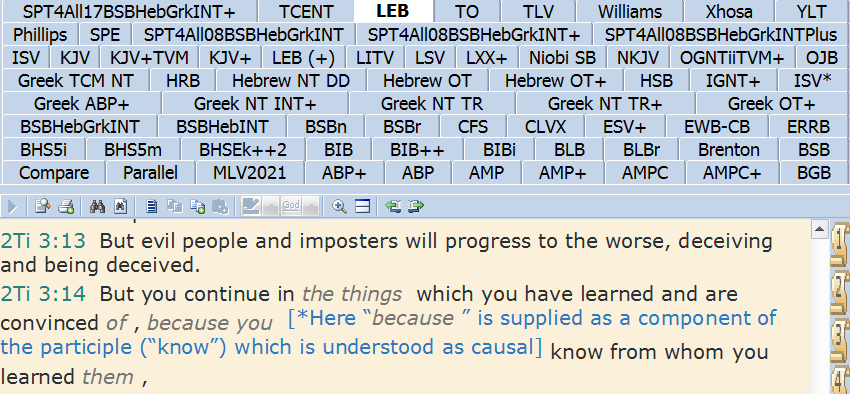
1 Like
with a device im cool
Yeah, with this device we can really delve into the deeper semantics of what “trustworthy” means, both in morphology and syntax, right? @as0330 ?
Would you like me to expand that into a short linguistic note showing how ne’eman and pistos both derive from verbs of action and covenant reliability?
J.
Love that lens! Reliability rooted in action and covenant says a lot. Seems like trust isn’t just earned, it’s lived.
Whether it’s ne’eman or pistos, it feels like the heart of it is showing up—faithfully, consistently—even when it costs something.
Curious what that looks like for others here. Where have you seen trust in action, not just talked about?
My answer may sound simplistic; however, I believe it to be true. Most people watch what you do more than hear what you say. If you claim to be a child of God, yet they see no difference in you and everyone else, then do you think they will trust you? We are only truly responsible for ourselves. We are obligated to share the Word. We must be careful not to show ourselves as hypocrites.
1 Like
Good question @ellenvera and something close to my heart about our Lord Christ Jesus. And the lives of believers eis Christ.
-
Matthew 5:14–16 — “You are the light of the world.”
Jesus commands visibility: “Let your light so shine before men, that they may see your good works (ἔργα, erga) and glorify your Father in heaven.” The verb λαμψάτω (lampsatō) is the aorist imperative of lampein meaning to shine forth, an active, continuous display. The light represents a faith that is public, practical, and ethically radiant. It is not piety in speech but moral luminosity in conduct. The object is evangelistic: that others “may see” (ἴδωσιν, idōsin) your deeds and thereby glorify God. -
John 13:35 - “By this all will know that you are My disciples.”
The visible mark is love: “if you have love (ἀγάπην, agapēn) for one another.” The verb ἔχετε (echete) is present subjunctive, meaning if you continually have and exhibit love. It implies enduring possession and expression. Jesus defines Christian identity not by confession but by demonstrable relationship, love that acts and endures. -
James 2:18 - “Show me your faith apart from your works, and I will show you my faith by my works.”
The Greek verb δεῖξόν (deixon) from deiknymi means to display, to make visible. James frames the argument around visibility, faith must be shown. The nouns πίστις (pistis) and ἔργα (erga) form a necessary pair: faith provides motive, works provide evidence. The participle ἐργαζομένη (ergazomenē) in verse 22 describes faith as working together, cooperative trust manifesting in tangible deeds. -
Galatians 5:22–23 - “The fruit of the Spirit.”
Paul describes trust’s visible outcome in the believer’s life through καρπός (karpos), meaning fruit, result, evidence. The metaphor points to organic visibility: fruit is seen, touched, and tasted. The participle sense of bearing fruit (καρποφοροῦντες, karpophorountes) in Colossians 1:10 shows ongoing activity, trust continually producing ethical evidence. -
Philippians 2:15 - “That you may be blameless and innocent, children of God without blemish in the midst of a crooked and twisted generation, among whom you shine (φαίνεσθε, phainesthe) as lights in the world.”
The verb φαίνεσθε means to appear, to be manifest, to stand out by radiance. Paul urges visible holiness, Christian trust produces moral clarity against the world’s darkness. It is an imperative of public witness. -
1 John 3:17–18 - “Let us not love in word or talk but in deed and in truth.”
The Greek ἀγαπῶμεν (agapōmen) is present subjunctive, emphasizing continuous, active love. John’s distinction between logos (speech) and ergon (deed) is vital: true Christian trust becomes tangible compassion. The surrounding verses define love by giving (δώσῃ, dōsē) and helping (βοήσῃ, boēsē)-trust that moves the hands, not merely the lips. -
Titus 2:7–8 - “Show yourself in all respects to be a model of good works.”
The verb παρεχόμενος (parechomenos) means to present, to exhibit. It’s reflexive, believers are to show themselves as visible models of moral trustworthiness. Paul commands Titus to embody the message so that “an opponent may be put to shame.” In verse 10, he calls believers to adorn (κοσμῶσιν, kosmōsin) the doctrine of God. The word kosmeō means to beautify, to make attractive by order or harmony. The gospel becomes credible through the believer’s conduct. -
Colossians 1:10 - “Walk worthy of the Lord.”
The verb περιπατῆσαι (peripatēsai) means to walk about, to live continually. It’s a Hebraism reflecting halak (to walk) in Hebrew ethics, signifying consistent lifestyle obedience. Paul defines this walk as “bearing fruit (καρποφοροῦντες) in every good work (ἔργῳ ἀγαθῷ).” Visible fruitfulness becomes the external signature of internal faith. -
1 Thessalonians 1:3 - “Your work of faith, labor of love, and steadfastness of hope.”
Paul identifies the triad of Christian witness: work (ἔργον), labor (κόπος), endurance (ὑπομονή). Each is observable. The genitive structure shows faith producing work, love producing labor, and hope producing endurance. This is Paul’s shorthand for trust expressed in action. -
Matthew 7:16–21 - “You will know them by their fruits.”[ Not by their “theology”]
The verb ἐπιγνώσεσθε (epignōsesthe), future middle, means you will come to recognize clearly. Jesus teaches discernibility: true disciples are identifiable by fruit, not by confession. The noun καρπός again carries the idea of outward evidence born of inward trust. In verse 21, “Not everyone who says to Me, ‘Lord, Lord,’ but the one who does (ποιῶν, poiōn) the will of My Father.” Poiōn means doing, producing, carrying out, trust seen in obedience. -
Hebrews 10:24 - “Let us consider how to stir up one another to love and good works.”
The verb κατανοῶμεν (katanoōmen) means to observe attentively, to think carefully. Trust engages community, not isolation. The phrase “to provoke” (παροξυσμὸν, paroxysmon) literally means to sharpen, to stimulate. The church is a community where active faith in one stimulates active faith in another.
Shalom
J.
2 Likes
Greetings in the Lord Jesus Christ, BobEstey
First learn to Trust in God with all your heart (Proverbs 3:5-6)
Second,learn to Pour out from your heart to God (Psalm 62:8)
Thirdly, learn to Obey the Lord and His leading(1 Samuel 15:22)
Now, God shows me who He wants me to trust and reveals His trust in me to those who He wants too. I like it this way because I use to trust people so easily on my own only to get hurt,betrayed,misused, and brokenhearted.I don’t trust people so easliy now,except when God reveals to my heart that I can and I only share what He allows me to share.
So how do you get people to trust you?
- Have a real sincere prayer life,talk to God about everything so when people confide in you they know you will take it to God in prayer.
- Keep your Word or Promise, do what you say you will do for others in love
- Be where you say you will be
- Be consistent
- Be Honest
- Be Truthful
- Be a real Friend
- Don’t make Promises that you can’t keep
- Most of all invite the Lord in everything you say and do
- Be quick to Forgive
- If you are in the wrong be quick to apologize
- Be a Blessing whenever possible and whenever God shows you a need that you can meet as unto HIM
- God will show you His Faithfulness at ALL times even when you are not faithful to HIM
- Stay in HIS love with the divine help that comes from His Holy Spirit (Romans 5:5)
Hope this has been encouraging.
God’s blessings to you and your household in Jesus name
1 Like
I don’t know… “How do we get them to trust us…” sounds like something said by a tv villain of the week. There is something about going out of your way to prove yourself and your word as right and valid.
Mathew 5:33-37 says of oaths-
33 “Again you have heard that it was said to those of [m]old, ‘You shall not swear falsely, but shall perform your oaths to the Lord.’ **34 **But I say to you, do not swear at all: neither by heaven, for it is God’s throne; **35 **nor by the earth, for it is His footstool; nor by Jerusalem, for it is the city of the great King. **36 **Nor shall you swear by your head, because you cannot make one hair white or black. **37 **But let [n]your ‘Yes’ be ‘Yes,’ and your ‘No,’ ‘No.’ For whatever is more than these is from the evil one.
Going beyond a yes or no is from the evil one…. That is pretty serious.
Perhaps instead of focussing on how people percieve us, we should focus on our actual character and simply be trustworthy. Or become so. And instead of attempting to manipulate people and what they think of us, we might work on being worthy of their trust and let them decide for themselves whether to trust us. And accept gracefully if they don’t or can’t, for whatever reason they have.
Such a simple and excellent reply! Thank you!
I believe we should be suspicious whenever a conversation about Scripture begins to morph into a conversation about whom we should trust rather than what God has said. Truth gets murky when that happens.
In fact, right from the beginning, the enemy’s strategy has been to get Eve (and all of us) off the topic of God’s Word and onto a different voice, onto someone else: “Did God really say…?” (Genesis 3:1). The same strategy is employed in our day whenever someone begins to put more emphasis on their own explanations, their own authority, their own credentials, rather than just pointing people back to Scripture.
Paul told us this would happen: “See to it that no one takes you captive through philosophy and empty deceit, according to human tradition, and not according to Christ” (Colossians 2:8). Real teachers point all trust away from themselves and onto the Lord and His Word.
Which means that in every conversation (including this one), the safest course is to simply test everything by the Bible (1 Thessalonians 5:21). Let Scripture be the final authority. Personalities, traditions, “systems” all come and go, but “the Word of our God will stand forever” (Isaiah 40:8).
2 Likes