How do you distinguish between songs that are emotionally moving and those that are theologically sound?

I don’t think emotion and theology have to be in competition, but they also aren’t the same thing. A song can move me deeply and still be thin or even confusing theologically, especially if it’s built more around personal feeling than around who God is.

What helps me is asking a few quiet questions after the emotion settles: What is this song actually saying about God’s character? About humanity? About grace, sin, redemption? Does it line up with the broader witness of Scripture, or is it centered mostly on how I feel in the moment?

I still appreciate emotionally rich worship, but I’ve learned not to equate “this moved me” with “this formed me well.” Some songs comfort; others teach; the healthiest worship music tends to do at least a bit of both.

2 Likes

King David sent his message in music. So the scripture says. to the chief musician a song of david.

1 Like

@ellenvera

Your wisdom is showing here. I appreciate your thoughts. This can be a touchy subject, since we have been raised to capitulate to the idea that music is purely personal, and there is no “right” and “wrong” music, even in the congregational gathering of the Body of Christ.

I can’t compose a formal treatise on music suitable for congregational participation here, because it is a big subject, and also because I am no expert. I can testify that too often I am unable to join into a congregational song for some of the same reasons you mention.

If we accept your distinction that some songs are primarily emotional and others are theologically sound, I can offer a few things that help me with your categorization.

One: Sincerity and truth. Does the song make declarations about Spiritual Realities that are not found in the Bible? (I won’t offer examples so I don’t step on toes). Does it make declarations about me, the singer that are not true or accurate? If the words of the song are untrue or insincere in any way, I don’t ever want to sing them to one who is “The Truth”, I never want to speak untruth to God just to cooperate with those around me.

Two: Is the song mainly about me, about my blessings or my enablement, or about me as an individual or is it about God our Savior, about His attributes, about His glory? Who is the obvious subject of the song?

Three: Does the song put the singer in a proper relationship to our King, our Master-Creator, and our Savior, or does it elevate my position.

Four: Is the song sung from the perspective of the whole gathering, church, body, or is it mainly sung from the perspective of an individual, the singer, or about some experience of the author of the song? Does it use “we” more or “I” more?

Five: Does the song recognize our (or my) fallenness, unworthiness, and/or great need while extoling God’s greatness, mercy, grace, and Holiness? Can the song speak of God’s greatness with little or no mention of us?

These are just some ideas, some thoughts that help me know if I am worshiping God, or mostly singing about my own prized position in God’s graces. This is in no-way a exhaustive list of rules or tests; I am not trying to teach others the right way to evaluate music. I am simply testifying why I do not sing some of the more popular songs that are sung in congregational settings. You will need to make these determinations for yourself. If my list helps, great. If not forget about it.

KP

3 Likes

If you want to be able to identify good theology, you should study the bible and learn good theology.

2 Likes

Is worship not a gift? By it we fellowship with God. Jesus said the Father wants to be worshipped in spirit and in truth. When we worship in song we’ve entered into fellowship with God. That fellowship involves our hearts, our emotions and our minds. As long as the lyrics speak truth and because we’re all in a different place, the song could be about what Jesus has done and how much we needed it, or it could be praising the Father for who He is. What’s important is our expression of those truths and our heart’s emotional response to those truths. A song can be both theologically sound and emotionally stirring. I would say that true worship is always emotionally stirring. Emotions are God given and hold the key to our inner world. To have our emotions stirred up to praise or thank God is a part of worship.

One thing I’ve learned about music. It is truth. Though you have different truths stemming from different people, they are all singing there story. The words that come out of there mouths. Are there personal flight. Or why would they sing it? For mammoth being money?

Let me let that be stricken from record and start again. I had done served time in 2 of the worst prisons in ok. I caught a case that landed me at granite ok also known as osr the death row was in osp the walls I had already visited here now I’m not a killer a rapist child molester none of that my crimes stem from being stupid so the district attorney said john is not a bad person he just makes bad decisions. So I’m at granite bad place for some enlightening for me well worth the petty crime I comited wich was burglary 2 granite has spirit has to right? built in the 1800’s there is a little chapel in the middle of the yard music always started the fellowship the music was always hims from the book when the band played you felt it so I got to talking to a baptist pastor had his own church he told me I have been all over the world I’m a evangelist as well as a minister in the church and I in all my travels have ever felt the spirit anywhere else like I feel here his eyes actually teared up so I believed him what was the beginning of our felowship we rocked the house.

There’s an ancient principle of Christian worship: Lex Orandi Lex Credendi, “the law of prayer is the law of belief”. It means prayer (and by implication in this specific context, our hymnody/songs) and belief should mirror each other; and also that they do mirror each other. How we pray and worship unavoidably shapes how and what we believe. So on the positive side–good worship strengthens our faith and shapes good theology; but on the negative, bad worship encourages bad theology.

From a purely psychological perspective this actually makes a lot of sense. Think about how poetry and music influences us–and just how the words stick with us. I know that, personally, I can still remember songs I sung as a child that I haven’t heard in literally decades, but if you were to ask me to quote, verbatim, something my pastor said during the homily just days after I’d struggle–I’d probably remember the theme, I’d probably be able to paraphrase bits and pieces. But I still have “Father Abraham had many sons, and many sons had father Abraham, and I am one of them, and so are you, so let’s all praise the Lord” locked as a core memory.

So, in practice, most of us are probably going to have our theology, our doctrinal views, the what and how of our belief shaped primarily not just by what we hear in the sermon; and if we aren’t the sort of people who nerd and geek out reading theology books, listening to theology podcasts, or watching documentaries about the Council of Nicea and all the nooks and cranies of the Arian controversy from the 4th century (and we shouldn’t expect every Christian who sits in the pews on Sunday to do all this just so they can have a well-formed understanding of their faith) then their entire theological and doctrinal formation is going to happen in the context of weekly worship: where they hear Scripture read out loud, a sermon giving a teaching, and most effectively: the prayers and hymns/songs that are sung.

I don’t think we have to separate emotionally moving music from theologically sound music–I think these can (and should) be the same thing. Though of course what constitutes “emotionally moving” is much more subjective. But the point here is that I don’t think we necessarily have to have emotionally moving music over there, and theologically sound music over here as though they are always different–they can be the same thing, and I think it’s good when they are.

Discerning theologically sound and theologically unsound music (and prayer) is more difficult; and that is why it’s important that music selection, and the shape of our prayers, be done in a discerning way. This is a big reason why I do prefer many of the historic and ancient hymns of the Church over more contemporary “praise and worship” music. Not because hymns are always better and “praise and worship” songs are always worse—there are plenty of examples of bad hymns and plenty of examples of good “praise and worship” genre music. But in my own life experience I found myself drawn to the worship language of historic Christian hymnody because, very often, they are theologically rich and dense; and often very emotionally moving. Isaac Watt’s “When I Survey the Wondrous Cross” or St. Bernard of Clairvaux’s “O Sacred Head Now Wounded” often move me deeply.

I have also found examples of re-setting hymns which amps the musical depth (for my modern sensibilities) while maintaining the theological and lyrical depth.

The HeartSong cover of “A Mighty Fortress” is fantastic, as is Red Mountain Music’s cover of “Come Thou Long Expected Jesus”. Or how about “Did Christ Over Sinners Weep?” as done by Indelible Grace? These are gorgeous.

1 Like

@Thanx for your views @TheologyNerd

You didn’t’ mention it, so I’ll ask your opinion: Do you make a distinction between “performance pieces” and congregational hymnody? (I know there are more than these two genres’ but these are germane to this discussion) In-other-words, are some pieces written specifically to be performed by an artist to convey to the hearers the meaning intended by the artist, and other pieces are written specifically to be sung by a group, proclaiming unity of belief, for the purpose of edification and unity? If so, what is the effect of a specifically “performance” piece being sung by the congregation, or a specifically congregational hymn being sung by an artist? If a piece of music is written by a performer, as an expression of that performer’s life, which is designed to be performed (or recorded)(or broadcast) to be heard by an audience, to convey a message, can that music also be sung in the congregation “in Spirit and in Truth”; can it be sung with sincerity, and as worship? Or should we not care; does it not matter? Should we just sing whatever song is being led, without objection or discrimination, sheepishly reciting the words being projected, on the “jumbotron”?

I’m interested in your understanding.

KP

I think I would make that distinction. I would frame it as there is edifying music that is good, music that I would listen to in the car for example; but I wouldn’t necessarily say it’d make for good congregational singing.

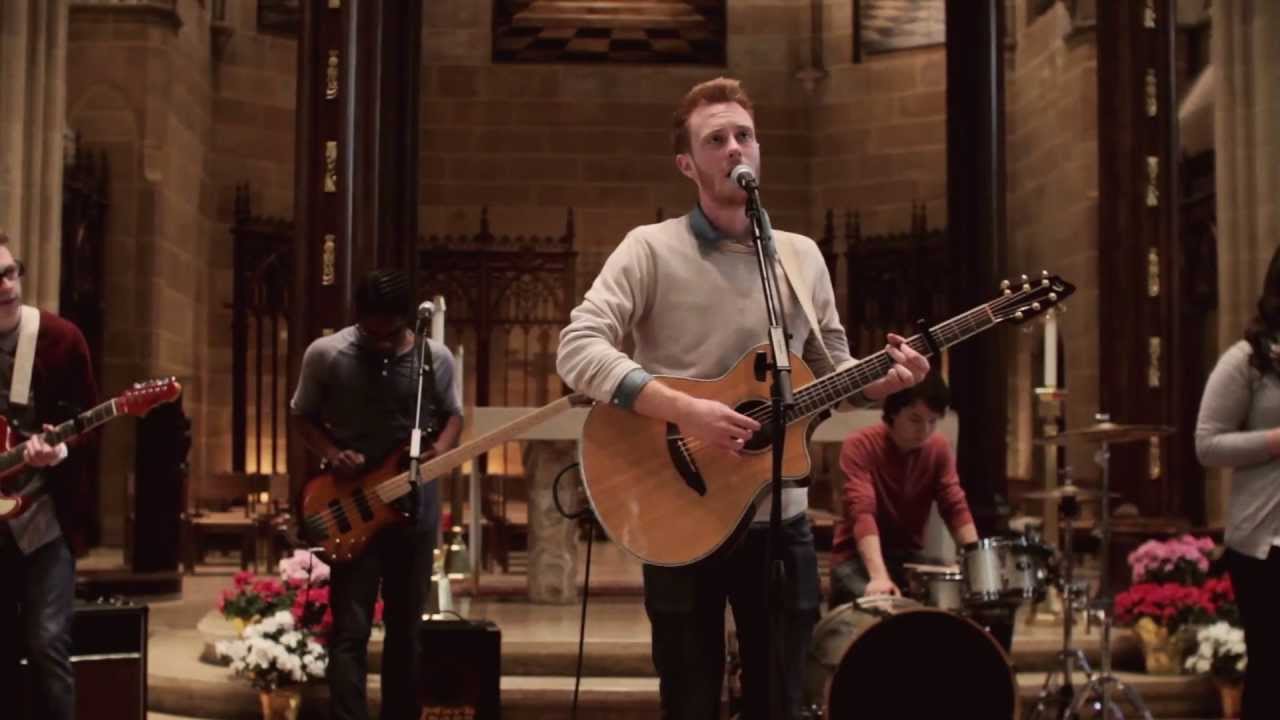
Some of this also is going to depend on how we, broad strokes, “do worship”. At my church we follow the traditional Lutheran Divine Service aka the Lutheran Mass; but the way we do it is probably best described as “Low Mass”, though I have been part of Lutheran churches which are more “High Mass”–incense, bells (literally the “bells and smells” of the Holy Liturgy). It’s not uncommon, in my experience, to leave things to the choir (or in the case of my current church which is very small and doesn’t have a choir) to an individual singer at certain points, primarily during the Lord’s Supper. And while 95% of our singing is directly from the Lutheran Hymnbook (TLH, 1941), we also set aside time for 1-2 “praise” songs though these are selected on some strict criteria to ensure they are doctrinally sound and also good for congregational singing.

And while 99.9% of the time the hymns are accompanied by an organist, when our organist has been ill, we’ll have someone fill in with a guitar.

It kind of reflects the broader spirit of Lutheran pragmaticism. A lot of Lutheran practice tends to be shaped by the principle of good order–what serves the needs of the Faithful and what promotes the Gospel.

But all in all, yes I do think there is a distinction between generally good and edifying music and what, specifically, is good for congregational singing. I would, in that sense, argue that good congregational music shouldn’t be too distracting. I’m not, for example, opposed to a praise band in principle (over, say, an organist)–though I would caution against treating this sacred time as a rock concert. So, there may be songs or versions of songs that I would listen to in my own time that I wouldn’t necessarily recommend be part of the Divine Service.

But I would also admit my own liturgical bias here. My current church, as I said, can be described in some ways as “Low Mass”, though my own personal preference would be for a more “High Mass” Service. I’ve even seen examples of the Divine Service using a modified Byzantine Rite (used in some Lutheran churches in Eastern Europe), and I must admit that my love of the Eastern liturgies is pretty strong. So, as I said, I am liturgically-biased in my sentiment.

@TheologyNerd. Thanks again for your thoughs. I found your testimony very interesting.

Also Interesting is a testimony of our beloved C.S. Lewis, who wrote a lecture “On Church Music”. In it he doesn’t build on scriptural teaching, but clearly expresses his own personal “bent” on the subject, a fact he is not hiding. It comes from one who regularly attended the service at his local parish church that did not have music. He says in his little treatise,

"What I, like many other laymen, chiefly desire in church are few, better, and shorter hymns; especially fewer.”

He also admits that he

“finds the case for abolishing all church music much stronger than the case for abolishing the difficult work of a trained choir in place of the “lusty roar of the congregation.”

This makes me chuckle.

We are not completely without witness to spiritual congregational singing in our Bible, but we have precious little instruction on how to employ it. We have the witness of singing at the culmination of what has become known as “The last Supper”, a Passover week meal which concludes with the verse:

“And when they had sung a hymn, they went out to the Mount of Olives. (Matthew 26:30, Mark 14:26).

This was obviously “congregational” (not a performance), and obviously Jewish “halel” tradition, an expression of unified “praise”. Nothing else is said and so there is little instruction to be taken from it to apply to our contemporary weekly meeting.

Clarke reminds us:

And when they had sung a hymn” (Gk: humnéō, Υμνησαντες) means, probably, no more than a kind of recitative reading or chanting. As to the hymn itself, we know, from the universal consent of Jewish antiquity, that it was composed of Psalms 113, 114, 115, 116, 117, and 118, termed by the Jews ‏הלל‎ halel, from ‏הללו־יה‎ halelu-yah, the first word in Psalm 113.

And as Poole says:

The inquiries after these things are but insignificant curiosities, fit for such as have more mind to look into the skirts of holy writ, than to find out of it what may be of profit and advantage to them. Our Savior doubtless intended by this to instruct us, that the ordinance of his supper is a eucharistical service, wherein our souls are most highly concerned to give thanks unto God; and as singing is an external action which God hath appointed to express the inward joy and thankfulness of our hearts, so it is very proper to be used at that holy institution.

Paul, correcting the Corinthians on their wayward gathering practices says:

What is the conclusion then? I will pray with the spirit, and I will also pray with the understanding. I will sing with the spirit, and I will also sing with the understanding. (1 Corinthians 14:15)

Regarding singing being an expression of unity, we have this from the writer of Hebrews:

For both He who sanctifies and those who are being sanctified are all of one (unified), for which reason He is not ashamed to call them brethren, saying: “I will declare Your name to My brethren; In the midst of the assembly I will sing praise to You.” (Hebrews 2:11-12)

And this from the Apostle Paul

But above all these things put on love, which is the bond of perfection. And let the peace of God rule in your hearts, to which also you were called in one body; and be thankful. Let the word of Christ dwell in you richly in all wisdom, teaching and admonishing one another in psalms and hymns and spiritual songs, singing with grace in your hearts to the Lord. And whatever you do in word or deed, do all in the name of the Lord Jesus, giving thanks to God the Father through Him. (Colossians 3:14-17)

The admonition to “sing with grace in your heart” suggests singing as an act of love, an unmerited gift, considering the edification of the other person more important than yourself. There will be this kind of gracious congregational singing in heaven, collectively raising Praise to God, as testified by the Apostle John in his apocalypse;

And I saw something like a sea of glass mingled with fire, and those who have the victory over the beast, over his image and over his mark and over the number of his name, standing on the sea of glass, having harps of God. They sing the song of Moses, the servant of God, and the song of the Lamb, saying: “Great and marvelous are Your works, Lord God Almighty! Just and true are Your ways, O King of the saints! Who shall not fear You, O Lord, and glorify Your name? For You alone are holy. For all nations shall come and worship before You, For Your judgments have been manifested.” (Revelation 15:2-4)

These mentions in our New Testament, along with the strong witness of congregational singing in the Old Testament,( the book of Psalms being a sort of hymnal, with specific psalms designated for specific occasions,) testifies that singing is an expression of unified praise within the congregation, and a practice of which God approves. While, I agree, congregational singing can be very moving and elicit strong emotions in singer and hearer, the purpose and aim of the practice is not sensual (inward facing), but gracious giving (outward facing), expressing praise from a heart of love. Only this kind of singing expresses proper praise, and testifies of The Heart of Jesus.

Thanx again
KP

The Jews was, still is, chanting with melody, not singing with emotion.

Gill.

And when they had sung an hymn,… The “Hallell”, which the Jews were obliged to sing on the night of the passover; for the passover, they say (l), was טעון הלל, “bound to an hymn”.

This “Hallell”, or song of praise, consisted of six Psalms, the 113th, 114th, 115th, 116th, 117th, and 118th (m): now this they did not sing all at once, but in parts.

Just before the drinking of the second cup and eating of the lamb, they sung the first part of it, which contained the 113th and 114th Psalms; and on mixing the fourth and last cup, they completed the “Hallell”, by singing the rest of the Psalms, beginning with the 115th Psalm, and ending with the 118th; and said over it, what they call the “blessing of the song”, which was Psa_145:10, &c., and they might, if they would, mix a fifth cup, but that they were not obliged to, and say over it the “great Hallell”, or “hymn”, which was the 136th Psalm (n).

Now the last part of the “Hallell”, Christ deferred to the close of his supper; there being many things in it pertinent to him, and proper on this occasion, particularly Psa_115:1, and the Jews themselves say (o), that חבלו של משיח, “the sorrows of the Messiah” are contained in this part: that this is the hymn which Christ and his disciples sung, may be rather thought, than that it was one of his own composing; since not only he, but all the disciples sung it, and therefore must be what they were acquainted with; and since Christ in most things conformed to the rites and usages of the Jewish nation; and he did not rise up from table and go away, until this concluding circumstance was over; though it was allowed to finish the “Hallell”, or hymn, in any place they pleased, even though it was not the place where the feast was kept (p) however, as soon as it was over.

Barnes

And when they had sung a hymn - The Passover was observed by the Jews by singing or “chanting” Ps. 113–118. These they divided into two parts. They sung Ps. 113–114 during the observance of the Passover, and the others at the close. There can be no doubt that our Saviour, and the apostles also, used the same psalms in their observance of the Passover. The word rendered “sung a hymn” is a participle, literally meaning “hymning” - not confined to a single hymn, but admitting many.

At the Passover meal itself, no, instruments were not used.
In the Temple, yes, instruments were used.
Those are two different locations with two different rules, and confusing them causes most of the modern misunderstandings.

Now the careful explanation.

In Second Temple Judaism, instrumental music was tied almost exclusively to the Temple cult, not to domestic meals. The Hebrew Bible consistently locates instruments in priestly, Levitical, and sanctuary contexts.

Psalm 150 is explicit about this setting, listing trumpets, harps, lyres, cymbals, and dance in a public, sacred space. Likewise, 1 Chronicles 15–16 and 2 Chronicles 29 describe Levites appointed to play instruments “before the LORD” in the Temple, under priestly oversight. Instruments were regulated, consecrated, and restricted.

By contrast, the Passover meal was eaten in homes, not in the Temple.

Exodus 12 mandates that the lamb be eaten “in houses,” and by the first century this was well established practice. Domestic worship was vocal and textual, not instrumental.

This distinction matters.

During the Passover sacrifice earlier that day, when the lambs were slaughtered at the Temple, the Levites did sing the Hallel with instrumental accompaniment. The Mishnah (Pesachim 5) describes this clearly. Trumpets and other instruments accompanied the Temple liturgy while the priests performed the sacrificial rites.

But once the meal moved into homes that evening, the instruments stopped.

At the seder, including the chanting of Psalms 113–118, the Hallel was rendered a cappella, through chant or responsorial recitation. No lyres. No flutes. No percussion. Just voices. This was not because instruments were evil, but because instrumental music belonged to the Temple, and the Temple had rules.

There is also a cultural layer here.

After the destruction of the First Temple, Jewish tradition increasingly associated instruments with Temple joy and refrained from them in ordinary or mourning contexts.

Even before 70 CE, restraint in domestic settings was already normative. Sound came from Scripture, not strings.

Now bring this back to the Gospels.

When Jesus and the disciples “hymned” at the conclusion of the Passover meal, they were in a private setting, late at night, preparing to leave for the Mount of Olives. There is no historical or textual basis for imagining instruments present. The Greek verb ὑμνέω does not imply instrumentation. It simply means to sing or chant praise.

So the reconstruction looks like this.

Temple sacrifice earlier in the day: chanting with instruments.
Passover meal at night: chanting without instruments.
Jesus and the disciples: unaccompanied psalmody, structured, sober, textual.

Which again puts distance between ancient practice and modern worship assumptions. No band. No background music. No emotional underscoring. Just Scripture on human breath, carried by memory and covenant.

Quiet. Heavy. Intentional.

No “heavy metal rock bands” and if you ever went to a shul…you will find ancient chanting, disciplined reverence, and text-centered worship, that’s what you will find.

J.