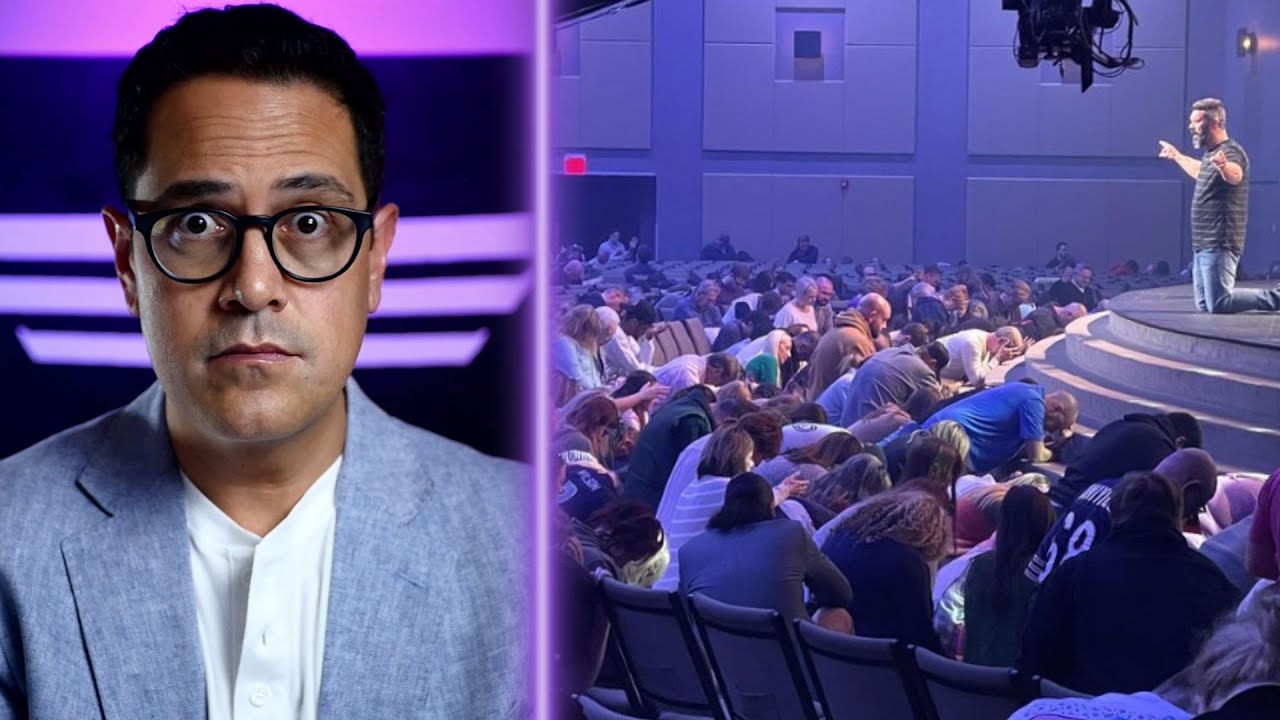
How Do You Think about the Verse "For You are Dust and To Dust You Shall Return"?

This verse is often associated with Ash Wednesday, which is a somber day of remembering our frailty and sinfulness. However, I’ve always found it paradoxically comforting.

“For we do not have a high priest who is unable to empathize with our weaknesses, but we have one who has been tempted in every way, just as we are—yet he did not sin” (Heb. 4:15).

Sometimes it’s comforting to reflect on my shared humanity and know that I am not unique in my sin. I was sitting in Ash Wednesday service yesterday listening to my pastor talk about how this day begins a time of honestly reflecting on our mortality and the state of our souls, and instead of feeling dread or anxiety or anything like that, I felt a release of peace. I pondered why that might be, and the answer I’ve come to is that we so often gloss over the reality of death, so confronting it was actually an invitation. We see death in movies or hear about it in the news all the time, but most of us don’t often encounter it regularly in our daily lives. Ash Wednesday and Lent feel like an invitation to grapple with the reality of death and its implications for our souls and eternity in a truthful and meaningful way. It feels like taking my blinders off and shedding my neat little 21st-century American way of viewing the world, often anesthetized to death, mortality, suffering, and inconvenience.

Would love to hear others’ reactions to this verse and the message of Ash Wednesday and Lent!

“Is ‘Ashes to Ashes, Dust to Dust’ in the Bible and What Does it Mean?”

1 Like

I recall the time my mother was terminal and feeling frightened. We had a talk and I said, “You know Mom, David died. So did Moses and Paul and all the heroes of faith we read about. They all died.” She answered that she had never really thought of it that way. “You know who else died? Jesus.” With that she had peace and death was no longer some frightening thing she faced alone, but something we all will face as the many before us have faced. No one looks forward to death but for Christians I think it’s more the dying than the actual death that we fear. And none of us know the when or how which I find to be His mercy.

I have no problem believing that the soul lives forever, and certainly this body won’t. The dust to dust is our body and the ‘who we are’ goes to be with the Lord. You never really know how you will react when your time comes. It’s not something we can rehearse or plan. We will all experience death unless we are of that generation that is raptured. It comforts me to know that our Lord also experienced it.

I was always scared of death. Freaked me out . For a long time i would always check on mom i would make shure she was breathing. And the thought of her not breathing was like fear hitting me. But she was always breathing the anxiety went away. One of the biggest fears in my life was mom would not be breathing and i would find her dead in her bed. I dont know exactly how he did it but 2 years ago i was on the couch and i heard dad say deb and there was a pause, john somthing is wrong! Debrah is not breathing. He took that from me. And i had peace in knowing who is in charge of life and death. Never shed a tear one. Blows my mind to this day. Somehow i just know.

1 Like

“For everything, there is a season, and a time for every matter under heaven: a time to be born, and a time to die; a time to plant, and a time to pluck up what is planted; a time to kill, and a time to heal; a time to break down, and a time to build up, a time to weep, and a time to laugh; a time to mourn, and a time to dance; a time to cast away stones, and a time to gather stones together; a time to embrace, and a time to refrain from embracing; a time to seek, and a time to lose; a time to keep, and a time to cast away; a time to tear, and a time to sew; a time to keep silence, and a time to speak; a time to love, and a time to hate; a time for war, and a time for peace.” Ecclesiastes 3:1-8

Read that one part again. “A time to be born, and a time to die.” In other words, death will come. There is an appointed time. We all must face our immortality in this temporal world. I truly believe that we fear this because of uncertainty. We fear what comes next. However, we do not have to. Why? Jesus tells us what comes next.

“Let not your hearts be troubled. Believe in God; believe also in me. In my Father’s house, there are many rooms. If it were not so, would I have told you that I am going to prepare a place for you? And if I go and prepare a place for you, I will come again and will take you to myself, that is where I am, and you may be also. And you know the way to where I am going.” John 14:1-3

I want you to think about this. “He that overcometh shall inherit all things, and I will be his God, and he shall be my son.” And “And God shall wipe away all tears from their eyes; and there shall be no more death, neither sorrow, nor crying, neither shall there be any more pain: for the former things are passed away.” Imagine that. It is a far better place to go than the one where we live. A place where God Himself will wipe away our tears. A place where there will be no more sorrow, pain, sickness, or death itself.

We are children of God.

“The Spirit himself bears witness with our spirit that we are children of God, and if children, then heirs–heirs of God and fellow heirs with Christ, provided we suffer with him so that we may also be glorified with him.” Romans 8:16-17

Only then can you be called a child of God. Only then can you be free from the fear of death, because it is at that moment that you will understand that your destination after leaving this earth is far better than what you are leaving behind.

Death is not to be feared. Dare I say, to me, it is something to actually look forward to. Think about it. You life ends here, and you wake up standing before God, and hopefully, He says
”Well done, good and faithful servant. You have been faithful over a little; I will set you over much. Enter into the joy of your master.’” Matthew 25:21

Peter

1 Like

1 Like

That was a very helpful thing to say to comfort your mom. And very true!

1 Like

Amen.

“O death, where is your victory?
O death, where is your sting?

The sting of death is sin, and the power of sin is the law. But thanks be to God, who gives us the victory through our Lord Jesus Christ" (1 Cor. 15:55-57).

1 Like

We are to “die” daily to “Self” @Hungry

Jesus states it first in terms of discipleship.

Matthew 16:24–25[1]

“To deny himself” translates ἀπαρνησάσθω, to disown or renounce. It is not mild self improvement. It is repudiation of autonomous authority. “Take up his cross” invokes execution imagery, a public surrender of life. Paradoxically, losing life for Christ results in finding true life, which is resurrection life.

Luke expands the scope.

Luke 9:23[2]

“Daily” emphasizes ongoing identification with the crucified Messiah. This is not a single emotional moment. It is sustained reorientation of allegiance.

Paul grounds the concept in union with Christ’s cross.

Galatians 2:20[3]

The verb συνεσταύρωμαι, “I have been crucified with,” is perfect tense, indicating completed action with ongoing effect. The old covenantal self under law condemnation has been executed in Christ. Yet resurrection life animates the believer. Death to self is inseparable from participation in His risen life.

Romans makes this juridical and ontological.

Romans 6:6–7[4]

“Our old man” refers to the former Adamic identity. The crucifixion of Christ is counted as the execution of that dominion. “Freed” translates δεδικαίωται, literally justified from sin’s claim. Death breaks mastery.

Paul continues,

Romans 6:11[5]

“Reckon” is λογίζεσθε, an accounting term. The believer is commanded to count as true what God has accomplished in the cross and resurrection. Death to self is not emotional annihilation, it is covenantal recalculation.

Another decisive statement appears in Galatians.

Galatians 5:24[6]

The “flesh” is the fallen nature in rebellion against God. Crucifixion language again indicates decisive break. The cross is not merely Christ’s historical event, it defines the believer’s identity.

Paul expresses it personally.

1 Corinthians 15:31[7]

In context this refers to continual exposure to death for the gospel, yet it reflects ongoing renunciation of self preservation in service to Christ.

Colossians deepens the union theme.

Colossians 3:3[8]

The aorist indicates completed action. The believer’s former life is considered terminated. The true life is concealed, ασφαλής, secure, in the risen Christ.

Jesus articulates the agricultural metaphor.

John 12:24–25[9]

The grain must die to multiply. “Hateth” is comparative language, meaning to value Christ above self preservation. The pattern mirrors His own death and resurrection.

Finally, the eschatological dimension.

2 Corinthians 4:10–11[10]

The present participation in “the dying” serves a revelatory purpose. Resurrection life becomes visible through weakness. The cross shapes the believer now, the resurrection empowers the believer now, and future bodily resurrection completes the pattern.

In summary, to die to self is not psychological erasure or ascetic hostility toward existence. It is covenantal union with Christ in His crucifixion, judicial release from sin’s dominion, renunciation of autonomous rule, and participation in resurrection life. The cross executes the old man. The resurrection animates the new. Anything less reduces the language to metaphor. Scripture presents it as identity.

No one who has truly “died to self” is in perfect union with Christ Jesus, our great God and Savior brother.

It’s gut check time, what are we doing out here, Christians?

J.

  1. Then said Jesus unto his disciples, If any man will come after me, let him deny himself, and take up his cross, and follow me. For whosoever will save his life shall lose it: and whosoever will lose his life for my sake shall find it. KJV ↩︎

  2. And he said to them all, If any man will come after me, let him deny himself, and take up his cross daily, and follow me. KJV ↩︎

  3. I am crucified with Christ: nevertheless I live; yet not I, but Christ liveth in me: and the life which I now live in the flesh I live by the faith of the Son of God, who loved me, and gave himself for me. KJV ↩︎

  4. Knowing this, that our old man is crucified with him, that the body of sin might be destroyed, that henceforth we should not serve sin. For he that is dead is freed from sin. KJV ↩︎

  5. Likewise reckon ye also yourselves to be dead indeed unto sin, but alive unto God through Jesus Christ our Lord. KJV ↩︎

  6. And they that are Christ’s have crucified the flesh with the affections and lusts. KJV ↩︎

  7. I protest by your rejoicing which I have in Christ Jesus our Lord, I die daily. KJV ↩︎

  8. For ye are dead, and your life is hid with Christ in God. KJV ↩︎

  9. Verily, verily, I say unto you, Except a corn of wheat fall into the ground and die, it abideth alone: but if it die, it bringeth forth much fruit. He that loveth his life shall lose it, and he that hateth his life in this world shall keep it unto life eternal. KJV ↩︎

  10. Always bearing about in the body the dying of the Lord Jesus, that the life also of Jesus might be made manifest in our body. For we which live are alway delivered unto death for Jesus’ sake, that the life also of Jesus might be made manifest in our mortal flesh. KJV ↩︎

1 Like

Good job brother you can preach to me anytime. Ecc 3:1-8. I had never read that before. My new favorit scripture! K8nda puts things in perspective. Im getting my bible.

1 Like

That was beautiful put tears in my eyes.

That was God. Talking directly to you for a purpose. Seek that purpose.

Peter

This is all I got:

Bless the LORD, O my soul; And all that is within me, bless His holy name!
Bless the LORD, O my soul, And forget not all His benefits:
Who forgives all your iniquities, Who heals all your diseases,
Who redeems your life from destruction, Who crowns you with lovingkindness and tender mercies,
Who satisfies your mouth with good things, So that your youth is renewed like the eagle’s.
The LORD executes righteousness And justice for all who are oppressed.
He made known His ways to Moses, His acts to the children of Israel.
The LORD is merciful and gracious, Slow to anger, and abounding in mercy.
He will not always strive with us, Nor will He keep His anger forever.
He has not dealt with us according to our sins, Nor punished us according to our iniquities.
For as the heavens are high above the earth, So great is His mercy toward those who fear Him;
As far as the east is from the west, So far has He removed our transgressions from us.
As a father pities his children, So the LORD pities those who fear Him.
For He knows our frame; He remembers that we are dust.
(Psalm 103:1-14 )

2 Likes

I already have my purpose and it is god who wrote it there. In my begining. so i never have to seek with my mind. For it will all be revealed unto me in his time.

Haha thanks for the laugh. I think one of the most amazing things about the Christian life and the story of the cross is that in the face of death and sin, God made a way for us to be reconciled, and astoundingly, we can now laugh in the face of death. Not in a smug or flippant way, but because we can be certain of a future when God will ultimately crush death and there will be no more sorrow or grief.

Psalm 103 is such a good one. My pastor actually quoted from that on Ash Wednesday as well.