The heart of the gospel.
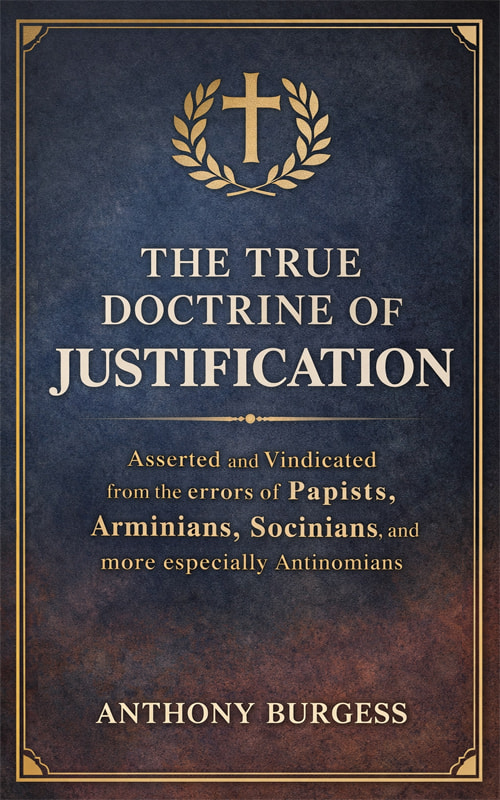
“The True Doctrine of Justification: Asserted and Vindicated from the Errors of Papists, Arminians, Socinians, and More Especially Antinomians” by Anthony Burgess stands as a robust defense and detailed exposition of the classical Protestant doctrine of justification by faith alone. Written during a time of significant theological conflict, Burgess’s work aims to clarify and defend the doctrine that was crucial to the Protestant Reformation and remains central to Reformed theology.
In his comprehensive treatise, Burgess meticulously dissects the multiple errors that had infiltrated the church’s understanding of justification, such as the Roman Catholic reliance on sacraments and works, the Arminian emphasis on human cooperation with divine grace, and the Antinomian rejection of the law’s role in the life of a believer. Each of these, Burgess argues, detracts from the sufficiency of Christ’s atoning sacrifice and the assurance it is meant to provide believers.
Burgess uses Scripture extensively to argue that justification involves both the imputation of Christ’s righteousness to the believer and the full remission of sins—themes he elaborates through careful biblical exegesis and theological reasoning. His goal is to present a balanced view that maintains the necessity of faith and repentance without falling into the trap of legalism or license.
This book is particularly notable for its depth and the rigor of its argumentation. Burgess not only addresses theological errors but also pastoral concerns, providing a guide that helps believers understand and appreciate the profound relief and joy that come from being justified by faith. His work is a valuable resource for theologians, pastors, and any serious student of theology seeking to understand the historical and biblical foundations of this pivotal Christian doctrine. It is especially relevant for those interested in the interplay between Reformation theology and contemporary challenges to orthodox Christian beliefs.
900 pages
Anthony Burgess was a prominent Puritan divine and scholar of the 17th century, noted for his erudite theological writings and deep commitment to the principles of the Reformation. Born in 1600 in Watford, Hertfordshire, Burgess attended St. John’s College, Cambridge, where he excelled in his studies and later became a fellow. He served as a vicar in Sutton Coldfield and was actively involved in the Westminster Assembly, where he participated in debates concerning church governance and doctrine, demonstrating his theological acumen.
Burgess was highly regarded among his contemporaries for his profound understanding of Scripture and his ability to articulate complex theological ideas with clarity and conviction. His works, including “Vindiciae Legis,” a defense of the moral law, and “Spiritual Refining,” a series of sermons on theological virtues, were widely esteemed not only for their scholarly merit but also for their practical application to Christian living. His writings contributed significantly to Puritan theology and were influential in shaping Protestant thought beyond his own time.
Throughout his career, Burgess was known for his staunch defense of Reformed orthodoxy, particularly on the doctrine of justification, which he expounded upon in his work “The True Doctrine of Justification.” His works were celebrated for their meticulous scholarship and pastoral sensitivity, earning him a reputation as a key figure in the Puritan movement. His legacy continues to be recognized in theological studies, where his works are cited for their doctrinal precision and their role in the development of Protestant theological thought.
J.