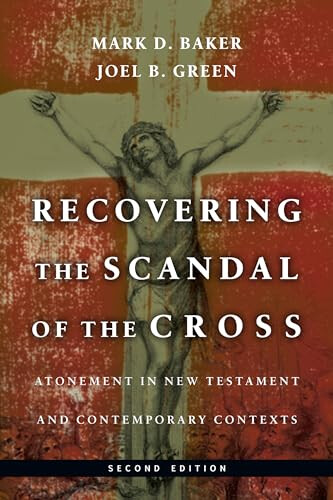
What is the doctrine of penal substitution?

In the simplest possible terms, the biblical doctrine of penal substitution holds that Jesus’ sacrifice on the cross takes the place of the punishment we ought to suffer for our sins. As a result, God’s justice is satisfied, and those who accept Christ can be forgiven and reconciled to God.

The word penal means “related to punishment for offenses,” and substitution means “the act of a person taking the place of another.” So, penal substitution is the act of a person taking the punishment for someone else’s offenses. In Christian theology, Jesus Christ is the Substitute, and the punishment He took (at the cross) was ours, based on our sin (1 Peter 2:24).

According to the doctrine of penal substitution, God’s perfect justice demands some form of atonement for sin. Humanity is depraved, to such an extent that we are spiritually dead and incapable of atoning for sin in any way (Ephesians 2:1). Penal substitution means Jesus’ death on the cross propitiated, or satisfied, God’s requirement for justice. God’s mercy allows Jesus to take the punishment we deserve for our sins. As a result, Jesus’ sacrifice serves as a substitute for anyone who accepts it. In a very direct sense, Jesus is exchanged for us as the recipient of sin’s penalty.

Penal substitution is clearly taught by the Bible. In fact, much of what God did prior to Jesus’ ministry was to foreshadow this concept and present it as the purpose of the Messiah. In Genesis 3:21, God uses animal skins to cover the naked Adam and Eve. This is the first reference to a death (in this case, an animal’s) being used to cover (atone for) sin. In Exodus 12:13, God’s Spirit “passes over” the homes that are covered (atoned) by the blood of the sacrifice. God requires blood for atonement in Exodus 29:41–42. The description of Messiah in Isaiah 53:4–6 says His suffering is meant to heal our wounds. The fact that the Messiah was to be “crushed for our iniquities” (verse 5) is a direct reference to penal substitution.

During and after Jesus’ ministry, penal substitution is further clarified. Jesus claims to be the “good shepherd” who lays down His life for the sheep in John 10:10. Paul, in Romans 3:25–26, explains that we have the righteousness of Christ because of the sacrifice of Christ. In 2 Corinthians 5:21, he says that the sinless Christ took on our sins. Hebrews 9:26 says that our sins were removed by the sacrifice of Christ. First Peter 3:18 plainly teaches that the righteous was substituted for the unrighteous.

There are quite a few different theories about how, exactly, Christ’s sacrifice frees us from the penalty of sin. Penal substitution is the most logically and biblically sound view.

In case you wonder, I firmly hold to Penal substitution.

J.

“For He made Him who knew no sin to be sin for us, that we might become the righteousness of God in Him.” 2 Cor 5:21

And then there is Isaiah 53. I would genuinely enjoy asking you a few follow up questions about it, @Bestill. At the same time, I know that you prefer not to have too many questions directed your way, and I respect that.

Shalom.

J.

What you wrote made me think of this verse, so I posted it. I don’t mind sincere questions.

Ever heard of Penal substitutionary Atonement and how do you understand this in light of Isaiah 53?
A sincere question.

Johann.

The term ‘penal substitutionary atonement’ is not something that floats around in my vocabulary, but from your explanation it is what I believe. The wages of sin is death, and Jesus received that wage. I have no doubt that Jesus died the death that was owed to me. Having paid for my sin, my sin is now paid for. No double jeopardy. Salvation is by believing and accepting what He did for me. Otherwise I’m still held accountable for my sin.

Isaiah 53 also confirms this and more. “The Lord has laid on Him the iniquity of us all.” It was my iniquity, my sin, and it was taken from me and put on Him. When my sin was placed on Him, He then died the death those sins deserved. He did this so I could be set free from the penalty and go from a death sentence to life. It was all by His grace and motivated by His love.

And its not just me He did this for. “For God so loved the world…” Like any gift, the gift is given and the gift also has to be received. What good is a gift if the person its given to refuses to receive it? Before you can receive, you need to believe in the Giver. Once you believe in the Giver you will realize the magnitude grace that’s found in the gift. You take it on yourself with gratitude and that transaction results in salvation.

Correct @Bestill.

The language of “receiving Christ” is explicitly biblical and is tied in the New Testament to faith rather than to a human work or transaction that merits salvation. In Johannine theology the act of receiving is grammatically and conceptually equated with believing.

~John 1:12

“But to all who did receive him, who believed in his name, he gave the right to become children of God.”[1]

I write these things to you who believe in the name of the Son of God, that you may know that you have eternal life.

The verse contains two parallel verbal expressions that interpret one another. The verb λαμβάνω (lambanō) means to receive, take, or welcome. John then immediately explains what that reception means with the participle τοῖς πιστεύουσιν (tois pisteuousin), those believing. In other words receiving Christ is not a separate action beyond faith but the personal appropriation of Christ through πιστεύω (pisteuō), to believe or trust.

The Gospel then clarifies the object and content of that faith.

~John 3:16 bxRom. 5:8; Eph. 2:4; 2 Thess. 2:16; 1 John 3:1; 4:9, 10

“For God so loved the world, that he gave his only Son, that whoever believes in him should not perish but have eternal life.”[2]

The salvific act is grounded in the giving of the Son by the Father. The verb δίδωμι (didōmi) emphasizes divine initiative. The human response is expressed by πιστεύων εἰς αὐτόν, believing into him, a construction that conveys reliance and personal trust directed toward Christ.

Paul articulates the same reception using the language of faith directed toward the risen Lord.

~Romans 10:9–10 xMatt. 10:32; Luke 12:8; [1 Cor. 12:3; Phil. 2:11] Acts 16:31

“Because, if you confess with your mouth that Jesus is Lord and believe in your heart that God raised him from the dead, you will be saved.”[3]

The internal element is καρδίᾳ πιστεύεται, believing with the heart. The outward expression is confession of Jesus as Lord. The resurrection is central because the cross accomplishes atonement and the resurrection vindicates the saving work of Christ.

Paul also uses reception language directly in his instruction to the churches.

~Colossians 2:6 vch. 1:10; 1 Thess. 4:1

“Therefore, as you received Christ Jesus the Lord, so walk in him.”[4]

The verb παρελάβετε (parelabete) again carries the sense of receiving or accepting. In context it refers to the initial moment of faith by which believers came into union with Christ and entered the sphere of His lordship.

It is therefore correct to say that salvation is a gift given by God in Christ.

~Romans 6:23 [ch. 2:7]; See ch. 5:12

“For the wages of sin is death, but the free gift of God is eternal life in Christ Jesus our Lord.”[5]

The noun χάρισμα (charisma) denotes a gracious gift. Salvation is not earned but granted through divine grace because of Christ’s obedient life, His atoning death on the cross, and His victorious resurrection.

Yet Scripture also clarifies that the ability to receive Christ ultimately arises from God’s regenerating work.

~John 6:44 ch. 12:32; Jer. 31:3; Hos. 11:4; [ver. 65; ch. 4:23]

The Father who sent me draws him. The author never specifically explains what this “drawing” consists of. It is evidently some kind of attraction; whether it is binding and irresistible or not is not mentioned. But there does seem to be a parallel with 6:65, where Jesus says that no one is able to come to him unless the Father has allowed it. This apparently parallels the use of Isaiah by John to reflect the spiritual blindness of the Jewish leaders (see the quotations from Isaiah in John 9:41 and 12:39-40).

“No one can come to me unless the Father who sent me draws him.”[6]

The verb δύναται (dunatai) expresses ability. Apart from divine drawing the human heart does not come to Christ. This is why the new birth precedes and enables genuine faith. Many don’t agree here.
~John 3:3

“Truly, truly, I say to you, unless one is born again he cannot see the kingdom of God.”[7]

Therefore receiving Christ in the biblical sense means personally trusting in the crucified and risen Son of God, resting in His righteousness and atoning work rather than one’s own merit. The Father gives the Son. The Son accomplishes redemption through the cross and resurrection. The Spirit grants new birth so that a person believes. Through that faith the believer receives Christ and enters into the salvation that God has graciously given.

Thanks sorella.

J.


  1. But to all who did receive him, who believed in his name, he gave the right to become children of God. - ESV ↩︎

  2. For God so loved the world, that he gave his only Son, that whoever believes in him should not perish but have eternal life. - ESV ↩︎

  3. Because, if you confess with your mouth that Jesus is Lord and believe in your heart that God raised him from the dead, you will be saved. For with the heart one believes and is justified, and with the mouth one confesses and is saved. - ESV ↩︎

  4. Therefore, as you received Christ Jesus the Lord, so walk in him. - ESV ↩︎

  5. For the wages of sin is death, but the free gift of God is eternal life in Christ Jesus our Lord. - ESV ↩︎

  6. No one can come to me unless the Father who sent me draws him. And I will raise him up on the last day. - ESV ↩︎

  7. Truly, truly, I say to you, unless one is born again he cannot see the kingdom of God. - ESV ↩︎