As Christians reflect on faith, history, and power, we invite your voice in Crosswalk Forums. #Constantine#ChurchHistory#christianforums#crosswalkforums#forums#crosswalk#faithcommunity#faithforums
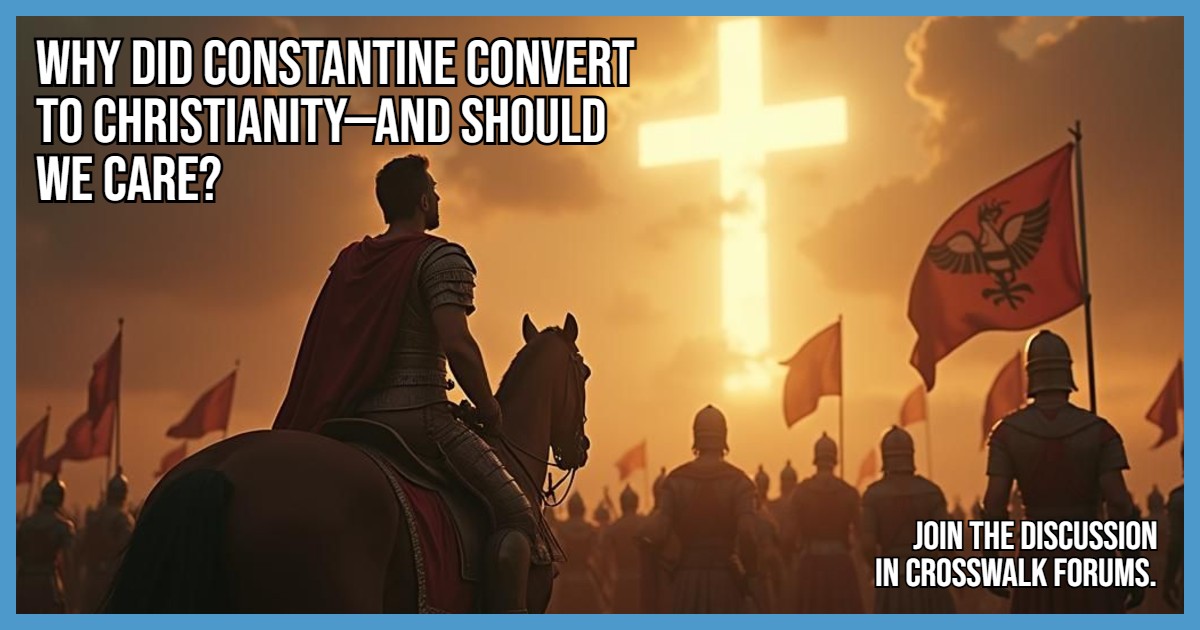
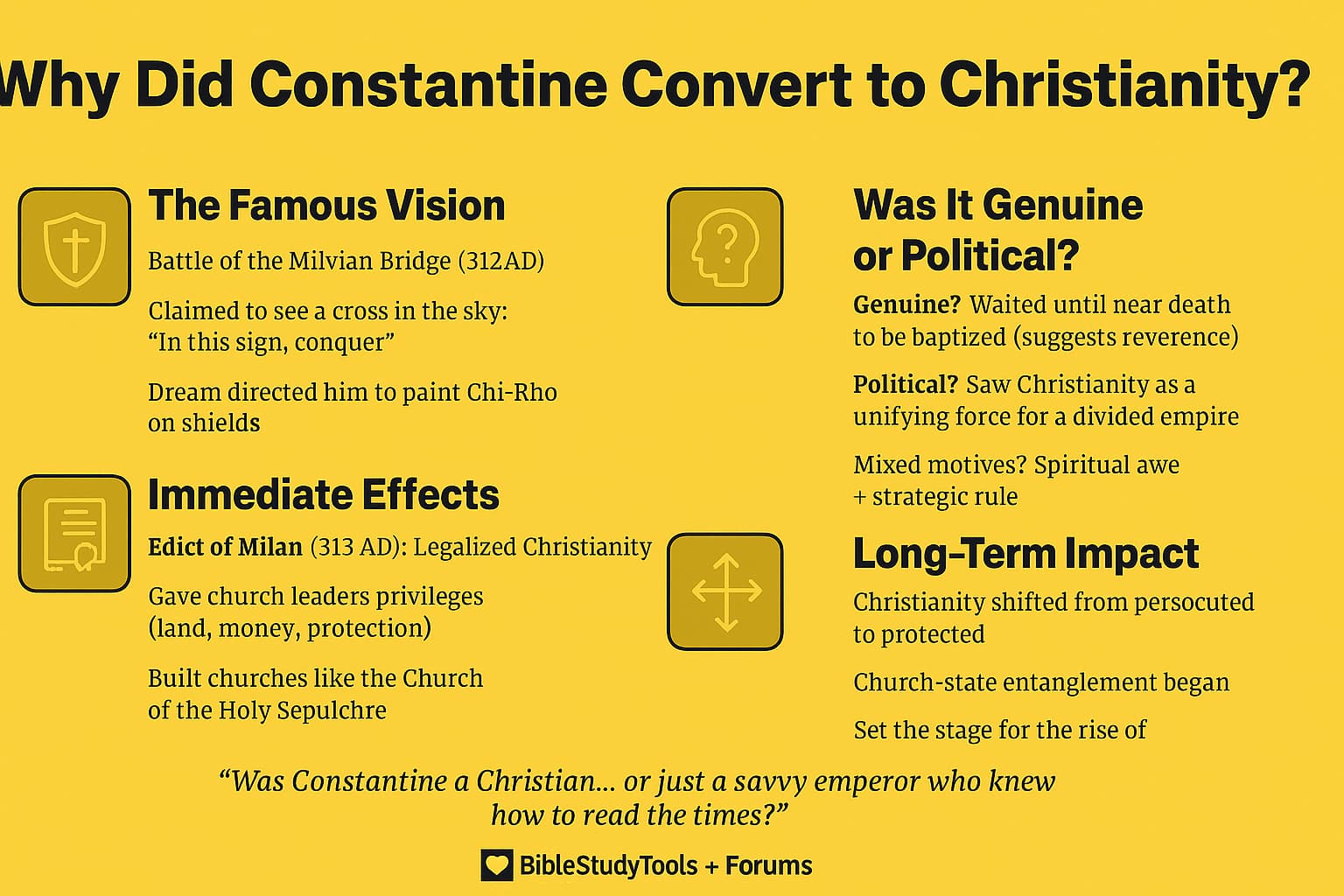
He claimed to see a vision before battle: a cross of light in the sky with the words, “In this sign, conquer.” That moment changed the Roman Empire—and church history—with Emperor Constantine’s reported conversion to Christianity.
But was his faith genuine or political? Did he believe in Jesus as Savior, or did he simply see Christianity as a useful unifying tool for his empire?
Today, we live in a culture where religious professions by leaders still raise eyebrows. Is it ever possible to truly separate faith from politics? And what are the lasting consequences when political power and the church become intertwined?
“Was Constantine a Christian… or just a savvy emperor who knew how to read the times?”
Whether Constantine’s conversion was genuine or politically expedient, the historical consequences remain staggering. But let’s make one thing clear — saving faith is never verified by state decrees, imperial favor, or battlefield visions. It is evidenced by repentance, regeneration, and submission to the risen Christ (Acts 2:38, Romans 10:9). Constantine claimed to see a cross with the words “In this sign, conquer,” but Christ never told His followers to conquer by the sword — He said take up the cross, not wield it. The gospel spreads by blood, yes — but the blood of martyrs, not of armies.
Was Constantine a Christian? Only God knows the heart. But his reign unmistakably blurred the line between church and state, shifting Christianity from a persecuted faith to an imperial institution. That merger brought protection, but also pollution. Suddenly bishops had political clout, church councils got state funding, and theological disputes invited military intervention. Faith became fashionable, and with it came nominalism, compromise, and coercion.
Should we care? Absolutely. Because every generation must learn that the kingdom of God is not built on Caesar’s sword but on Christ’s cross. Whenever the church weds political power, she always bears strange children. Our task is not to speculate about Constantine’s motives but to guard the gospel from becoming a tool of the state. Christ reigns not from Rome, but from a throne that no empire can threaten.