Alright, let’s agree to disagree on this. You’ve known me since June, so you know I don’t argue for the sake of it. Regarding tropos, greek terms, and related ideas, I had actually started writing a post on the topic, but then realised that many people here might find it hard to follow. Still, let me try to explain it now as clearly and precisely as I can.:
Maximus’s doctrine of theosis, deification as the graced hypostatization of human nature in divine life, hinges on an ontology bifurcating physis (nature, the quidditative “what”) from tropos (mode, the existential “how”), a distinction that safeguards created otherness while enabling participatory union. Sin, for Maximus, corrupts not the imago Dei inherent to human physis but its fallen tropos, fracturing the primordial harmony of body-soul-spirit and cosmic polarities (Ambigua 10: “The mode of existence of the nature is one thing, and the nature itself is another. For the mode is the particular realization of the nature in each case, whereas the nature is the common definition of all that belongs to the same species”). The Incarnation rectifies this: the Logos assumes uncorrupted human physis in a deified tropos, inaugurating a “beautiful exchange” wherein “God humanizes through his love for man, and [humanity] divinizes… rendering man God by reason of the divinization of man, and God man by reason of the Incarnation of God” (Ambigua 7).
This exchange posits theosis not as essential identity (tautotēs), averting pantheism, but as energetic communion (koinōnia), where finite humanity participates in infinite divine energies per 2 Peter 1:4, “becoming partakers of the divine nature according to [its] capacity” (Quaestiones ad Thalassium 60).
Philosophically, this navigates the finite-infinite chasm via Neoplatonic exitus-reditus refracted christologically: creation’s procession (proodos) from the Trinitarian Monad diversifies into five primordial divisions (diaireseis), uncreated/created, intelligible/sensible, heaven/earth, paradise/oikoumene, male/female, each imprinted with logoi as participatory archetypes (Ambigua 41: “All existing things are ‘marked by five divisions’”). Humanity, the mikros kosmos, is vocationally ordained to mediate these antinomies, but Adam’s kenōsis, dividing the united, inverts this telos, engendering tropic entropy. Christ’s hypostasis, however, recapitulates (anakephalaiōsis, Eph. 1:10) these fissures: “God became man in order to save lost man, and… united through Himself the natural fissures running through the general nature of the universe… to fulfill the great purpose of God the Father, recapitulating all things, both in heaven and on earth, in Himself” (Ambigua 41, 111). Thus, theosis is cosmogonic: believers, via ascetic praktikē and theōria, reintegrate polarities in Eucharistic anaphora, ascending from self-alienation to Trinitarian perichōrēsis.
Epistemologically, Maximus’s Christocentric gnōsis unfolds triadically, katharsis, theōria physikē, theologia, wherein knowledge is not propositional but theandric, deifying the knower (Ambigua 7: “The Word of God… transforms, and the things which were transformed he deifies… so as to remain and be in their proper mode, and at the same time to be God by participation in grace”). This counters Origenist prelapsarian intellects by grounding cognition in incarnate energeiai, rendering theology an askēsis of virtuous assimilation.
Against the Ecthesis (638) and Typos (648), which posited a singular divine-human will to appease Miaphysites, Maximus insists that will and energy. nhere in physis, not hypostasis: “With the duality of his natures, there are two wills (thelēseis) and two operations (energeiai)” (Opuscula 6). A hypostatic will would forge a “composite” (synthēton) volition, estranging the Son from the Father’s ingeneracy and engendering Trinitarian tetrad: “For either… we melt down the two essential wills… and recast them by composition as one will and one energy… and there is manifest something completely strange and foreign to communion with either the Father or with us” (Opuscula 7).
This dyothelitism, two natural wills in dyadic harmony preserves Trinitarian monarchy: the Son’s human thelēma physikon submits impeccably to divine will sans gnōmē as in Gethsemane: “Let not what I will, but what you will prevail, inasmuch as, being God by nature, he also in his humanity has, as his human volition, the fulfillment of the will of the Father” (Opuscula 6). Christologically, Maximus rehabilitates Dionysius’s “theandric energy” (Ep. 4) as tropic innovation, not fusion: “To put it more clearly, His ‘life among us’ was such that divine and human energy coincided in a single identity” (Ambigua 5). a perichoretic synergy wherein natures interpenetrate without confusion, echoing Chalcedon’s adverbs extended volitionally. Soteriologically, this obviates the unassumed-unhealed axiom’s inversion: absent human will, “the natural property of the flesh is volition” remains unhealed, nullifying theosis (Opuscula 3). Christ’s dyothelitism models synergy, divine initiative empowering human response, against Monothelite determinism or Nestorian schism: “Were Christ to have possessed a gnomic will, he would have been ‘double-minded and double-willed, and fighting against himself… For evil consists in nothing else than this difference of our gnomic will from the divine will’” (Opuscula 3). In the Disputation with Pyrrhus (645), Maximus elicits Pyrrhus’s capitulation by analogizing: as the Trinity’s hypostases share one ousia via natural energies, so Christ’s natures share one hypostasis via dyadic operations, ensuring “how will He be God by nature and man by nature without possessing completely what belongs to each nature in its natural constitution?” (Ambigua 5)
Brother, Scripture remains the sole rule of faith and doctrine, not the abstractions of Maximus or the metaphysics of later Byzantine synthesis. When one leaves the written Word to chase philosophical distinctions such as physis and tropos, the line between biblical revelation and speculative theology blurs. Paul exhorts, “Do not go beyond what is written” (1 Corinthians 4:6), and Peter warns that men twist difficult things “to their own destruction” (2 Peter 3:16).
Let us return to what God has actually revealed, not to what men have imagined.
The Word of God never divides man into ontological layers of “mode” and “nature” to explain sin or salvation. Scripture says plainly, “By one man sin entered into the world, and death through sin” (Romans 5:12). Sin did not merely distort a “mode of existence,” it corrupted the heart (lēb) and the whole nature of man. Genesis 6:5 declares, “Every inclination of the thoughts of his heart was only evil continually.” The Hebrew word lēb does not refer to a metaphysical mode but to the moral and volitional center of man. The problem is not in an existential tropos but in the human will itself that rebelled against God. “The heart is deceitful above all things, and desperately sick” (Jeremiah 17:9). That is Scripture’s anthropology, not the layered ontology of Maximus.
The Incarnation is not described by the apostles as a metaphysical restoration of human “mode” but as a redemptive act. “For Christ also suffered once for sins, the righteous for the unrighteous, to bring you to God” (1 Peter 3:18). Paul interprets the Incarnation not as a healing of an ontological disjunction but as a substitutionary work: “He made Him who knew no sin to be sin for us, so that in Him we might become the righteousness of God” (2 Corinthians 5:21). The verb γινώμεθα (ginōmetha, “might become”) indicates moral and judicial transformation through faith, not ontological participation in divine energeiai. It is by grace through faith that man is united with Christ (Ephesians 2:8), not through metaphysical energies but through the Spirit who regenerates and sanctifies.
The Orthodox appeal to 2 Peter 1:4, “that you may become partakers of the divine nature,” must be read in its grammatical and contextual sense. The Greek phrase κοινωνοὶ θείας φύσεως (koinōnoi theias physeōs) does not mean becoming divine in essence, nor does it refer to participation in uncreated energies. The context explains it: “having escaped from the corruption that is in the world through lust.” Participation in the divine nature means moral conformity and fellowship through the indwelling Spirit, not metaphysical absorption. The Hebrew concept of holiness, qadosh, means separation unto God, not infusion of essence. God communicates His righteousness, not His being. We are transformed in likeness, not in substance (Romans 8:29, “conformed to the image of His Son”).
The doctrine of divine “energies” is foreign to the apostolic witness. Scripture never speaks of uncreated activities emanating from God as distinct from His essence. The biblical writers use energeia (ἐνέργεια) to describe God’s power at work, not as an eternal category distinct from His being. Ephesians 1:19–20 says God’s energeia is “the working of His mighty strength which He wrought in Christ when He raised Him from the dead.” Here the word energeia denotes divine power in action, not a separate ontological sphere. It is an expression of His will, not an uncreated emanation we can participate in. The same term is used of Satan’s counterfeit power in 2 Thessalonians 2:9, showing that the concept is functional, not metaphysical.
As for Christ’s will and energy, Scripture testifies simply that “He learned obedience through what He suffered” (Hebrews 5:8). The Greek verb ἔμαθεν (emathen, “He learned”) and ὑπήκοος (hupēkoos, “obedient”) emphasize His full human submission, not a metaphysical harmony of dual energies. The apostolic emphasis is ethical and redemptive, not ontological. Christ’s obedience undid Adam’s rebellion (Romans 5:19), restoring the relationship between God and man by atonement, not by the healing of a “mode.”
In short, your appeal to Maximus’s categories of physis and tropos, and to uncreated energies, builds a metaphysical edifice the apostles never erected.
Scripture grounds our union with God in faith, repentance, and the indwelling Spirit, not in participation in divine activities. The new man is “created according to God in righteousness and true holiness” (Ephesians 4:24), not through energetic communion but through regeneration by the Spirit (Titus 3:5).
Let us not substitute Neoplatonic metaphysics for the plain teaching of the Word. “Sanctify them by Thy truth, Thy word is truth” (John 17:17). The apostles never speculated on divine logoi or tropos, they preached Christ crucified, risen, and returning, the power (dunamis) and wisdom (sophia) of God.
Thanks.
J.
Neither do I accept, not even for a moment, the risk of reducing salvation to a shallow legal transaction stripped of its transformative depth.
Not a single bit
Sam
Moving on @Agnes:
Maximus presents Christology as a deeply structured system where each part of Christ’s person safeguards both divine and human reality. By “patristic signature,” he means that Christology is firmly rooted in the teachings of earlier Church Fathers, synthesizing insights from Gregory Nazianzen, Cyril of Alexandria, and Dionysius the Areopagite. Maximus does not create a new theology from scratch; he interprets and harmonizes prior authoritative voices to clarify Christ’s nature.
The Incarnational signature emphasizes that Christ assumes the full human nature, including body, soul, mind, and will. This is essential because, as Maximus says, “what is not assumed is not healed.” Only by taking on everything that makes us human can Christ fully restore and deify humanity. Maximus expands this into what he calls “three incarnations”: the Word as flesh distinct from sinners, the Word manifest in creation (the logoi), and the Word expressed in language or revelation. He adds a fourth dimension in virtuous believers, who embody the Word through their lives. This illustrates that the Incarnation is not a one-time historical event but a dynamic, ongoing participation in God’s plan for human restoration.
The composite signature concerns how the divine and human natures coexist in Christ. Maximus explains that these two natures are united in a hypostasis through perichoresis, meaning they interpenetrate without mixing or losing their distinct properties. The dyothelite principle, that Christ has two natural wills, and dyenergism, that He has two corresponding operations, safeguards this unity. These ensure that Christ’s humanity is complete and active, while His divinity remains fully divine. Without this careful balance, heresies like Monothelitism could distort the understanding of Christ’s person and the work of salvation.
The cosmic signature situates Christ’s Incarnation within the larger context of creation. Christ’s descent restores the unity fractured by Adam’s primordial sin. Humanity, as a microcosm, participates in this restoration, and liturgical and mystical practices reflect this cosmic reconciliation. The Incarnation is thus not just about individual salvation but about healing the entire creation, aligning it with God’s original design and ultimate purpose.
Maximus shows that the question of Christ’s wills is not just about Christology; it touches the whole structure of salvation and the very life of the Trinity. If Christ did not have both a divine and a human will working together in perfect harmony, then the unity between God and humanity would be broken before it even began. Dyothelitism, the teaching that Christ has two natural wills and two natural energies, protects this mystery from falling apart.
Here’s why: if Christ lacked a human will, then humanity would remain unhealed and untransformed. Salvation is not magic done to us from outside; it is God entering into the depths of human condition, even our will, the most intimate seat of our freedom, and healing it from within. By freely aligning His human will with the Father’s divine will, Christ restores our capacity to will the good without destroying our freedom. That is why salvation must be participatory: because healing occurs not by erasing our will but by transforming it so that it cooperates with divine grace.
At the same time, dyothelitism safeguards the unity of Christ’s persons. It shows that divine and human actions in Christ are neither mixed nor confused, nor are they in conflict. Instead, they work together in perfect synergy, the divine acting through the human, the human lifted by the divine, concurring, as the Council says: “for the salvation of the human race.” This synergy mirrors the life of the Trinity itself: the Father, Son and Spirit act as one, yet without confusion of their persons. Likewise in Christ, two wills, two operations act as one salvific movement without dissolving into each other.
Passive rebellion on full display.
No problem.
J.
What exactly is the gnomic will… @Johann, could you explain please?
Thank you so much for your help. It was amazing learning from you brother @Samuel_23.
Wow…
See @ILOVECHRIST, hear from me too…
The natural will is not a faculty we choose; it is the inherent inclination of our nature toward the good, and yes ,that humanity was created to speak to God. The gnomic will, by contrast arises only in the fallen state: it is the deliberative, wavering faculty that must decide between good and evil, because our original orientation has been fractured.
Christ, as St. Maximus says, has no gnomic will, for in Him the human will is never in tension with the divine. His human thelēsis is always perfectly aligned with the will of the Father. And precisely, because He assumes the natural will, the deepest motion of our nature and heals it from within, He makes possible our own restoration. Salvation is not God coercing our will from outside but healing it from within, so that, in synergy, divine grace, and human freedom work together without confusion or opposition.
This brings four questions…
-
Did Adam have a gnomic will at creation, before eating the fruit?
Yes, Adam had gnomic will, which is the deliberative, reflective aspect of human choice, the “I consider, I decide”. Before the Fall, Adam’s gnomic will was fully aligned with God’s will. It was operative, but it did not produce disorder because Adam’s nature and mode were harmonious. He could deliberate and choose freely, yet he would not have chosen evil, because his heart and mind were oriented perfectly toward God.
Then why did Adam eat the fruit?
Lemme guess…
Prelapsarian freedom…
Before the Fall, Adam did have freedom, including the ability to choose contrary to God, but his gnomic will was aligned perfectly, so in principle, he would not have chosen evil. The choice to eat the fruit, then, represents the actual exercise of freedom, in a moment of real testing.
Freedom is relational, not mechanical. Adam’s freedom was real precisely because he could choose either way. The fact that his heart and mind were oriented toward God made obedience natural, but not inevitable. He had to actively choose to trust and obey. The alignment of his nature with God does not remove the reality of choice; it means that choosing good is natural and fulfilling.
The Fall introduces a rupture in orientation. When Adam ate it, it was an exercise of his gnomic will that misaligned his mode from his created nature. The decision was a deliberate rebellion, not a mechanical necessity. His essence (human nature as created in God’s image) remained, but the mode, the way he enacted his nature was fractured. This is exactly what Maxmus highlights, sin damages the mode, not the essence.
Why didn’t God make the mode perfect from the start?
Theologically, it would eliminate true freedom. God desired humans to freely love and obey him, not be robots.
If Adam had no real possibility to rebel, his obedience would be compulsory, not relational. God wanted humans to participate in goodness, not just be perfect by decree.
The Incarnation demonstrates how God honors freedom while healing the fractures introduced by sin. By becoming human in Christ, He restores the mode without coercion, allowing humans to freely participate in divine life in a way Adam never could.
Why rebellion won’t happen after the Second Coming?
After the Second Coming, humanity’s mode, the way we enact our nature, will be fully transformed and perfected. Our essence remains human, but our faculties, desires, and inclinations will be fully aligned with God’s will. This is not a forced alignment; it is the natural outcome of our hearts being perfectly oriented toward God.
When God created Adam, his essence (physis) and mode (tropos) were fully aligned. Adam could freely choose, but his heart and mind were oriented perfectly toward God. This is why he could deliberate and choose, but before the Fall, choosing evil was not a real possibility, because his mode was rightly disposed. -
How is Jesus able to avoid Gnomic will?
Christ, in His human nature, did not have Gnomic will, in the fallen sense. The gnomic will arises when there is a deliberative due to uncertainty, tension or conflict between desires. Because Jesus’ human nature was unfallen and His divine-human union perfect. His human will (the natural will) was already fully aligned with the divine will. There was no need of deliberation, hesitation or internal struggle that characterises the gnomic will. Hence, He acted perfectly in freedom without any gnomic reflection or hesitation about doing the good. -
After the sacrifice of Christ, do we have gnomic will?
Yes, humans have gnomic will, as I said before, our mdoes are not yet fully healed or transformed. We can deliberate and sometimes choose against God because sin has left our modes wounded. The Incarnation and sacrifice of Christ heals the ontological fracture in principle, that the human nature is restored in its essence, but the full transformation of our mode and faculties is progressive. Humans are freed to cooperate with God’s grace, but gnomic will persists as part of our experiential, ethical freedom. -
After the Second coming, do we have gnomic will?
No, in the eschaton, when our mdoes are fully perfected, and our faculties aligned with God, gnomic will creases to oeprate. Deliberation due to uncertainty or inner conflict is no longer needed because our hearts, minds and wills are fully transfigured by grace. We remain fully human, retaining our essence, but our human will is now perfectly harmonzied with God. We act freely but rebellion or hesitation is impossible, not because our freedom is taken away, but because our perfected mode is oriented entirely toward the divine will.
God did not preemptively transform Adam’s mode to “force” obedience, because genuine love and relationship require real freedom. If Adam’s mode had been fixed to only do good, his obedience would not have been free, and love without freedom is not relational, it is mere programming.
When Adam sinned, the fracture occurred in his mode. His nature remained essentially human and still bore the image of God, but the mode, the way he enacted that nature, was corrupted. His body, mind, will, and soul were no longer harmonized; disordered desires entered, and the capacity to freely choose evil now existed.
Why wasnt the mode immediately transformed back?
Because God respects the interplay between freedom and restoration. Transformation of the mode requires divine intervention through the Incarnation and the redeptive work of Christ which allows humans to participate in divine life without coercion.
God could heal the mode, but if He had done so without Christ’s incarnation, it would bypass the relational, participatory, and nature of salvation
So why was Incarnation necessary?
The Incarnation was necessary, because the restoration of human mode is not just about fixing behaviour, it is about healing the way humanity exists in its fulness, so that humans can freely participate in God’s life without losing their identity.
God could have commanded perfection, but that would bypass true freedom and relational love. Human would be perfected in a mechanical sense, but they would not have authentic, cooperative participation in their own healing. The Incarnation allows God to enter human nature Himself, assume it fully, and through Christ’s life, death and resurrection, model and actualise the perfected mode.
By doing so:
- Christ restores human mode from within, not from outside, showing how human nature can be fully aligned with God’s will while retaining freedom.
- Humanity can now participate in God’s energies, experience theosis, and be transformed relationally and ontologically.
- It preserves true freedom, ebcause humans are drawn into alignment with God by grace and love, not by coercion.
The Incarnation is necessary because only God entering humanity fully can heal the fractured mode in a way that preserves freedom, relational love, and participatory union.
Anyways, @Agnes, I love that you are finding the session informative. Step by step, we will continue to move forward. I guess today you’ve learned a lot. Tomorrow, we will discuss St. Basil the Great.
@Samuel_23 , today I finally brought up all the questions I’ve carried with me for 4–5 years. Back in the day, they used to weigh me down so much that I sometimes thought about stepping away from my faith. Living in Australia, I didn’t have easy access to answers, and I often felt frustrated and alone with these doubts. But this year, and especially today, the way you patiently explained everything step by step, it was like a light switched on. Every lingering question I had has been properly answered. I feel a peace I haven’t felt in years, a weight lifted from my heart, and a happiness that’s hard to put into words. I realize now how much I still have to learn, and I feel inspired to keep growing in faith.
I was thinking of going offline for now, but it wouldn’t feel right if I didn’t first appreciate the hard work you’ve put in.
Do you have any doubts or questions about the posts I made earlier on St. Gregory the Theologian or St. John Chrysostom?
Yep, got a couple of doubts about the St. Gregory and St. John Chrysostom posts, but honestly, today’s lesson was wayyy heavy already. I’m totally knackered, and I’m surprised you still have the energy to talk about this stuff now! 
Since you personally know ilovechrist user (I can’t share his name without permission), he’ll add you to our group. Yeah, we actually made one, Once you’re in, we can have longer discussions, like we had in meet. For now, I think after you reach level 1, you’ll unlock more features, but I guess that will happen soon.
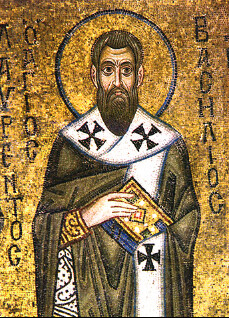
Ontological Foundations: Essence, Hypostasis, and Participatory Communion
Basil’s ontology pivots on a nuanced bifurcation of essence (ousia, the shared divine, “what”, immutable, simple and transcendent), from hypostasis (the particular “who”, the Father’s unbeggoten monarchy, Son’s eternal generation as radiant Image [Col 1:15], Spirit’s procession as vivifying bond), a framework that averts Arian polytheism while precluding Sabellian conflation. In Letter 236 (to Amphilochius), he elucidates:
“The distinction between essence and hypostasis is the same as that between the general and the particular… They are of the same essence, so as not to introduce a difference of nature, but they are different in hypostasis, so as to preserve unconfused conceptions.”
This dyadic logic, refined from Athanasius’s homoousious and Nyssen’s prosopa, posits the Trinity as archetypal fellowship: three hypostases in perichoretic unity, where relational idioms, like unbegotten, begotten and proceeding, denote eternal processions sans temporal succession or essential partition. The Father’s causality (as source) grounds monarchy, yet equality reigns:
“The Spirit is with the Father, and the Son, not as a third person, but completing the Trinity” (On the Holy Spirit 18.45)
Ontologically, this Trinitarian prototype irradiates creation:
beings participate in divine energies per capacity, their essence imprinted with divine rational principles (logoi) as participatory vestiges, Ps 104:30’s Spirit-animated cosmos.
Soteriologically, such participation effects deification:
humanity married by sin’s tropic disorder yet retaining the divine image ascends through graced synergy, divine initiative empowering human response toward hypostatic likeness. Basil’s homily on Psalm 1 frames salvation as ethical transfiguration:
virtues like almsgiving and fasting recapitulate Trinitarian kenosis, purging passions to unveil the soul’s contemplative core.
"The Christian ought to be like a bee, extracting sweetness from every flower, " he analogises, blending Aristotelian teleology, essence oriented to act, with Platonic anagogy where knowledge of God unfolds triadically:
moral praxis illuminates Scriptures, yielding contemplative vision of uncreated light (On the Holy Spirit 9.23).
This avoids Origenist universal restoration by emphasising voluntary cooperation, as grace suffices yet invites freedom, as "God has given us free will…that we might become sons of God by choice (Homily on Psalm 48).
Pneumatological and Cosmological Interweavings
Basil’s pnumatology, the capstone of his Trinitarian, elevates the holy Spirit from an Arian ministerial spirit to a hypostatic coequal in On the Holy Spirit, a treatise masquerading as a letter to evade imperial censure. Against Pneumatomachi (Spirit-fighters) he marshals doxological tradition, baptismal formula (“In the name of the Father, Son and Holy Spirit” Matt 28:19), and eucharistic prepositions (“with the Son together with the Holy Spirit”) as apostolic norm:
“We glorify the Father, we are brought to the Son, we are united in the Holy Spirit” (15.38)
The Spirit’s procession “from the Father through the Son” (a nuance fueling Filioque debates) ensures soteriological plentitude: as sactifier, the Spirit deifies by indwelling, perfecting the Son’s redemptive mediation, and Father’s creative monarchy.
Absent this, baptism becomes a dyadic rite, severing illumination: “Through the Spirit, we acquire knowledge of the Son…and through both we attain the Father”.
Pneumatologically, theosis is a Trinitarian economy: The Spirit’s energies vivify virtues..
Comsologically, the Haxaemeron unveils Gen 1 as a participatory hymn:
creation’s six days symobilze ascent from chaos to Sabbath rest, matter not platonic shadow, but divine artefact ordered by logoi for theoria
The firmament divides waters above and below, analogizes soul’s purification, separating sensible dross from intelligible purity; humanity as microcosm, crowns this as priestly mediator, tilling earth in Trinitarian likeness. Sin inverts teleology, passions fragment harmony, but incarnation restores:
The Son’s descent divinises ascent, with Spirit as “hovering” animator.
Basil’s asceticism operationalises this. Longer Rules (55 questions) envisions cenobitic life as a Trinitarian school, poverty mirrors Father’s transcendence, obedience the Son’s submission, labour the Spirit’s indwelling, fostering apatheia as prelude to deification: “The monk is one who has crucifed the world, that he may live to God” (Shorter Rules 2). Ecclesiology ensures, synodality as hypostatic plurality in essential unity, bishops as stewards of mysteries amid Arian Schisms.
Polemical Resolutions
Basil’s Against Eunomius, a dialectical magnum opus, counters Anomoian (dissimilar essence) rationalism, Eunomius’s claim that unbegotten exhausts divine essence, rendering the Son, a begotten creature, with apophatic restraint, essence eludes categorical grasp, as “we speak of God ‘from his operations’ not from his essence” (Book I.14) Eunomius’s Aristotelian univocity fractures Trinity into hierarchy; Basil retorts analogically: “generate” denotes hypostatic relation, not essential defect, as radiance proceeds from light timelessly (Book II.15). Soteriologically, Arian Subordinationism nullifies homoousios: a created Son cannot deify, severing participatory chain, “If the Son is not of the same essence, how shalle we becomes sons?”.
@Agnes, I created this post for general reading. I know some terms might be unfamiliar, but I introduced them so you can explore on your own and ask me questions. This way, we can dive deeper together.
@Agnes, in simple words
Basil’s understanding of God rests on a subtle but crucial distinction between essence and hypostasis. Essence is what of God, the unchanging, simple, transcendent divine reality. Hypostasis is the who, the particular personhood of the Father, Son and Holy Spirit. By distinguishing these, Basil preserves both divine unity and personal distinction, avoiding the extremes of Arianism, which diminishes the Son and Sabellianism, which erases the distinction between persons. As he writes, the persons share one essence, yet remain distinct in hypostasis, creating a framework in which God is perfectly one and perfectly three. This is no conceptual abstraction, but rather it is a carefully reasoned reflection on the mystery of God’s self-revelation.
Basil refines the thought of St. Athanasius and St. Gregory of Nyssa to describe the Trinity as a perichoretic fellowship, three persons in eternal interpenetration. The Father is unbegotten, and the Son is eternally begotten, and the Spirit proceeds from the Father through the Son. These terms do not imply sequence or hierarchy in TIME; they describe the eternal relational identity of each hypostasis. Though the Father is the origin, the three are coequal in divinity. This relational ontology illuminates the very life of God as inherently communal, offering a model for human participation in divine life.
Creation reflects the Trinitarian prototype. All beings are made to participate in God according to their capacities. Humans, as images of God, carry logoi, divine rational patterns that mirror God’s ordering of the cosmos. The Spirit animates creation, giving life, intelligence, and motion. Participation is not mere imitation; it is a real sharing in God’s life. Humans, though fallen, retain the divine imprint in their essence and can ascend toward theosis, becoming increasingly conformed to the divine image through grace.
Sin fractured the harmony of creation, introducing disorder into human modes and passions. Yet the image remains, and grace invites restoration. Moral and spiritual practices like almsgiving, fasting, and prayers are not ends in themselves but instruments for aligning the human soul with God. Through this synergy, divine initiative and human response converge, moving humanity toward hypostatic likeness with God. Basil’s bee analogy shows that a Christian must extract divine sweetness from every opportunity, purifying the heart and opening it to contemplation of God’s uncreated light.
Central to Basil’s theology is freedom. Participation in God’s life is real only if its freely chosen. Grace is sufficient but does not override human volition. By freely cooperating with God, humans authentically become sons and daughters of God, fully aligned with the divine will. Deification is thus relational and participatory, that the human will is healed and not coerced, and obedience is the natural flowering of a heart oriented toward God.
I do have a couple of questions still buzzing in my head though. Like, how exactly does the Father’s monarchy prove it’s relational and not hierarchical if we take time out of the equation? And how does creation really act as a Trinitarian prototype?
First, regarding the Father’s monarchy, when we speak of the Father as the monarch, it is important to understand that it is a relational, not a hierarchical monarchy. If we remove the temporal framework, monarchy doesnt indicate authority in the human sense; rather it denotes the origination within the trinity, that the Father is unbegotten, the Son is eternally begotten, and the Spirit eternally proceeds. This ordering expresses relationship and eternal origin, not superiority. All three hypostasis share the same divine essence; the Father’s monarchy maintains the distinctions necessary for relational understanding without implying inequality or rank.
Second, about creation as a Trinitarian prototype; creation is not just a netural background but reflects the relational structure of God. See, all beings participate in divine energies according to their capacities. The pattern of Father as source, Son as radiance, and Spirit as vivifying bond is mirrored in creation. Humanity as microcosm is called to participate in and reflect this perichorectic communion. In this sense, creation prefigures Trinitarian relationality: it is ordered to reflect the eternal interplay of origin, radiance and vivifying bond. Through participation in divine energies, creation manifests relational unity, making the Trinity intelligible in the cosmos itself.
If you want, you can join our discord channel.
@Samuel_23- Are the people under your care aware of this concerning the Scriptures?
Oriental Orthodoxy does not believe that the Bible alone is sufficient as the final and exclusive authority for faith and practice. Their theological structure is not Sola Scriptura but Holy Tradition — Scripture as the central and inspired heart within a larger living Tradition. The Oriental Orthodox Churches (such as the Coptic, Syriac, Armenian, Ethiopian, and Malankara) hold that the Holy Scriptures are fully authoritative and divinely inspired, yet they are inseparable from the interpretive life of the Church guided by the Holy Spirit through the apostolic succession, the Ecumenical Councils (the first three recognized by them), the liturgical worship, and the consensus of the Fathers.
They believe that the Church existed before the written New Testament, and that the same Spirit who inspired the Scriptures also preserves the Church in truth. Thus, Scripture is not viewed as self-interpreting, but as interpreted within the life of the Church, by those who share the faith and worship of the apostles. For instance, the Coptic Synaxarium and the writings of St. Severus of Antioch or St. Cyril of Alexandria treat Scripture as supreme but always read within the “rule of faith” (κανών τῆς πίστεως, kanōn tēs pisteōs).
The distinction is crucial: they affirm the infallibility of Scripture, but not its sufficiency apart from Tradition. The Word of God is seen as both written and lived — written in the Scriptures and lived in the Church’s worship, prayers, creeds, and sacraments. Hence, the Oriental Orthodox reject the Protestant principle that Scripture is the sole infallible rule of faith, holding instead that the Bible is the written portion of Holy Tradition, and that the Spirit-illumined Church is the guardian and interpreter of both.
In summary, Oriental Orthodoxy teaches:
Scripture is divinely inspired and without error in what it teaches.
Scripture is part of Holy Tradition, not separate from it.
The Church, through apostolic continuity, preserves and interprets Scripture rightly.
Therefore, the Bible alone is not sufficient; it is sufficient only within the interpretive and sacramental life of the Church.
Their guiding principle echoes 2 Thessalonians 2:15, “Therefore, brethren, stand fast and hold the traditions (παραδόσεις, paradoseis) which you were taught, whether by word or by our epistle.” They see this as divine warrant that both written and oral apostolic teaching constitute the fullness of Christian truth.
Furthermore-
The traditions mentioned in Scripture have nothing to do with the later traditions of the Early Church Fathers as an independent authority. The biblical use of paradosis (tradition) refers only to the apostolic deposit — what the apostles themselves received from Christ and the Spirit and then transmitted to the churches. It is not the evolving body of theological commentary or ecclesial custom that developed centuries later.
In other words, Scriptural tradition is apostolic, not patristic. It is what Paul, Peter, John, James, and the others delivered directly under divine inspiration. The Early Church Fathers, however valuable as witnesses and interpreters, did not originate revelation. They are post-apostolic commentators who sought to explain and defend what was already given once for all (Jude 3). When Paul says “hold the traditions which you were taught” (2 Thessalonians 2:15), he refers to his own inspired teaching, not to future bishops or writers centuries later.
The Fathers can be helpful in showing how early Christians understood Scripture, especially in the first and second centuries before doctrinal corruptions accumulated. But they themselves never claimed to add to the apostolic deposit. The earliest Fathers, like Clement of Rome or Polycarp, explicitly defer to “the Scriptures which are true” and the “commandments of the Lord” as the final rule. Their authority is derivative, not original.
Therefore, the tradition of the Bible is the original transmission of divine revelation, completed in the apostolic era. The tradition of the Fathers is historical commentary and application on that revelation. When the two are conflated, confusion arises. The apostles spoke by the Holy Spirit (2 Peter 1:21), while the Fathers, however devout, wrote by human illumination. Scripture’s “tradition” is inspired and normative; patristic tradition is instructive but fallible.
So, the traditions in Scripture have nothing to do with the later corpus of Early Church Fathers as an equal or parallel source of truth. The apostolic paradosis ended when the last apostle died, and its content was sealed in the canonical Scriptures, which remain the only inspired record of that divine transmission.
Correct?
J.