Beyond Confession: Reading the Early Church Fathers in Context

@Johann @bdavidc @Kpuff, @ILOVECHRIST @ServantofChrist @SincereSeeker join me in learning about
some of the great Orthodox theologians who shaped modern Christianity
For the First day, I’ll like to begin with St. Gregory the Theologian.
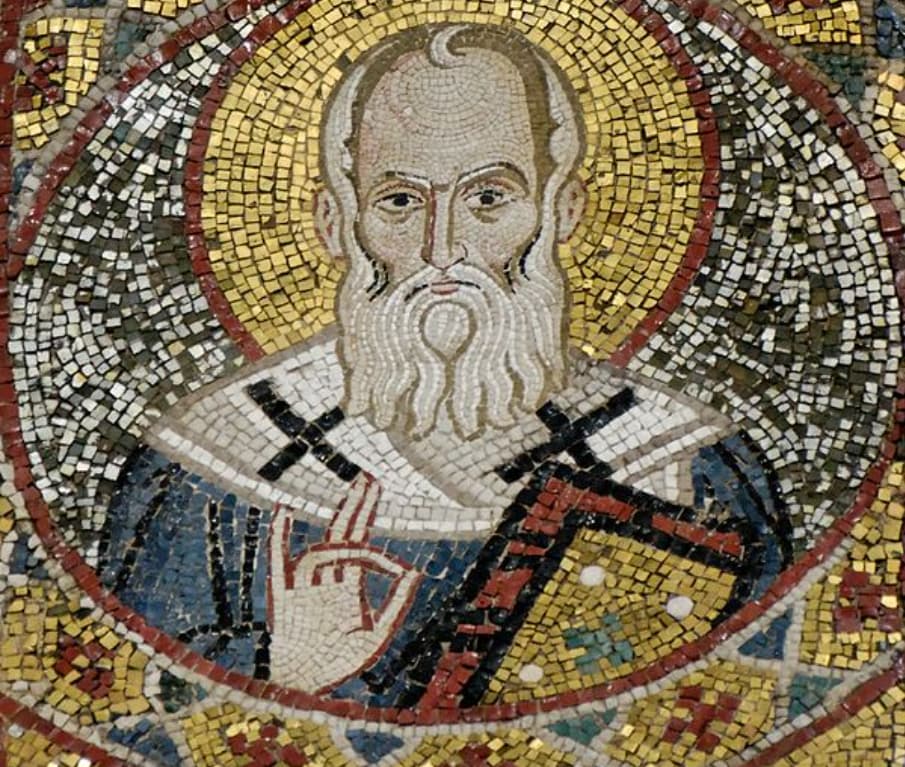

Gregory’s theology is characterised by a profound emphasis on the monarchia of the Father as the unbegotten source of the Godhead, from which the Son is eternally generated and the Holy Spirit eternally proceeds, without compromising the consubstantiality of the three hypostases. This framework, elaborated most systematically in his Five Theological Orations (Orations 27-31, delivered in Constantinople) represents the culmination of Nicene theology while incorporating Stoic, Platonic and Aristotelian elements to safeguard against both subordinationism and modalism. In Oration 29, for instance, Gregory posits the Trinity as a monad moving toward dyad and fulfilled in triad, a dynamic relational ontology where the Father’s ingenerateness grounds the Son’s generation and the Spirit’s procession, ensuring the unity of essence amid distinction of persons. This is not mere speculation; Gregory roots it in divine economy, where God’s self-revelation in history, through creation, incarnation, and Pentecost, discloses the immanent Trinity.
His pneumatology, particularly in Oration 31, marks a decisive advance. Against those who viewed the Spirit as a subordinate energy or creature. Gregory argues for its full divinity, facilitating theosis: only a divine Spirit can deify humanity, facilitating theosis through baptism and sanctification. Drawing on Johannine texts like John 15:26, “the Spirit of truth, who proceeds from the Father”, he distinguishes procession from generation to preserve the hypostatic distinction, while affirming equality in honour, glory and worship. This nuanced articulation preempts later schisms such as the Filioque controversy.
Gregory’s method is deeply exegetical, integrating Scripture as the normative foundation for doctrine. He employs a Spiritual Hermeneutic, interpreting texts within their canonical context to reveal Trinitarian implications.
For example, To counter the misreading of
Proverbs 8:22:
“The Lord created me at the beginning of his ways”
He insists on a prosopological reading where Wisdom (Sophia) prefigures the Son’s eternal generation, not temporal creation. His use of deuterocanonical texts like Wisdom of Solomon further enriches the passage:
Wisdom 7:25–26, describing wisdom as an effulgence of eternal light, bolsters his argument for the Son’s consubstantiality, portraying divine begetting as impassible and atemporal. This scriptural saturation, combined with rhetorical eloquence, makes his theology intellectually robust and pastorally accessible.
Let’s talk about the heresies he fought against…
1 Like

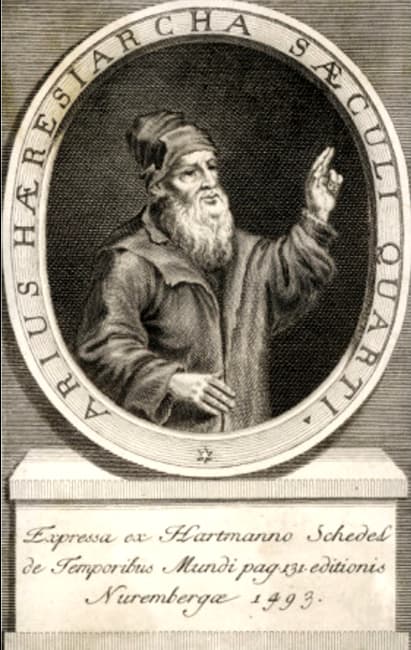
Yes @Samuel_23, let me guess, I know that one of them is definitely Arianism.

1 Like


Some of the Arian leaders were:
Acacius of Caesarea
Aetius of Antioch
Demophilus of Constantinople
Eudoxius of Antioch
Eunomius of Cyzicus
Eusebius of Nicomedia
Eustathius of Sebaste
Ulfilas

Yes, Gregory’s era was marked by the resurgence of Arianism under Emperor Valens which denied the Son’s eternal divinity, posing him as a created being. In its radical Eunomian form, led by Eunomius of Cyzicus, this heresy claimed exhaustive knowledge of God’s essence through dialectical logic, reducing Trinity to a hierachial traid, where the Son and Spirit were dissimilar to the Father. Gregory’s Theological Orations serve as a direct refutation, employing apophatic theology to critique Eunomian hubris:
human reason, tainted by sin, cannot comprehend God’s essence, but only approach it through purification and illumination
He accuses Eunomians of theologizing like Aristotle, misapplying categories of substance and accidents to divine realities, and counters with scriptural paradoxes:
if the Son is begotten, it is eternally so, without passion or division, as there was never a time when he was not
In Oration 23, it was delivered amid ecclesial strife in Constantinople, Gregory refutes Eunomian claims that the Son and Spirit do not share the Father’s essence by emphasizing relational procession: the Son’s generation and the Spirit’s Procession are internal to the Godhead, not external creations. He employs a triadic logic, unity in diversity, to dismantle subordinationism, arguing that hypostatic distinctions enhance rather than diminish divine reality. This oration, part of his broader campaign following Valen’s death, culminated in his brief tenure, as archbishop of Constantinople. The council’s creed, expanding Nicaea’s, explicitly affirmed the Spirit’s divinity and condemned Eunomianism, Macedonianism (which denied the Spirit’s homoousios), and other variants.
Gregory also confronted Apollinarianism, propagated by Apollinaris of Laodicea, which preserved Christ’s divinity by denying his full humanity, specifically positing that the divine Logos replaced the human rational soul. In letter to Cledonius (Epistles 101-102, I guess), Gregory defends dyophysitism:
Christ assumes complete human nature (body, mind, soul) to redeem it wholly, drawing from Heb 2:17, “He had to become like his brothers in every respect”)
Apollinarian truncation, he argues, undermines soteriology; what is not assumed is not healed quod non assumptum non sanatum.
This Christological precision influenced the Council of Constantinople’s condemnations and prefigured Chalcedonian definitions, ensuring Orthodoxy’s balance between unity of persons and duality of natures.
His defenses were not abstract; they were embodied in pastoral resilience. Amid Arian mobs in Constantinople, who once attacked him during a baptismal vigil, Gregory’s preaching swelled Nicene adherents, transforming a minority faction into the imperial orthodoxy under Theodosius I. His autobiographical poem De vita sua reflects this struggle, portraying theology as a ascetic discipline against heresy’s spiritual corrosion.
:saluting_face:
Gregory’s influence permeates modern Christianity through the Niceno-Constantinopolitan Creed, recited in Eastern Orthodox, Catholic, and Protestant liturgies, which enshrines his Trinitarian formulations as dogmatic norms. His emphasis on the Father’s monarchy safeguards against tritheism, informing Eastern theology’s resistance to the Filioque and fostering ecumenical dialogues today. In Western traditions, Rufinus’s Latin translations (ca. 400 CE) disseminated his orations, impacting figures like Augustine and Aquinas, who drew on his apophaticism for discussions of divine incomprehensibility.
Now, tomorrow, I’ll move to St. John Chrysostom…

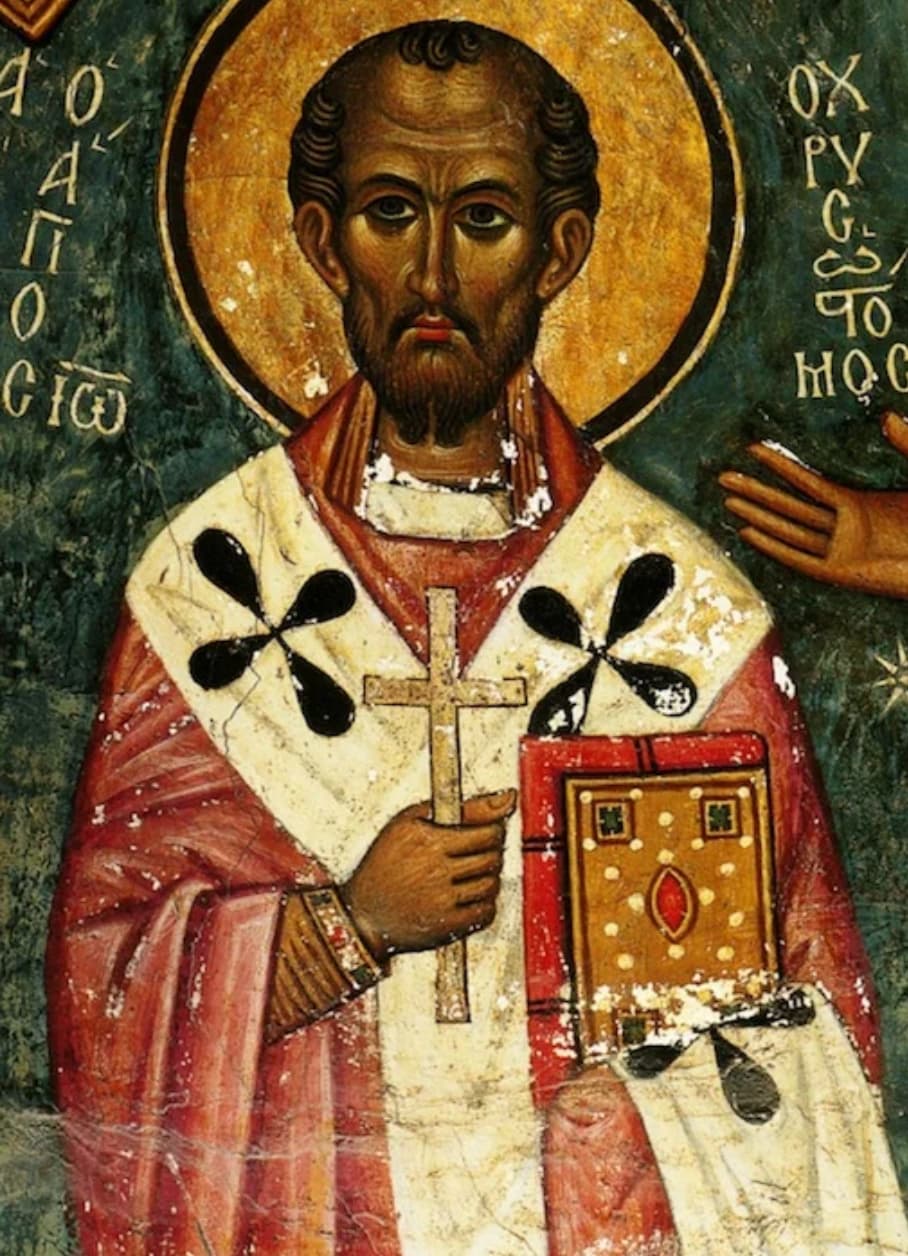
Coming next to St. John Chrysostom… Born in Antioch, to a christian family, educated in rhetoric under Libanus, and shaped by monastic asceticism under Diodore of Tarsus.
Chrysostom’s theology is fundamentally homiletic, rooted in the proclamation of Scripture as the living Word that transforms the believer. Unlike the speculative metahphyiscs of the Cappadocians, his approach aligns with the Antiochene school, proritizing the literal sense while accomodating typological and moral applications. In his homilies on Genesis and homilies on Matthew, he employs a verse-by-verse exposition, insisting that Scripture’s clarity obviates philosophical speculation:
"The Scriptures are so simple that even the unlearned can understand them”
(Hom in Mat 1:1)
Yet this simplicity serves profound ends, facilitating moral education toward virtue. Chrysostom conceptualizes salvation as a synergistic process: divine grace initiates, but human free will responds through ethical praxis, similar to Phil 2:12-13.
God’s grace is entirely sufficient as both the initiating and sustaining principle of salvation. Salvation is indeed a work of divine grace received through faith, yet this grace does not operate in isolation from human response. Rather, it calls forth cooperation, thereby preventing a deterministic understanding of salvation that reduces the human person to passive instrumentality. Monergism, while emphasizing the primacy of divine action, suffers from a significant theological limitation in that it negates the dignity and freedom inherent to the human person. The gift of free will is fundamental to the created order and is consistently affirmed throughout the Christian tradition. Even Lucifer, though created good, was not coerced into rebellion but exercised his will in opposition to God. This reality demonstrates that divine sovereignty does not abolish human freedom but presupposes and respects it. When this truth is acknowledged, the monergistic model becomes insufficient as a comprehensive account of salvation. Synergism, understood as the harmonious cooperation of divine grace and human freedom, offers a more faithful expression of the divine economy, preserving both the supremacy of grace and the integrity of human agency within the salvific process.

Central to his contributions is the elevation of the Eucharist as the mystical core of Christian life. In On the Priesthood, a dialogue treatise modelled on Plato’s Republic, Chrysostom delineates the priest’s role as mediator of divine mysteries, handling the “awesome and tremendous” body of Christ with angelic purity. This work, drawing on Hebrews’ high-priestly Christology, underscores the sacrament’s theophanic character: through anamnesis, believers partake in Christ’s sacrifice, achieving communion with God and one another. His liturgical reforms, including the anaphora attributed to him standardized EO worship.
Now ethically, Chrysostom’s theology critiques societal inequities, integrating prophetic justice with evangelical poverty. In homilies like those on the Statutes (delivered amid Antiochian riot 387), he condemns wealth hoarding as theft from the poor, invoking Matt 25:31-46. This stoic gospel, influenced by Stoic cosmopolitanism, yet grounded in incarnational theology, Christ kenosis models humility, anticipates modern liberation theologies. His ascetic monasticism, as a paradigm for all Christians, fosters passionlessness against vice while affirming marriage and lay vocations…
About his defense against Heresies…
Chrysostom’s era witnessed the persistence of Arianism, particularly its radical Anomoean variant under Eunomius, which posited the Son’s essential dissimilarity to the Father, reducing him to a created intermediary. In his Homilies on John, Chrysostom mounts a vigorous defense, employing a pro-Nicene hermeneutics to affirm Christ’s full divinity. Interpreting John 1:1m he argues against Anomoean subordinationism by stressing eternal generations, for the Son is begotten, not made, coeternal, consubstantial without temporal origin. He critiques heretical logic as demonic sophistry, urging fidelity to scriptural economy over rational dissection (Hom in Joh 2.4). This exegesis not only refutes Anomoeanism but safeguards the soteriological axion:
only a fully divine Christ can deify humanity
Againt Judaizing Christians, those tempted to adopt Jewish practices like Sabbath observance or synagogue attendance, Chrysostom’s eight Homilies, called Adversus Judaeous, defended Christianity’s supersessionist identity. His intent is pastoral, to prevent syncretism in Antioch’s mixed populace. Drawing on Gal 3:28, “neither Jew nor Greek” he argues Christ’s fulfillment of the Law abrogates ritual observance. This polemic, though ethically problematic by modern standards, reinforced ecclesial boundaries amid imperial favoritism toward Christianity under Theodosius I.

Chrysostom also confronted paganism and internal corruptions. In Homilies on the Statues, he defends Orthodoxy against mob violence sparked by imperial taxes, framing riots as satanic temptations and urging repentance. Against Manichaean dualism and Marcionite rejection of the OT, he affirms scriptural unity:
the God of creation, is the God of redemption
His broader apologetics, such as in Demonstration Against Jews and Pagans on the Divinity of Christ, employs miracles and prophecy fulfilment to vindicate Christianity’s superiority, contributing to the empire’s Christianization.
These defenses were embodied: his reforms against clearical luxury, and simony in Constantinople provoked elite opposition, leading to his deposition at the Synod of the Oak, yet solidified his matyrdom-like status.

he was exiled by Empress Eudoxia and Emperor Arcadius, I think in 404, a died in 407. He wrote over 800 homilies, treatises and letters.

Peace

Sam

Hey Samuel, remember me? We had those long Google meets on Wednesday and Thursday, five hours straight diving into Orthodox theology. I’ve been thinking about it nonstop since then. My boyfriend and my brother have been learning alongside me, and it honestly feels like a blanket’s been lifted off my eyes. With my boyfriend being Orthodox and your guidance, I can finally feel my stubborn mind starting to shift. I don’t just want to watch another boring YouTube video or skim through blogs. I really want to learn properly, ask questions, and have real, interactive conversations about Orthodoxy. The fact that you still took the time to talk with me even when you weren’t feeling well, I think you had stomach pain, really touched me. Seeing how much effort you made honestly changed something in me. That was the moment I decided to take this seriously and really learn about Orthodox and Catholic faith, even though I’m not either yet.

If you’re willing, I’d be honoured if you could teach me more. Would you take me on as one of your students?

Thank you David for introducing me to Samuel

Welcome, sister. I am truly glad to hear your heart and mind are eager to learn. If you have any doubts or questions, you are always welcome to write a post or ask David and he will inform me if necessary. I am mostly active on this forum, though I have been feeling quite low lately and not at my best, so I apologize in advance if I am slower to respond. Even so, I will do my best to guide you and help with anything you are curious about. It is a blessing to see your sincerity and commitment to understanding Orthodoxy and the faith.

Perhaps I should speak here of the fact that in my own Lutheran tradition, we are very emphatic about our connection with our deep Catholic (not Roman Catholic) past. Which is to say, we do not look at the ancient and holy fathers of the Church such as St. Gregory Nazianzus, or St. John Chrysostom as “Orthodox theologians” or “Catholic fathers”; they are our theologians and fathers. As we understand ourselves, as Lutherans, to be part of the unbroken chain of faith that includes these precious saints of God, and whose words, works, and lives are fundamental to our own contemporary life of faith.

So from a Lutheran perspective, St. Gregory Nazianzus is a father and theologian of the Lutheran tradition. So, naturally, he is very important. He is one of our precious fathers in the faith.

1 Like

That is beautifully expressed, and I truly respect the sincerity behind it. It is indeed a testimony to the universality of the early Church that figures such as St. Gregory Nazianzus and St. John Chrysostom are not the property of any single communion. They belong to the undivided Church, and their witness speaks across centuries and confessions.

1 Like

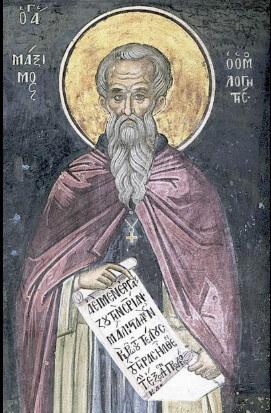
Next @TheologyNerd since we both like theology, I would like to discuss is St. Maximus the Confessor, the Saint which contributed the most to theology…
He was a Byzantine monk, ascetic, and polymath whose epithet confessor, commemorates his unyielding witness unto mutilation and exile, represents the zenith of patristic synthesis in the seventh century.
At the heart of Maximus’s ontology lies a pivotal distinction:
*nature as the shared essence defining a being’s what (eg human rationality, volitional capacity) versus the mode as the contingent “how” of its realization, vulnerable to sin’s distortion yet redeemable through grace. Sin corrupts not humanity’s essence, its divine imprint (imago Dei) isnt corrupted, but rather its existential mode, fracturing the intended harmony of body, soul and spirit, and extending cosmic discord. The Incarnation inaugurates a beautiful exchange where the divine Word assumes uncorrputed human nature in a transfigured mode, enabling reciprocal divinization:
God humanizes in love, humanity divinizes in response, as “a power that divinizes man through his love for God…renders man God to the same degree as it humanizes God for man’s sake”
This exchange is not fusion, many confuse it as pantheistic absorption, but rather energetic participation, where humans become “partakers of divine nature” according to capacity, their modes aligned with eternal divine principles.
These logoi, preexistent rational blueprints in the Word, imprint creation as participatory archetypes, ensuring ontological coherence, each creature’s essence reflects the divine will, without compromising contingency. Humanity, as microcosm (a miniature universe), is vocationally poised to mediate creation’s polarities, uncreated versus created, spirit versus matter, heaven versus earth, paradise versus world, male versus female, fulfilling Eph 1:10’s recapitulation of all things in Christ. Adam’s primordial fault inverts this:
a self-assertive mode divides the unified, birthing tropic entropy
Christ’s hypostatic union rectifies it, descending through divisions to ascend in unity:
“God became man in order to save lost man, and…united through Himself the natural fissures running through the general nature of the universe.”
Soteriologically, this cosmic therapy demands ascetic praxis, purification of passions, yields natural contemplation (beholding logoi in creatures), culminating in mystical union, where the believer’s mode mirrors Christ’s deified humanity. Maximus reframes Evagrian impassibilty (freedom from disordered desires) as purified love, ascending from self-mastery to Godward communion, rendering theology, not speculative but transformative spiritual discipline.
Epistemologically, knowledge is theandric:
propositional grasp yeilds to participatory knowledge, deifying the knower as the Word “transforms, and the things which were transformed he deifies…so as to remain and be in their proper mode, and at the same time to be God by participation in grace”
This counters Origentist intellectualism by grounding cognition in incarnate operations, where Scripture’s dual authorship, human and divine, parelles the Fathers’ inspired witness, demanding exegetical harmony.
Maximus’s Christology bears four interlocking signatures, patristic, Incarnational, composite, cosmic, each a bulwark against heresy, synthesised through logoi theory to preserve Chalcedon’s “without confusion, change, division, or separation.” Patristically, he is a synthesiser par excellence, compiling florilegia to vindicate orthodoxy, interpreting ambiguities in Gregory Nazianzen, Cyril of Alexandria, and Dionysius the Areopagite, as consonant with dyophysitism (two natures). For instance, Dionysius’s theandric activity (human-divine operations) denotes a novel mode of manifestation, not quantitative oneness:
“This newness would be of our power…a new and ineffable manner of the manifestation of the natural energies.”
Cyril’s “one incarnate nature” describes the hypostatic union, not generic fusion, as echoed in the Lateran Synod of 649’s patrisitic citations, likely drawn from Maximus’s Opusculum 15.
Incarnationally, per Gregory’s axion, that the unassumed is unhealed, Christ assumes the full humanity, including the passions and will, to heal it wholly. Maximus explands this into “three incarnations”, that is the Word as flesh (distinct from sinners), as logoi in creation (creatures signifying Him) and as language (revelation through words), with the fourth in virtuous believers embodying the Word. This multifaceted thickening of the Logos preserves distinctions while effecting deification:
“God always willingly becomes man in those who are worthy.”
Compositely, Christ’s hypostasis unites natures via perichoresis, yeilding a composite hypostasis without mingling:
“from which and in which and which” two natures coexist. Dyothelitism (two natural wills) and dyenergism (two operations) inhere in natures, not person, averting a compsite heterodoxy that births a tertium quid, that is netiehr God nor man. Monothelitism estranges Christ:
*his will if singular, opposes the Father’s (yeilding Trinitarian quaternity) or humanity’s (nullifying healing) as “evil consists in nothing else than this difference of our deliverative will from the divine will”. In Gethsemane, Christ’s human will submits impeccably, “not what I will but what you will”, harmonising sans gnomic vacillation modelling deified synergy.
Cosmically, Christ mediates divisions:
his descent unifies them in ascension, rendering “the whole creation…another human being” with liturgy as participatory microcosm (mystagogy 7). This Christocentric cosmology prewires reality for deification, where elect natures realize eschatological telos.

Dyothelitism safeguards the whole theological system @TheologyNerd, @Agnes
soteriologically, absent human will, Christ cannot appropirate passions as fishhook for sin, tempted yet sinless (Questions to Thalassius 21), nor enable cooperation in salvation, unraveling theosis. Christologically, it upholds hypostatic integraity; Trinitarianly, preserves the monarchy against Arian polytheism or Sabeliian modalism, as wills in natures ensure no intra-divine opposition. Maximus’s Disputation with pyrrhus deconstructs compromises:
“The number of wills and operations is essentially attributes to his natures…for he himself was able to will and to act according to both of his natures…for our salvation.”
His martyrdom, (he wasn’t killed, but rather his tongue and hand were severed), sealed this at Constantinople III, affirming TWO NATURAL WILLS AND AND ACTIONS CONCURRING…FOR THE SALVATION OF THE HUMAN RACE…AMEN

Wow, @Samuel_23 , that was incredible! I honestly had to read it twice because there’s so much depth in what you wrote about St. Maximus. I feel like I understand only the surface of what he’s saying. Could you maybe break it down for me a bit more simply? Especially the parts about nature vs. mode, logoi, and how theosis actually happens in his view, those really caught my attention but I’d love to grasp them more deeply. And how does all of this tie back to our spiritual life today?

@Agnes, I’ll talk about the first section, from

Till

At the heart of St. Maximus the Confessor’s theology is a fundamental distinction between nature and mode. Nature is the essence of a being, what makes something what it is. For humans, nature includes our rationality, free will, and the essential features that make us truly human. Mode, on the other hand, is how that nature is expressed or lived out. It is the practical, concrete way we exist in the world. Acc to Maximus, sin does not destroy our essential nature of human beings. The Image of God within us, remains intact. What sin affects is our mode, the way we live and act. Sin distorts this expression, breaking the harmony of body, mind and soul, and introducing disorder in the world. In simple terms, humans are in the image of God, but we live that image imperfectly when we sin.
The Incarnation of Christ brings what Maximus calls the beautiful exchange. God becomes human in Christ, taking on human nature in its perfect, uncorrupted mode, THis allows humans to participate in God’s life without losing their own humanity. Maximus emphasizes that this participation is not a mere merging or confusion of God and humanity. See, Humans retain their identity, but through Christ’s life and grace, they can share in God’s divine energies. Energetic participation means that we are drawn into God’s life, cooperating with divine love, without ever ceasing to be ourselves. It is a dynamic relationship:
God makes humans divine through love, and humans respond by growing in likeness to God
Maximus also introduces the idea of logoi, or divine patterns. See, each creature has a blue print in God’s mind, a rational principle that reflects God’s will and maintains order in creation. Every being has its nature and its mode, and the logoi ensure that creation is coherent and purposeful. Humans, in particular, are a microcosm of the universe. We are called to mediate the contrasts of creation, spirit and matter, heaven and earth, male and female. Our purpose is to restore humanity, reflecting the unity intended by God. Adam’s sin disrupted this balance. His self-centred choice fractured creation, introducing disorder into the cosmos. Christ’s incarnation, life and death restore this harmony. By taking on the human nature fully, Christ heals what was broken, offering humans a path back to alignment with God’s design.
Salvation in Maximus’s theology is a process of cosmic healing. Human beings cooperate with divine grace through ascetic practices, purification of the passions, and contemplation of God in creation. By purifying ourselves, we align our mode, the way we live, with the divine order. This alignment allows humans to participate in the divine life and experience mystical union with God. Knowledge, for Maximus, is not only intellectual but theandric; it involves both human effort and divine transformation. Learning and understanding are ways in which humans are drawn into God’s life, not just accumulating facts. Scripture, as both divinely inspired and humanly written, must be interpreted carefully. Proper interpretation allows believers to participate fully in God’s plan and avoids the mistakes of heresies like Origenism, which overemphasised human intellect and preexistent souls.
Now, I’ll explain the highlighted passage for better understanding @Agnes :
the beautiful exchange in Maximus’s theology is the heart of why the Incarnation matters for humans.
See, the mistake people make while talking about this.
When God became human in Christ, he did not take on humanity in a broken or sinful state. He assumed on humanity in its pure, uncorrupted state, the way God originally intended it to exist. This is crucial because it means Christ’s human nature is a model for what humanity could be, full aligned with God’s design. Through this, human are invited into participation in God’s life, known as theosis or divinization, but they do not loose their indentity or humanity. In other words, humans remain themselves, but they are drawn into the divine life through Christ’s grace. Maximus emphasizes that this is not some vague merging of God and human beings, which would destory human distinctiveness or reduce God to mere human terms. It is, rather relational, energetic participation:
humans cooperate with God’s love, and God infuses humanity with divine life without overpowering it.
Energetic participation means humans are actively engaged, they respond to God’s love, and are transformed, rather than passively being absorbed into divinity.
The logoi, or divine patterns are Maximus’s way of explaining how the world is ordered and purposeful. Each creature reflects a divine blueprint, a rational principle that ensures everything functions acc to God’s will. Nature is the essence, what a being is, while mode is how it expresses itself, The logoi govern this expression so that creation is coherent. Humans ae a microcosm, a miniature reflection of the universe, carrying responsibility to mediate the dualities in creation: spirit and matter, heaven and earth, male and female.
Adam’s sin disrupted his harmony. By choosing himself over God, Adam fractured the unity of creation, introducing disorder not just into humanity but into the cosmos itself. Christ’s incarnation repairs this. By taking on human nature fully, a body, mind and soul, Christ restores the integrity of human mode and demonstrates how humans can live in alignment with God’s original design.

I have several doubts I’d like to clarify before we move to the next part. I’ve been reflecting on the beautiful exchange and the Incarnation, and some questions came up:

Why did God have to assume human nature in the first place to heal it? Could He not simply command it to be restored? How can the finite and infinite coexist in Christ without confusion? I also read about communicatio idiomatum in the previous posts and I am trying to understand it in this context.

If the logoi are divine patterns, why do they not automatically perfect the mode of expression of humanity? Would that not mean both human nature and mode are restored perfectly without the need for God to assume humanity? Why does the restoration of human mode require the Incarnation? What are the conditions for this axion, that what is not assumed is not healed?

Also, how can humans participate in God’s life without diminishing what humans are? What exactly are the energies of God, and how does human essence and the divine energies allow humans to partake in God’s life without losing their boundaries or passively being absorbed into God?

I know I could search online, but your explanations are always clearer, so I wanted to ask you directly.

Thank you so much for guiding me through this.

God assumes human nature in the Incarnation, because the healing of humanity is not just a matter of fixing an abstract flaw; it involves the very reality of human existence, our mode, our lived experience, our way of being in the world. The principle maximus emphasises is as “what is not assumed is not healed” means that for Christ to restore human nature fully, He had to assume it in its entirety. Divine command alone cannot impart experiential transformation. God can ofc sustain and guide creation, but the brokenness introduced by sin, our passions, choices and disordered mode of existence, requires a participatory healing. Christ assimes our nature to transform it from within, restoring human mode through His perfect life and union with the divine.
The reason Christ needed to assume human nature rather than simply “command” its restoration is that sin fractured not just human essence but the mode, the lived experience of being human. Essence is what makes us human in principle, but mode is how that humanity is expressed in reality, our passions, choices, and relational life. Sin corrupted the mode, introducing disorder into our actions and our relationships with God and creation.
Divine command alone could restore order externally, but true healing requires participation. Healing must engage the human mode from within, because human nature is relational and experiential. Christ enters into that reality fully, living it perfectly, offering humans a model and a source of grace. Through His Incarnation, humans can genuinely cooperate with divine life rather than being passively “fixed.” This participatory restoration respects human freedom, dignity, and the reality of our existence.
Now, regarding the finite and infinite coexisting in Christ, this is where the hypostatic union becomes crucial. Christ’s one person unites two natures, a divine and human, without confusion, change, division, or separation. Communicatio idiomatum is the principle that allows the properties of each nature to be ascribed to the one person of Christ:
We can say the divine Logos suffers in His humanity or acts in His divinity, without blending or losing either nature. The infinite does not overwhelm the finite, but rather they coexist in harmony, each fully preserved.
About the logoi, these are indeed divine patterns or rational blueprints for creation. They ensure the creation is coherent and purposeful, yes, but they do not automatially perfect the mode of humanity because sin distorts human freedom and lived experience. The logoi provide order and structure but the actual lived expression of human nature needs restoration from within, because human nature is relational and experiential, that is a command saying “the mode be fixed” isnt right because it violates human freedom, and at the same time, it imposes a single option that is to follow God alone, while it may seem good, it makes us mere puppets…see the real problem @Agnes.
Humans can participate in God’s life, yes, through divine energies. What is a divine energy. These are the uncreated activities of God by which He communicates Himself to creation. When humans cooperate with these energies, they are drawn into God’s life without losing their distinct identity. Participation is dynamic, not passive absorption. Humans remain fully human, yet their essence and faculties are elevated and transformed, and united with God in love. Their boundaries remain, but their capacites are healed and fulfilled. Its full realization will be after the second coming of Christ, in which our hearts are oriented towards God, and our faculties and mode are transformed to such an extent that we retain our human essence and our mode is perfected. We cannot enter the divine essence, but we participate in the divine energies. We also cannot rebel against God, not because God gives a divine command after the second coming to perfect our mode or prevent rebellion, but because our transformed mode has been perfected to such an extent that our hearts are fully aligned with God. In this way, rebellion against God, whether by an angel or a human, becomes out of the question. This is not imposed externally by God, but arises naturally from our perfected human nature and fully aligned mode with God’s will.
In simpler terms, God’s energies are like channels of His life and love. Through them, our essence is nourished and brought into communion with Him. Human nature is not erased or replaced; it is restored and divinized, in a way that allows genuine interaction and cooperation with God’s will. This is the beautiful exchange: God humanizes Himself to heal and elevate humanity and humanity responds in love and participation, becoming partakers fo divine life without ceasing to be itself.
I hope it clarifies your doubts…

Yes, I see the real problem @Samuel_23 and a lot of conflicting statements from you.

First, Scripture never divides God into “essence” and “energies.” The Hebrew and Greek terms for God’s works and presence never imply a separate “layer” of divinity distinct from His being. The word used for “work” in Greek is energeia, meaning “activity” or “operation,” and it appears in the New Testament only to describe God’s active power within creation, not an ontological division within Him. For instance, energeia in Ephesians 1:19–20, “the working (energeian) of His mighty power,” simply refers to the effectual power of God in resurrection, not an uncreated intermediary substance by which man communes with God. God’s energeia is His action, not a separate metaphysical category that humans mystically partake of.

Second, the biblical mode of participation in God is not through metaphysical “energies” but through union with Christ by the Holy Spirit, through faith. The New Testament speaks repeatedly of being “in Christ,” never of “participating in the divine energies.” In John 15:4–5, Christ says, “Abide in Me, and I in you.” The Greek meinate en emoi expresses personal relational union, not absorption into divine activity. Paul writes in 2 Peter 1:4 that believers “become partakers of the divine nature” (theias phuseōs koinōnoi), but this does not mean they share in God’s uncreated attributes or essence; it means they share in the moral and spiritual likeness of God, being renewed after His image through regeneration and sanctification (Ephesians 4:24). The participatory element is ethical and spiritual, not ontological.

Third, your claim that “humans will be unable to rebel after the Second Coming because their mode is perfected” conflicts with the biblical explanation of perseverance and glorification. Scripture teaches that glorified saints will be sinless not because of an intrinsic ontological change of “mode,” but because of the full presence of the Spirit and conformity to Christ. 1 John 3:2 states, “We shall be like Him, for we shall see Him as He is.” The transformation comes from vision and conformity, not metaphysical participation in “divine energies.” The heart’s obedience is the fruit of the Spirit’s work, not an automatic “mode alignment.” The idea that rebellion becomes “out of the question by nature” risks turning free, worshipful obedience into ontological necessity, which Scripture never teaches.

Fourth, the “divine energy” concept obscures the gospel’s center: reconciliation through the blood of Christ. The New Testament grounds participation in God’s life in the cross and resurrection, not in ontological flow between created and uncreated realms. Colossians 1:20 says that God reconciled all things “by the blood of His cross.” This is not participation in “uncreated energies,” but justification and reconciliation through atonement. Our union with God is covenantal and redemptive, not metaphysical. The Holy Spirit indwells believers as arrabōn (down payment, Ephesians 1:14), joining them to Christ’s life. That is biblical theosis: union through redemption, not absorption through energy.

Fifth, whenyou say, “God’s energies are like channels of His life and love,” that metaphor might sound spiritual, but biblically, God’s life is communicated personally, not by channels. The Spirit (Pneuma) Himself dwells within believers (Romans 8:11), not some emanation of divine energy. There is no intermediary substance between God and His redeemed. The veil was torn, the Spirit was given, and fellowship is direct through Christ the Mediator.

The apostolic writers never speak of “energies” as a means of communion. They speak of “Spirit,” “grace,” “truth,” and “fellowship” (koinōnia). In 1 Corinthians 1:9, Paul says, “God is faithful, by whom you were called into the fellowship of His Son.” That is relational, covenantal, and redemptive, not metaphysical or energetic.

The Palamite framework also fractures divine simplicity by proposing that God’s essence is utterly unknowable but His energies are knowable. Scripture does not allow such partition. God reveals Himself truly, though not exhaustively. “He who has seen Me has seen the Father,” Christ declares (John 14:9). If divine “energies” are required to know God, then the Incarnation would be insufficient revelation, which contradicts John 1:18, “No one has seen God at any time; the only begotten Son, who is in the bosom of the Father, He has made Him known.”

To summarize the correction-

Energeia in Scripture refers to divine activity, not a metaphysical tier of divinity.

Participation in God is through faith-union with Christ, not by mystical energy.

Transformation and glorification occur through Spirit-wrought conformity, not ontological necessity.

Rebellion’s end comes from redemption completed, not “mode perfection.”

The gospel centers on Christ crucified, not “energies.”

Thus, the doctrine of divine energies, while attempting to preserve transcendence, introduces philosophical categories foreign to Scripture and obscures the personal, covenantal nature of salvation. The true participation in God’s life is Christ in you, the hope of glory (Colossians 1:27), not metaphysical energy but incarnate grace, personally indwelling, relationally transforming, and eternally secured by the blood of the Lamb.

J.

See @Agnes
When God created Adam, human nature was perfect, and the “mode” represented the way that nature was lived out, including the freedom to choose rightly or wrongly. Before eating the forbidden fruit, human nature and mode were fully aligned, yet human freedom still existed. Adam freely chose to eat the fruit, which disrupted the harmony between mode and nature, creating a fracture in human life.

Christ’s Incarnation and sacrifice fully healed this disunity between human nature and mode, restoring the possibility of right alignment. However, this does not automatically mean that every person is saved after Christ’s first coming. Human freedom continues to play a role because while the essential disunity has been healed in principle, our personal modes—the way we live, choose, and orient ourselves—still need transformation.

At the Second Coming of Christ, our modes will be fully transformed and perfected. Human freedom remains, but now our hearts and wills are oriented toward God, and our human essence, made in the image of God, is united with this perfected mode. Because of this alignment, no one will choose to rebel against God—not because God imposes it, but because our perfected nature and mode ensure that our free choices are fully harmonious with God’s will.

What “mode” @Samuel_23

First, in Genesis, the Hebrew word for “man” is אָדָם (adam), and his nature is described as being created in the image (צֶלֶם, tselem) and likeness (דְּמוּת, demuth) of God (Genesis 1:26–27). This does not speak of “mode” but of relational representation. The “image” denotes representation and capacity for communion; the “likeness” denotes moral and spiritual resemblance. There is no linguistic or conceptual basis for a separate ontological “mode.” The Hebrew account presents man as a nefesh chayah (נֶפֶשׁ חַיָּה, living soul), unified in body and breath (Genesis 2:7). His essence and operation were not two “layers” of being but a single integrated reality: life animated by the ruach (רוּחַ, breath/spirit) of God.

When the man sinned (Genesis 3:6–7), the problem was not a metaphysical fracture between “nature and mode” but a moral and spiritual rupture between man and God. The verbs emphasize disobedience and rebellion, not ontological disorder. Adam saw (וַתֵּרֶא), took (וַתִּקַּח), and ate (וַתֹּאכַל). The sin was transgression (parabasis, Romans 5:14), not a change of existential mode. The Hebrew text describes alienation, curse, death, and exile, all relational and moral consequences, not metaphysical ones.

Second, when Christ came, Scripture never says He “healed the disunity between nature and mode.”
That is the language of Neo-Chalcedonian and Palamite theology, not the apostles. The New Testament declares that Christ came to deal with sin (hamartia) and death (thanatos), not to realign “modes.” Hebrews 2:14 says, “Since therefore the children share in flesh and blood, He Himself likewise partook of the same, that through death He might destroy the one who has the power of death.” The verb katargēsē (to nullify, abolish) in verse 14 refers to the defeat of death, not to the reconstitution of an ontological harmony between essence and mode.

In Greek, “nature” is physis and “mode” would be tropos. Scripture uses physis for the essential constitution of beings (Romans 2:14, Galatians 2:15), but never attaches tropos as a metaphysical principle of operation. The phrase tropos hyparxeōs appears only in later patristic and Byzantine theology, not in Scripture. The apostolic message focuses on kainē ktisis (new creation, 2 Corinthians 5:17) and anagennēsis (regeneration, Titus 3:5), both moral and spiritual renewals wrought by the Spirit, not metaphysical harmonizations.

Third, your claim that “Christ’s incarnation and sacrifice fully healed this disunity between human nature and mode” misunderstands both atonement and sanctification. The Greek verb therapeuō (to heal) is used in the Gospels for bodily and moral restoration, but Paul and Peter describe Christ’s redemptive work not as “healing of modes” but as hilasmos (propitiation, 1 John 2:2), katallagē (reconciliation, 2 Corinthians 5:18–19), and apolutrōsis (redemption, Ephesians 1:7). These are judicial and relational categories, they deal with guilt, estrangement, and death, not ontological mechanics. The Cross did not simply restore a metaphysical order; it satisfied divine justice and reconciled humanity to God through covenant grace.

Fourth, your statement that “after the Second Coming our modes will be perfected, ensuring harmony and preventing rebellion” again confuses glorification with ontological reconfiguration. The Greek for glorification, doxazō (Romans 8:30), means to be made radiant with the glory of God, not to have one’s “mode” realigned. Scripture explains our sinlessness in glory as conformity to Christ’s image (symmorphoi tēs eikonos, Romans 8:29), not as a transformation of “mode.” Our wills will be sinless because the sarx (fleshly corruption) is gone and the pneuma (spirit) reigns perfectly (Romans 8:10–11). That is moral perfection and spiritual fullness, not metaphysical determinism.

His phrase, “Our perfected nature and mode ensure our free choices are fully harmonious with God’s will,” subtly imports necessity into grace. But Scripture teaches that our freedom in glory is not necessity by nature but delight by grace. Psalm 40:8 says, “I delight to do Your will, O my God; Your law is within my heart.” The Hebrew chaphets (delight) and torah beqerev libbi (law within my heart) describe willing harmony born of love, not imposed alignment of mode. The glorified saints will obey not because they cannot sin ontologically, but because they will not sin affectionally, their wills renewed by the beatific vision of Christ (1 John 3:2).

Theologically, the problem with “mode and nature” language is that it treats sin as an ontological malfunction rather than a moral rebellion, and treats redemption as metaphysical restoration rather than penal substitution and spiritual regeneration. Scripture is utterly clear: “He Himself bore our sins in His body on the tree” (1 Peter 2:24), hina tais hamartiais apogenomenoi tē dikaiosynē zēsōmen - “so that, having died to sins, we might live to righteousness.” The grammar of the Gospel is substitution and transformation, not ontological realignment.

Biblical correction.

Genesis presents man as a unified nefesh chayah, not a composite of “nature” and “mode.”

Sin ruptured relationship, not metaphysical structure.

Christ’s death healed guilt and corruption, not “ontological disunity.”

Glorification perfects holiness through vision and Spirit, not by mode necessity.

Human freedom in eternity is perfected love, not ontological constraint.

J.

1 Like

The language of “mode” and “logoi” that I have been using is a theological abstraction developed later by the Fathers, especially in the Byzantine tradition, to articulate more precisely how the divine economy interacts with creation and human participation in God’s life.

From an Orthodox patristic perspective, the distinction between nature (physis) and mode (tropos) is a way of explaining how humanity’s essential being (its created image of God) remained uncorrupted by sin while our lived existence—the orientation of our faculties, choices, and actions—became disordered. This framework is not meant to contradict Scripture but to articulate what happens at a metaphysical and relational level when Christ assumes human nature in the Incarnation. By taking fully human nature in its uncorrupted mode, Christ restores the human capacity to participate in God’s energies without confusion, while preserving human freedom. The “healing of mode” is not a legal or judicial act, which Scripture rightly emphasizes, but a metaphysical explanation of how the Incarnation allows humans to be restored in their operative life, so that our faculties can now operate harmoniously in accordance with God’s will.

The “participation in divine energies” does not imply absorption into God’s essence. Orthodox theology emphasizes that human beings share in God’s life without ceasing to be fully human, maintaining boundaries while being transformed. This participatory healing, as Maximus the Confessor explains, ensures that our wills, desires, and faculties are oriented rightly, which in Scripture is expressed relationally as sanctification, moral transformation, and union with God through grace. So the patristic language complements biblical teaching rather than contradicting it, providing a lens to understand how the Incarnation effects both restoration and human cooperation in salvation.

You are correct that the New Testament never explicitly speaks of God’s “energies” as a separate metaphysical tier and that energeia generally refers to God’s actions or effective power, such as in Ephesians 1:19–20. Orthodox theology, especially in the Palamite and Maximus tradition, develops the concept of divine energies not to contradict Scripture but to articulate how finite human beings can truly experience and participate in God without absorbing His essence.

From this perspective, God’s essence remains utterly transcendent and unknowable, while His energies are the ways in which He personally communicates His life, love, and grace. Participation in the divine energies does not imply absorption into God’s essence or a literal “substance” between God and creation. Rather, it expresses the real, experiential union with God granted through the Spirit, which Scripture consistently portrays relationally. This is consonant with John 15:4–5, 2 Peter 1:4, and other passages, but the patristic vocabulary gives nuance to the experience of divine life: human beings participate in God’s uncreated life while remaining fully themselves. This preserves both divine simplicity and human integrity. When we speak of participation in divine energies, we are describing the lived reality of theosis: humans become partakers of God’s life, not by losing their created identity, but by having their faculties, will, and soul aligned with God’s transformative presence. This aligns with Scripture’s emphasis on union with Christ and the indwelling Spirit. Similarly, the end of rebellion in glorification is not a metaphysical compulsion but the perfected state of human faculties oriented wholly toward God’s will through grace, as you rightly note. The distinction is that Scripture emphasizes relational, covenantal, and ethical participation, while patristic theology articulates how this union can exist ontologically without confusion between Creator and creature.

Brother, the foundation of all doctrine must be Scripture, not later theological abstractions. When you speak of “modes” and “logoi” as if they give explanatory power beyond what the apostles taught, you are moving into speculation that Scripture itself does not authorize. Paul wrote, “Do not go beyond what is written” (1 Corinthians 4:6), and the prophets and apostles both warn against mixing divine revelation with human philosophy (Colossians 2:8).

The Word of God does not need philosophical categories to clarify redemption. Scripture speaks clearly. Man’s physis (nature) was created good (tov) in Genesis 1:31, yet sin entered through disobedience (Romans 5:12) and corrupted the whole man, not merely his mode or tropos. The heart (lev) became deceitful (Jeremiah 17:9), the mind (nous) was darkened (Ephesians 4:18), and the will (thelema) enslaved to sin (John 8:34). The corruption is not only existential but moral and spiritual, for “in Adam all die” (1 Corinthians 15:22).

Christ did not assume a merely “uncorrupted mode” but the full humanity that had fallen under death. Hebrews 2:14 declares that “since the children share in flesh and blood, He Himself likewise partook of the same.” He did not take an idealized humanity untouched by Adam’s ruin, for then He could not be our High Priest who is “touched with the feeling of our infirmities” (Hebrews 4:15). What He assumed, He healed. The Incarnation was not a metaphysical rearrangement of human faculties but a redemptive act in which God entered our mortality to conquer sin and death by the cross.

When Scripture speaks of participation, it does so by faith, not metaphysics. Peter writes that we become “partakers of the divine nature” (koinonoi theias physeos) through the promises of God (2 Peter 1:4), meaning by union with Christ through the indwelling of the Spirit, not through ontological merging or energetic participation. The Hebrew understanding of life with God is always relational and covenantal, not speculative or philosophical. The goal is holiness (qedushah), not metaphysical theosis.

Maximus and the Fathers you cite sought to explain mystery in philosophical categories, but their vocabulary, though historic, is not inspired. Scripture is the rule of faith, and its testimony is plain. The healing of man is judicial, spiritual, and moral, judicial because Christ bore our guilt (Isaiah 53:6), spiritual because He gives new birth (John 3:6), and moral because He renews the mind (Romans 12:2). The mode of healing is the cross, not ontology.

The apostolic gospel is not a system of metaphysics but the proclamation that “Christ died for our sins according to the Scriptures, was buried, and rose again the third day” (1 Corinthians 15:3-4). The Incarnation finds its meaning in the cross, not in speculative categories of being and mode. The power that restores man is not philosophical precision but the blood of the Lamb.

It is incumbent upon us all to rightly divide the Word of God.

J.