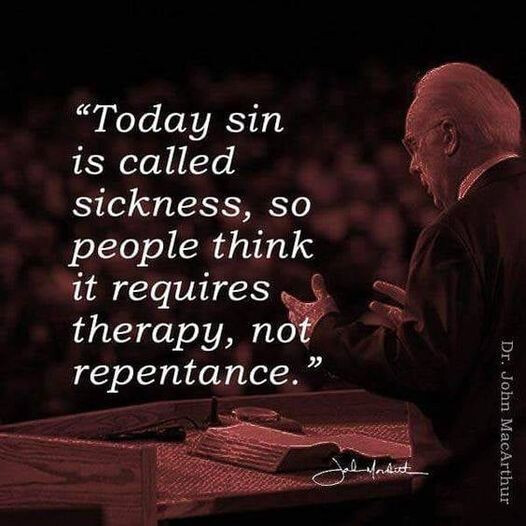
Do You Think Ezekiel 33:8-9 Applies to Us?

​We read this is the Word.

“Whenever you hear a word from my mouth, you shall give them warning from me. If I say to the wicked, O wicked one, you shall surely die, and you do not speak to warn the wicked to turn from his way, that wicked person shall die in his iniquity, but his blood I will require at your hand. But if you warn the wicked to turn from his way, and he does not turn from his way, that person shall die in his iniquity, but you will have delivered your soul." Ezekiel 33:8-9

Now I understand that God is talking to Ezekiel here. However, is He not talking to you as well? Jesus also told us this.

"Now the eleven disciples went to Galilee, to the mountain to which Jesus had directed them. And when they saw Him, they worshiped Him, but some doubted. And Jesus came and said to them, “All authority in heaven and on earth has been given to me. Go therefore and make disciples of all nations, baptizing them in the name of the Father and of the Son and of the Holy Spirit, teaching them to observe all that I have commanded you. And behold, I am with you always, to the end of the age.” Matthew 28:16-20

We are obligated to be sowers of the Seed. Tellers of the Truth. Sharers of the Gospel. However? We are not responsible for their acceptance. You tell them the Truth. John 3:16-18

“For God so loved the world, that he gave his only Son, that whoever believes in him should not perish but have eternal life. For God did not send his Son into the world to condemn the world, but in order that the world might be saved through him. Whoever believes in him is not condemned, but whoever does not believe is condemned already, because he has not believed in the name of the only Son of God."

You share with them all of the Gospel, and they say, “I do not believe in God.” Or “I do not believe that you have to accept Jesus to get to Heaven.” Or “religion is for idiots.” Something to this effect. Have you failed? Have you not communicated properly? Are you responsible for the fact that they will now die, not accepting Christ, and forever be cast out? You think about this. Someone you care about, someone you love, and you have the key to give them, so that they may enter into Heaven, and yet, they are on their way to Hell. Have you failed to save them?

The simple answer is NO. You have fulfilled your obligation. You are now free and clear. You have told them the Truth. You are not responsible for their decision to accept or not. It is your responsibility to tell people the Truth. It is your responsibility to live as God commanded us to live.

The truth is simple. Believe and accept Jesus, and live. Or do not, and die. This is the message. The truth. This is what we are obligated to tell people. “he that believeth not is condemned already because he hath not believed in the name of the only begotten Son of God.” Not that God is going to condemn you. You are condemned already. Not that God is looking to punish you. But rather, God is looking to save you.

My question to anyone is, we have the “Great Commission.” We are told to preach. We are told that;

“How then will they call on him in whom they have not believed? And how are they to believe in him of whom they have never heard?[a] And how are they to hear without someone preaching?” Romans 10:14

So what say you? Do you feel it is ok to be silent and live and let live? Or do you think Ezekiel 33:8-9 applies to us as well?

Peter
1 Like

Ezekiel was a priest and a prophet, It’s a prophets role to speak to the people on behalf of God, just as its a priest role to speak to God on behalf of the people. I believe the Ezekiel 33 passage applies to the prophets.

I look to Jesus for my instruction on how He shared the truth to unbelievers. I don’t see Him confronting them over their sin as a way of introduction. It’s only with the Pharisees and after they rejected Him that He confronted their sin. In my experience telling someone they’re a sinner and going to hell only puts them off. It doesn’t convict or persuade them of truth. Love does though and it was the love of Jesus that won many over to Him.

We’re called to share the gospel with those we know. Only evangelists and those called by God to be evangelists share the gospel with everyone. People like Paul. People like Philip and the other apostles. They didn’t go around telling everyone they’re sinners. They shared the good news.

Not everyone is called to be a preacher. The gifts of the Spirit are to serve the church. That doesn’t mean that non Christians can’t benefit from our gifts, but they’re first calling is to serve the church.

You’re right that we’re not responsible for the decisions other people make. Only God saves. We don’t have that power. God takes the Scripture we share and by His power plants it into the heart. Otherwise it just sits on the wayside and is eaten by the birds.

>I know, even in little things, that a seed can be planted. (and Apollos can water)_ Something even like when looking at nature anywhere with a friend or an acquaintance even commenting on a kitty saying “It’s hard for me to look at something like this and not think of a Creator.” This is a witness.

Heb 1:1 Long ago, at many times and in many ways, God spoke to our fathers by the prophets,
Heb 1:2 but in these last days he has spoken to us by his Son, whom he appointed the heir of all things, through whom also he created the world.
Heb 1:3 He is the radiance of the glory of God and the exact imprint of his nature, and he upholds the universe by the word of his power. After making purification for sins, he sat down at the right hand of the Majesty on high,
Heb 1:4 having become as much superior to angels as the name he has inherited is more excellent than theirs.
Heb 1:5 For to which of the angels did God ever say, “You are my Son, today I have begotten you”? Or again, “I will be to him a father, and he shall be to me a son”?
Heb 1:6 And again, when he brings the firstborn into the world, he says, “Let all God’s angels worship him.”
Heb 1:7 Of the angels he says, “He makes his angels winds, and his ministers a flame of fire.”
Heb 1:8 But of the Son he says, “Your throne, O God, is forever and ever, the scepter of uprightness is the scepter of your kingdom.
Heb 1:9 You have loved righteousness and hated wickedness; therefore God, your God, has anointed you with the oil of gladness beyond your companions.”
Heb 1:10 And, “You, Lord, laid the foundation of the earth in the beginning, and the heavens are the work of your hands;
Heb 1:11 they will perish, but you remain; they will all wear out like a garment,
Heb 1:12 like a robe you will roll them up, like a garment they will be changed. But you are the same, and your years will have no end.”
Heb 1:13 And to which of the angels has he ever said, “Sit at my right hand until I make your enemies a footstool for your feet”?
Heb 1:14 Are they not all ministering spirits sent out to serve for the sake of those who are to inherit salvation?

Ezekiel Is Israel’s Watchman
Eze 33:1 The word of the LORD came to me:
Eze 33:2 “Son of man, speak to your people and say to them, If I bring the sword upon a land, and the people of the land take a man from among them, and make him their watchman,
Eze 33:3 and if he sees the sword coming upon the land and blows the trumpet and warns the people,
Eze 33:4 then if anyone who hears the sound of the trumpet does not take warning, and the sword comes and takes him away, his blood shall be upon his own head.
Eze 33:5 He heard the sound of the trumpet and did not take warning; his blood shall be upon himself. But if he had taken warning, he would have saved his life.
Eze 33:6 But if the watchman sees the sword coming and does not blow the trumpet, so that the people are not warned, and the sword comes and takes any one of them, that person is taken away in his iniquity, but his blood I will require at the watchman’s hand.
Eze 33:7 “So you, son of man, I have made a watchman for the house of Israel. Whenever you hear a word from my mouth, you shall give them warning from me.
Eze 33:8 If I say to the wicked, O wicked one, you shall surely die, and you do not speak to warn the wicked to turn from his way, that wicked person shall die in his iniquity, but his blood I will require at your hand.
Eze 33:9 But if you warn the wicked to turn from his way, and he does not turn from his way, that person shall die in his iniquity, but you will have delivered your soul.

Why Will You Die, Israel?
Eze 33:10 “And you, son of man, say to the house of Israel, Thus have you said: ‘Surely our transgressions and our sins are upon us, and we rot away because of them. How then can we live?’
Eze 33:11 Say to them, As I live, declares the Lord GOD, I have no pleasure in the death of the wicked, but that the wicked turn from his way and live; turn back, turn back from your evil ways, for why will you die, O house of Israel?
Eze 33:12 “And you, son of man, say to your people, The righteousness of the righteous shall not deliver him when he transgresses, and as for the wickedness of the wicked, he shall not fall by it when he turns from his wickedness, and the righteous shall not be able to live by his righteousness when he sins.
Eze 33:13 Though I say to the righteous that he shall surely live, yet if he trusts in his righteousness and does injustice, none of his righteous deeds shall be remembered, but in his injustice that he has done he shall die.
Eze 33:14 Again, though I say to the wicked, ‘You shall surely die,’ yet if he turns from his sin and does what is just and right,
Eze 33:15 if the wicked restores the pledge, gives back what he has taken by robbery, and walks in the statutes of life, not doing injustice, he shall surely live; he shall not die.
Eze 33:16 None of the sins that he has committed shall be remembered against him. He has done what is just and right; he shall surely live.
Eze 33:17 “Yet your people say, ‘The way of the Lord is not just,’ when it is their own way that is not just.
Eze 33:18 When the righteous turns from his righteousness and does injustice, he shall die for it.
Eze 33:19 And when the wicked turns from his wickedness and does what is just and right, he shall live by this.
Eze 33:20 Yet you say, ‘The way of the Lord is not just.’ O house of Israel, I will judge each of you according to his ways.”

J.

Am I the only one who read, “Long ago, in a galaxy far, far away?” Squirrel, yeah, I know.

@Johann, just for clarification. “Long ago… God spoke to our fathers by the prophets, but in these last days he has spoken to us by his Son…”

I’m guessing your main point here is a dispensational shift. The idea that God’s method of interacting with humanity changed fundamentally with Jesus. You are saying that Ezekiel was a specific prophet given a unique, physical task for the “house of Israel” in an Old Covenant context. Because we are now in the New Covenant era, you are suggesting we cannot simply copy and paste Ezekiel’s exact role as a “watchman” onto modern Christians.

Just trying to understand since you left us with no commentary. It seems like you are arguing that this literal “watchman duty,” where a single believer carries the actual blood guilt for another person’s sins if they don’t warn them, was unique to the Old Testament prophetic office?

If this is your point, I can agree with that. However, understanding that you are trying to convey that Jesus is the ultimate and final word from God. While the heart of Ezekiel 33, that God desires all people to turn from evil and live (v. 11), remains true to God’s character, the strict, terrifying burden of being a “watchman” who carries the blood guilt of others belongs to an old era of prophets, not to modern believers under the grace of Christ. It begs just one question.

What, if any, is our role as children of God today? Are we to point out sin? Ever? Or are we to talk about choices? Or are we to live and let live? Honest question.
Peter

Ok, I get that; however, an argument can be made that this is not true. Peter didn’t write his letters to pastors or apostles; he wrote them to ordinary, scattered Christians facing persecution. Yet, he told them:

“But in your hearts revere Christ as Lord. Always be prepared to give an answer to everyone who asks you to give the reason for the hope that you have.”

This isn’t a command for a closed circle of friends. It implies that a Christian’s daily life should provoke questions from outsiders, and every believer needs to be ready to speak up. You brought up Philip.

When intense persecution broke out in Jerusalem, Acts 8:1 says the apostles stayed behind. It was the ordinary, everyday believers who were scattered throughout Judea and Samaria. Acts 8:4 tells us exactly what those regular believers did:

“Those who had been scattered preached the word wherever they went.”

It wasn’t just the “professionals” doing the talking. It was the displaced, everyday church members sharing the faith with strangers in new lands. We are Ambassadors to the World (2 Corinthians 5:18-20), and Jesus calls us Salt and Light (Matthew 5:13-16)

So I ask you the same question I asked Johann. What, if any, is our role as children of God today? Are we to point out sin? Ever? Or are we to talk about choices? Or are we to live and let live? Honest question.
Peter

This reference to “a seed can be planted (and Apollos can water)” comes directly from 1 Corinthians 3:6, where Paul explains that spiritual growth is a collaborative, ongoing process, not a one-time high-pressure sales pitch. Correct?

I believe you are saying that witnessing doesn’t require standing on a soapbox, passing out tracts, or confronting people about their sins. It can be as simple, natural, and low-pressure as making a casual comment about a cat or a beautiful sunset. By injecting God into everyday conversation (“It’s hard for me to look at this and not think of a Creator”), you are planting a tiny spiritual seed.

Excellent point, and great advice.
Peter

1 Like

Guess so.

Nope.

No I’m not..

No I’m not..

No I’m not…

Did I give my point?

Shalom Pastor Peter.

J.

The most successful ministry I personally know of began in India by a hospital chaplain. It began with service to a small outcast tribe living on gov’t land. They’d never heard of Jesus, worshipped idols and were dirt poor. Today the whole tribe is Christian, runs a VBS for neighboring tribes. The kids are all in school and excelling. They built a prayer house and I could go on. They’re still very poor, but everything about their lives has changed and all because of Jesus.
It began with serving them and in that service, relationship was formed and with that relationship they learned about Jesus. It was one very sick old woman who accepted Christ and her witness to the tribe set things off.

They weren’t told about sin without first knowing the remedy for sin. The first thing they learned was God’s love for them in a very practical way.
So no. We don’t go around preaching hell and damnation. We don’t point out their sin. We love them as Christ first loved us. It’s God’s goodness that leads people to repentance.

I was first attracted to Christianity by watching a Christian woman. Her life, her manner, her speech attracted me to find out more. Jesus said that no one can come to Him unless His Father draws him. I was drawn to Christ through this woman’s witness by how she lived and the witness of Jesus in her life.

We must remember that unless God’s presence is in the message we share, nothing will come of it. It’s God who saves, not us.

3 Likes

If asking whether the principle applies today, I would answer yes. If you are asking whether Christians inherit Ezekiel’s exact covenantal office and obligations, the answer is no. That distinction preserves both the original context and the New Testament’s application.

J.

1 Like

Consider these passages:

Mark 1:15 – Jesus began His ministry saying, “The time is fulfilled, and the kingdom of God is at hand; repent and believe in the gospel.” Repentance necessarily implies acknowledging sin.

Luke 13:3, 5 – Jesus warned, “Unless you repent, you will all likewise perish.” That is a warning of judgment.

John 16:8 – The Holy Spirit “will convict the world concerning sin and righteousness and judgment.” While conviction is ultimately the Spirit’s work, He ordinarily works through the proclamation of God’s Word.

Acts 2:36–38 – Peter’s Pentecost sermon confronted his hearers: “This Jesus…you crucified.” They were cut to the heart and asked what they should do. Peter answered, “Repent…”

Acts 17:30–31 – Paul preached to the Athenians: “God now commands all people everywhere to repent, because He has fixed a day on which He will judge the world.” Paul explicitly connected repentance with coming judgment.

Acts 20:26–27, 31 – Paul declared himself innocent of their blood because he had proclaimed the whole counsel of God and had “admonished everyone with tears.”

2 Corinthians 5:10–11 – “Knowing therefore the fear of the Lord, we persuade others.” Paul appealed to the coming judgment as motivation for evangelism.

Jude 23 – “Save others by snatching them out of the fire.” The imagery assumes a warning about impending judgment.

The gospel certainly is good news, but it is only good news because it first addresses the bad news. Jesus came to save sinners (1 Timothy 1:15).

If sin is never mentioned, what exactly are people being saved from?

That said, Scripture also guards how we do this. We are not called to walk around condemning people in a self-righteous manner or delighting in pronouncing doom. Rather, we are to speak the truth in love (Ephesians 4:15), with gentleness and respect (1 Peter 3:15), and with tears if necessary (Acts 20:31).

If what you are saying is the truth… we should never warn people about God’s judgment or never confront sin, then that is not the pattern of Jesus, John the Baptist, Peter, Paul, or the other apostles. The New Testament consistently presents repentance, sin, judgment, and the grace of Christ together.

Remove one, and the gospel itself is diminished.

J.

1 Like

How do you share the gospel? Do you share Jesus with people you don’t know and if yes, what is it that you say?

It seems my objection to your statement, “So no. We don’t go around preaching hell and damnation. We don’t point out their sin,” struck a nerve. Instead of addressing whether that statement can actually be sustained from Scripture, you’ve shifted the discussion to how I share the gospel.

With respect, that’s not the issue. The question is not my evangelistic method, it’s whether your statement is biblical.

From where I sit, this is beginning to feel more personal than exegetical. Rather than interacting with the passages I’ve raised, you’re questioning me. If your position is that we should avoid speaking about sin because we might offend people, then I have to ask, where do you find that pattern in the preaching of Jesus or the apostles?

Do you need more explicit passages showing that sin must be confronted, repentance must be preached, and judgment must be warned of? Scripture is remarkably consistent on those points.

Just ask, and thou shalt receive…

J.

How do I share the gospel?

Something like…

“It’s all puddin’, brothers and sisters. Don’t worry about sin. Don’t trouble yourself over God’s judgment. Smoke all the weed you like, indulge whatever feels right, and just follow your heart. After all, who are we to point out sin? Let me simply affirm you, tell you how wonderful you are, and reassure you that you’re bearing amazing fruit.”…

The trouble is, that isn’t the gospel Jesus preached.

Jesus preached, “Repent, for the kingdom of heaven is at hand” (Matthew 4:17).

John the Baptist warned, “Bear fruit in keeping with repentance… Even now the axe is laid to the root of the trees. Every tree therefore that does not bear good fruit is cut down and thrown into the fire.” (Matthew 3:8, 10).

Paul declared, “The times of ignorance God overlooked, but now he commands all people everywhere to repent, because he has fixed a day on which he will judge the world in righteousness by a man whom he has appointed.” (Acts 17:30–31).

The gospel is glorious because it first tells us the truth about our sin, God’s holiness, and the judgment to come. Remove those truths, and you’ve not made the gospel more loving, you’ve emptied it of the very reason Christ came to save sinners.

Necessity of New
The appeal of nice is strong. It plays to our vanity and pride. Jesus confronts us with the need to be made new. He does this three times in John 3 alone:

“Unless one is born again he cannot see the kingdom of God” (John 3:3).

“Unless one is born of water and the Spirit, he cannot enter the kingdom of God” (John 3:5).

“You must be born again” (John 3:7).

If we would be right with God, we don’t need to improve ourselves. We need a complete restart. In fact, the Bible uses several theological concepts to describe what Jesus means:

Regeneration, which means being born again, with an emphasis on the divine source of that new life (1 Pet. 1:3).
Re-creation, which means being made anew as part of the end-time new creation (2 Cor. 5:17; Gal. 6:15).

Transformation, which means being given a new nature (Col. 3:10).
A radical change must occur in us. One word the Bible never uses to describe what Jesus is talking about is “reformation.” You might reform a church, but not a dead heart. The personal change that Jesus says we need goes much deeper; it reaches down to our very nature.

According to Scripture, God made us to worship him, to love him, and to find in him our deepest satisfaction. That was our nature as he originally created it. But when our first parents rebelled against God, they didn’t just break a rule; they corrupted their nature. Theologians call this “original sin,” and we’ve all inherited it. Created with a nature to love God, we now have a nature bent on loving self. From birth, Paul says, we’re dead in our sins, and walk in the passions of our flesh (Eph. 2:1–3). We’re like dead men walking.

This is why nice doesn’t work. We must be made new.

Enjoy your Sunday.

Signing Off.

J.

1 Like

I was replying to Peter. And no, no nerve was struck.

That’s not an answer. I was genuinely asking you how you share the gospel because I’m interested to hear how you do it. Try again?

I think we’re beginning to derail the purpose of this thread. With respect, I also don’t think we’re working from the same understanding of what the gospel actually is. No offense intended.

Shalom.

J.

No offense taken. The gospel is practical in application. The original question was:

“Do you feel it is ok to be silent and live and let live? Or do you think Ezekiel 33:8-9 applies to us as well?”

That requires a personal answer and the reason behind your answer. Quoting Scripture doesn’t answer the question that was asked. If you don’t want to share how you tell others of the gospel, that’s ok. You’re choice and you’re entitled to your choice.

two things.

1/ If one has a message direct from God like Ezekiel for a particular person or group, then one has to delever it and risks judgement if one fails.

2/ The great commission to go int to all the world, applies to us all. We all should be open about our Christianity, able to say what and why we are Christian and again failure to do so means we risk Gods judgement for that failure.

( judgement= no well done )

The reason I am asking this is simple. There is a growing movement in preaching half the Gospel. We have entire churches rising, growing, and leading me to feel good while they are on their way to hell. Think Joel Olstein.

If it feels right and good, do it. God has gotta back. We are children of the living God. Romans 8:31-39

"What then shall we say to these things? If God is for us, who can be against us? He who did not spare his own Son but gave him up for us all, how will he not also with him graciously give us all things?

Who shall bring any charge against God’s elect? It is God who justifies. Who is to condemn? Christ Jesus is the one who died — more than that, who was raised — who is at the right hand of God, who indeed is interceding for us.

Who shall separate us from the love of Christ? Shall tribulation, or distress, or persecution, or famine, or nakedness, or danger, or sword? As it is written, “For your sake we are being killed all the day long; we are regarded as sheep to be slaughtered.” No, in all these things we are more than conquerors through him who loved us.

For I am sure that neither death nor life, nor angels nor rulers, nor things present nor things to come, nor powers, 39 nor height nor depth, nor anything else in all creation, will be able to separate us from the love of God in Christ Jesus our Lord."

AMEN! and AMEN! That is GREAT NEWS. Then you have people like Joye Meyers. Name it and claim it. Give to me, un ai mean God, and it will be given to you. “See if I will not open you the windows of heaven, and pour you out a blessing, that [there shall] not [be room] enough [to receive it].” AMEN! AMEN!

What about sin? Hell? What about the Devil? "Oh, now don’t you worry about that stuff. Hey, we all sin. Right? Jesus came and died for all sins. The Word says this.

“But the free gift is not like the trespass. For if many died through one man’s trespass, much more have the grace of God and the free gift by the grace of that one man Jesus Christ abounded for many.” Romans 5:15

See? Keep reading.

“For if, because of one man’s trespass, death reigned through that one man, much more will those who receive the abundance of grace and the free gift of righteousness reign in life through the one man Jesus Christ.” Romans 5:17

So, you do not need to worry about all that dark stuff. God is LOVE. He saves everyone. A loving god would not want to send you to hell. Just be you. God loves you. Jesus died for you; all is good. You will be just fine.

This is dangerous because people WANT to believe it. They want to live however they choose and do whatever they want. This is the danger of not talking about sin. Not teaching repentance, sharing only half the Gospel.
Peter

2 Likes