And one more thing I want to get off my chest. Strawman arguments doesnt make people want to fellowship with you. Johaan said I denied the physical resurrection of Christ but I didn’t. And PeterC said I kept saying that I wanted to learn but I didn’t say that. It seems that I’ve offended you. Well you offended me as well.
Bruce–
It’s true what you say about tenderness and love and the fruits of the Spirit. But one area to be careful of is thinking that Jesus is JUST tenderness and love.
Remember when Jesus went to the Temple and over-turned the tables of the money-changers and whipped them with a leather whip he made? It was righteous indignation.
I always joke that if we sent some of the “woke-minded” people from our day back to that day in the Temple they would most likely say “That’s not very Christ-like of you Jesus!” 
The Book of Jude tells believers to “contend earnestly for the faith”–so, though I agree with you that we should be kind to one another, there are times when one needs to "contend" for the faith. If someone is attacking solid Christian doctrine and leading others astray we need to confront them. This may be called “argument”–but it can be done in a kind yet firm manner. Sometimes it is hard to avoid. But as I mentioned earlier I would much more like to discuss things that are uplifting than “defending” a doctrine against heretical attack.
2 Likes
Correct you are @Fish153
In the logic of Scripture, reproof is a gift. In the logic of certain secular mindsets, reproof is an act of oppression**. For one kind of secularist, even the word “sin” is intrinsically oppressive.** It implies, the secularist suspects, that you think you know the standards and I don’t. You, therefore, hope to use them to lord it over me. You want to control my behavior. This view makes sense from the perspective of a flat, two-dimensional world, where contests for power flavor all human interaction.
By contrast, Scripture assumes that God exists and has spoken to rebellious wanderers prone to take the wrong path, to their harm. He’s ordained that his speech be written down and studied, so its wisdom can be widely disseminated, both by ordinarily people and by his agents. In that context, reproof is a gift:
Do not reprove a scoffer, or he will hate you; reprove a wise man, and he will love you. Give instruction to a wise man, and he will be still wiser; teach a righteous man, and he will increase in learning. . . . Reprove a man of understanding, and he will gain knowledge. (Prov. 9:8–9; 19:25b)
Love Accepts and Transforms
Faithful preachers understand that, apart from the Spirit, secular people have little interest in Scripture’s correction. But church visitors and even faithful members can experience reproof in ways that owe something to secular thought. As we know, there is an increasing interest in “safe places” free from challenging ideas, which can be construed as micro-aggressions. Believers who have adopted this perspective may expect the church to be a “safe place” where people enjoy unconditional acceptance, where they can be themselves without fear of judgment. Bob Yarbrough rightly notes that in “self-esteem cultures, pastoral rebuke may be a paradoxical and unwelcome notion.” But since God is holy and people are not, someone must address the disparity.
The teaching of Scripture goes like this: God accepts people as they are because of their union with Christ, but he does not leave them where they are—and neither should pastors or friends. If a new convert is a drug addict, we love him (or her) unconditionally, as the Lord does. Still, it’s not loving to ignore the addiction or to abandon him or her to self-destructive habits. Genuine love both accepts and also transforms. Jesus accepted sinners, then transformed them. Transforming love wants people to become the best versions of themselves. Transforming love is necessary because people offend God, hurt others, and wound themselves. Everyone is better off if godlessness and injustice cease.
Transforming love wants people to become the best versions of themselves.
But transforming love and accepting love need each other. Without accepting love, transforming love criticizes and pesters and is never satisfied. And without transforming love, accepting love decays into indulgence, even neglect.
Suppose a man is about to put a plate in an oven that will damage the plate, the oven, or both. It’s vital for his wife to “reprove and correct” him promptly. But if he is a sloppy eater, prone to get mustard on his chin and spinach in his teeth, his wife is in a more delicate position. If she swiftly and sharply points out every misplaced drop of sauce, accepting love disappears. But if she never comments, he will soil his clothes and, at least slightly, harm his social reputation. It’s not always easy to decide when to correct and when to be silent. This is a matter of wisdom and prayer, yet the Proverbs above offer clues. Before we speak, we may ask: Is it likely that a wise man will love me after hearing my correction? Will he “gain knowledge” from me? Will a wise woman “be still wiser” after I speak, or will she plausibly be hurt or annoyed?
J.
1 Like
Never Wrong
It is never wrong to offer reproof and correction, but if we hope for the ideal response, we want to remember the times and the manner of those who excelled at effective rebuke. After all, we live in a self-esteem culture in which pastoral rebuke is considered “paradoxical and unwelcome.”
What, then? Let the preacher, the teacher, and the friend surround transforming love with accepting love, as Jesus did. And let us show the discretion of Abigail, gently appealing to God’s laws and promises, to move rebels back to the Lord’s way.
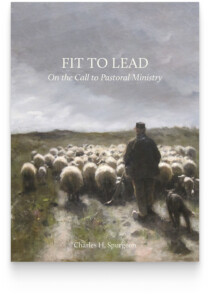
With the rate of pastors retiring, burning out, or concluding their ministries, the need has never been more urgent for aspiring ministry leaders to prepare well for their pastoral calling.
In the eBook Fit to Lead: On the Call to Pastoral Ministry, compiled by The Spurgeon Library at Midwestern Seminary, current and aspiring pastors will gain wisdom from Charles Spurgeon on how to discern and thrive in their call to pastoral ministry. In the short book, Spurgeon—the “Prince of Preachers”—discusses how to identify and encourage those called to ministry, as well as what steps to take in pursuing a call to ministry.
J.
1 Like
I never meant to say rebuke is wrong. Im saying that man’s theology is sometimes wrong and it kills love and creates quarrels. I believe Paul rebuked that type of thing. I find it interesting that people who call for rebuke think their own church cannot be wrong and refuse to be corrected themselves. Anyway i feel terrible and I need love. You guys hurt me. I need to go heal now.
I apologized to Johaan twice that I remember but he never apologized for using a strawman argument against me. That would have been love and would have helped. All he does is talk too much. Please just let this thread die like my heart.
Without love everything is useless. If i cant find it here or in a church ill just stay to myself. People hoard wealth as children die of starvation yet the church doesn’t rebuke its members because the preachers are rich too. Thats not love. People argue, complain, worry and boast in the economy yet the shepherds dont rebuke them. Yet you talk of rebuke. God is our supplier and complaints, worry, arguing and boasting is evil as the Bible said. Thats not love for God or his word.
Im sorry that im so weak with mental problems but thats who I am. But Jesus loves me. He understands how i feel. His anguish was so terrible that he sweated blood. I really dont belong around church people. I hope this is the last time I try. Solitude is my strength. Just me and Jesus.
Its sad when people dont understand others who have mental problems. They never experienced it so they don’t understand. But Jesus loves us as much as anyone else. I know Jesus is on my side because he died for me and helped me escape lust.
I have a huge headache. This might be because of the mental problems I have. Drinking coffee actually relieves this tension that causes the headache but I ran out of coffee. Anyway im not ashamed to have weakness. Its who I am. But I just dont fit in anywhere. People like me never do i guess. Peace and goodbye.
I having a very difficult day. People like me need love and maybe thats why i talk about it. I believe suffering caused my mental problems. I cant attend church so I looked for fellowship online but all I found was debate and divisions. I think thats a sad picture of the modern church. Love should be first and foremost. If you cant love someone then what’s the point? Love fulfills the law, love edifies, love is greater than faith and hope. I just wanted People to love and to be loved but all I find is people who prefer their fallible church theology to love. I blame myself for the suffering i endured but I also blame people who showed me no love. It was a group effort to destroy me. We’re all to blame.
Ok @Bruce, we hear you. You did not find what you were looking for here. Perhaps you will find what you seek elsewhere. God Bless.
Peter
1 Like
Well well. Guess Bruce was not who he claimed to be. He is no longer a part of our Forum. @Johann, that name looks familiar?
Peter
No clue brother @PeterC.
J.
1 Like
He has now been removed from here using anon4271163, another name I cannot remember, and now Bruce.
Peter
1 Like
Some people will insult you if you don’t agree with them. Take pride in the fact that you don’t do that.
1 Like
What a wonderful statement that just spreads unity and compassion! (not).
Watershed of Wisdom
Reproof is a fork in the road for a sinful soul. Will we cringe at correction like a curse, or embrace rebuke as a blessing? One of the great themes in Proverbs is that those who embrace rebuke are wise and walk the path of life, while those who despise reproof find themselves to be fools careening toward death.
The Proverbial warnings against dismissing brotherly correction are staggering. The one who rejects reproof leads others astray (Proverbs 10:17), is stupid (Proverbs 12:1) and a fool (Proverbs 15:5), and despises himself (Proverbs 15:32). “Whoever hates reproof will die” (Proverbs 15:10), and “poverty and disgrace come to him” (Proverbs 13:18).
But just as astounding are the promises of blessing to those who embrace rebuke. “Whoever heeds reproof is honored” (Proverbs 13:18) and prudent (Proverbs 15:5). “He who listens to reproof gains intelligence” (Proverbs 15:32), loves knowledge (Proverbs 12:1), will dwell among the wise (Proverbs 15:31), and is on the path of life (Proverbs 10:17) — because “the rod and reproof give wisdom” (Proverbs 29:15) and “the reproofs of discipline are the way of life” (Proverbs 6:23).
To the one who embraces rebuke, God says, “I will pour out my spirit to you” (Proverbs 1:23), but to the one who despises it, “I will laugh at your calamity” (Proverbs 1:25–26). It will be said of those who reject correction, “They shall eat the fruit of their way, and have their fill of their own devices” (Proverbs 1:30–31), and it’s only a matter of time until they themselves will say, “I am at the brink of utter ruin” (Proverbs 5:12–14).
And when ruin comes for the fool who resists reproof, it will be sudden and devastating: “He who is often reproved, yet stiffens his neck, will suddenly be broken beyond healing” (Proverbs 29:1).
Open the Gift
The wise recognize rebuke as a gift of gold (Proverbs 25:12). It is kindness, and a token of love. “Let a righteous man strike me — it is a kindness; let him rebuke me — it is oil for my head; let my head not refuse it” (Psalm 141:5).
Often it is easier for others in our lives not to say anything, but just let us go merrily on our way down the path of folly and death. But reproof is an act of love, a willingness to own that awkward moment, and perhaps having your counsel thrown back in your face, for the risk of doing someone good. When a spouse or friend or family member or associate rises to the level of such love, we should be profoundly thankful.
Hear God’s Voice in Your Brother’s
All of us who have in Christ “all the treasures of wisdom and knowledge” (Colossians 2:3), and are in our right mind, will want to “listen to advice and accept instruction, that [we] may gain wisdom in the future” (Proverbs 19:20). We’ll not just suffer someone speaking into our lives, but invite them to do so — and when they do, embrace it as a blessing. Even when it’s a rebuke poorly delivered, and the timing and tone are off, and the motivation seems suspect, we’ll want to ransack it for every grain of truth, and then repent, and thank God for the grace of having people in our lives who love us enough to say something.
Not wanting to “despise the Lord’s discipline or be weary of his reproof” (Proverbs 3:11), we’ll ask, How is it that God’s reproof most often comes to us? Answer: in reproof from a brother or sister in Christ. We’ll beware resisting the reproof of a fellow in Jesus, especially when it’s echoed in multiple voices, knowing that likely we would be resisting the very reproof of God.
When a brother or sister in Christ goes to the inconvenience to have the unpleasant conversation bringing correction into our lives, we should be floored with thanksgiving. “The Lord reproves him whom he loves” (Proverbs 3:12). Count it as love from your brother, and as God’s channel of his love for you.
Easier Said Than Done
But all of that, of course, is much easier said than done. Deep down in the caverns of our remaining sin, where we can be most callous to true grace in its varied forms, we don’t want to hear any correction. Something wicked in us recoils.
When we hear that “all Scripture is breathed out by God and profitable,” it’s natural to be more excited about it being “for teaching” and “for training in righteousness” than “for reproof” and “for correction” (2 Timothy 3:16). That’s too personal. That touches a nerve.
And forces from without don’t make it any easier. It shouldn’t surprise us that the societal air we breathe is hostile to correction and reproof, even in their most gentle and loving varieties. If humanity isn’t depraved in nature and sinful in practice, then rebuke is no longer a life-saver, but an annoyance. But if we do acknowledge that we are flawed, selfish, and arrogant and regularly sin with our words and actions, then we will learn to see a brother’s rebuke for the tremendous grace that it is.
J.
1 Like
I know you believe that you are very learned and able to spot untruths in people’s statements and you move to correct them. That’s fine on one level, but you made that opening line to him sound more like a curse than a blessing. What do you mean, you can stay there? Are we supposed to have unity within the body? Where words are chosen carefully to be in love & compassion (which encourages unity) .
You have to be careful Brother, when you stop to speak to someone…think about it this way: You are on the narrow path to the Lord, you have others on the path, some behind you, some ahead of you. So you can’t talk down those behind you on the road. You can’t expect someone to know something that they’ve never been taught yet. So you come acoss many times like, where someone may be looking for milk, you beat them over the head with the meat?! Not good. You totally came across more like a curse than blessing. Just something to ponder on…
Let me know when you are ready for a mature and edifying dialogue, one that seeks to “speak the truth in love” (Ephesians 4:15) and aims for the mutual edification of the body of Christ (Ephesians 4:29; 1 Thessalonians 5:11).
Attempting to judge my motives or attack my character is neither profitable nor biblical, for we are warned not to judge according to appearances, but to judge with righteous judgment (John 7:24). Such arguments do not address the substance of what has been said, but rather resemble the kind of strife and contention that Scripture cautions us to avoid (2 Timothy 2:23-24; Titus 3:9).
Therefore, there is no need for me to respond to misrepresentations of my position. If you would like to discuss the Scriptures themselves, I am more than willing to do so, following the example of the Bereans, who examined the Scriptures daily to see whether these things were so (Acts 17:11).
J.
Who’s judging your motives? You apparently don’t understand what I said. It was meant as brotherly advice, how you came across to that man, was not the best way.
But you’re too smart to learn that huh? Sorry to hear that. It would have edifiied you, if you were teachable.