The Two Houses In God's Word

PART 1
Here’s another topic not popularly taught in most Churches today. But it’s a very important topic for the serious Bible student, because it determines which Old Testament prophecies are meant for which of the two houses of Israel after… God split old Israel into two separate kingdoms and nations. This is written in God’s Word, so don’t allow anyone to take this away from you, because there exists certain ones today that like to claim they ‘only’ represent God’s Israel, when God’s Word shows that is not true.

Heb 8:7-13
7 For if that first covenant had been faultless, then should no place have been sought for the second.
8 For finding fault with them, He saith, "Behold, the days come, saith the Lord, when I will make a new covenant with the house of Israel and with the house of Judah:
9 Not according to the covenant that I made with their fathers in the day when I took them by the hand to lead them out of the land of Egypt; because they continued not in my covenant, and I regarded them not, saith the Lord.
10 For this is the covenant that I will make with the house of Israel after those days, saith the Lord; I will put My laws into their mind, and write them in their hearts: and I will be to them a God, and they shall be to Me a people:
11 And they shall not teach every man his neighbour, and every man his brother, saying, “Know the Lord”: for all shall know Me, from the least to the greatest.
12 For I will be merciful to their unrighteousness, and their sins and their iniquities will I remember no more.
13 In that He saith, “A new covenant”, He hath made the first old. Now that which decayeth and waxeth old is ready to vanish away.
KJV

Have you ever wondered why the above New Testament Book of Hebrews 8 above mentions that “house of Israel” and “house of Judah”? Apostle Paul, which I believe wrote the Book of Hebrews, was quoting from Jeremiah 31 regarding that Promise by God to the children of Israel. So who are those two separate houses mentioned there?

Just a side note about the above Hebrews 8 Scripture: the Old Covenant has waxed old and is vanished away today, for Lord Jesus Christ shed His Blood on His cross to offer us the New Covenant, and God’s laws are now written in our minds and hearts by The Holy Spirit by that New Covenant. However, The New Covenant is not completed yet today, because there are still many of God’s people that reject Lord Jesus Christ. The full effect of that Jeremiah 31 prophecy is for when Lord Jesus returns and reigns as King of Israel with His elect priests and kings. That… is when both houses will ‘know’… The LORD, from the least to the greatest.

But who are those two houses?

(Continued…)
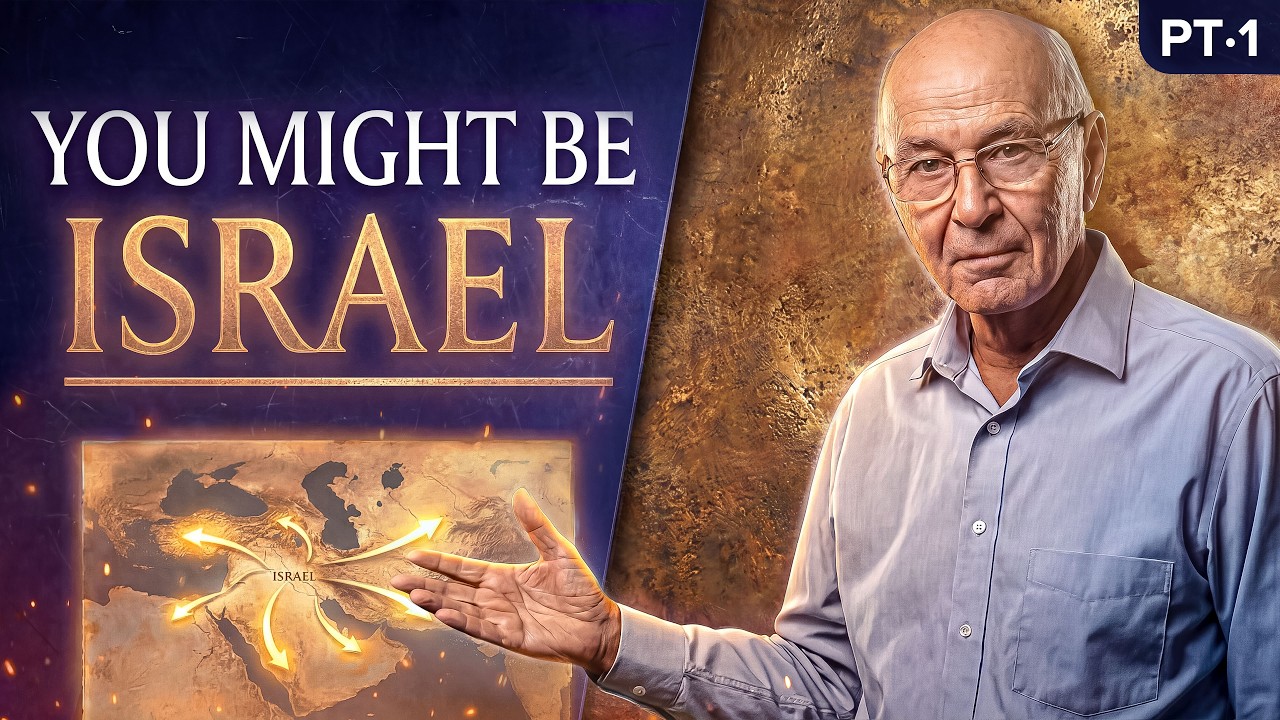
When the ten norther tribes fell into gross idolatry many left and came to Judea as refugees. These kept their tribal identities even to the the tie of Jesus.

PART 2
I’m not going to do a whole lot of Scripture pasting with this topic, so I’ll rely on you to turn to the Bible Scriptures I reference and study them for yourselves.

  1. the first thing to understand in God’s Word begins in the 1 Kings 11 Chapter when Solomon had many wives and concubines from foreign nations that worshiped pagan gods. Solomon allowed his wives to bring in their idol worship in among the children of Israel. God warned Solomon about it twice, but Solomon didn’t change. That is when our Heavenly Father took action and decided to rend (split) the nation of Israel into two separate kingdoms. But God said He wouldn’t do it in Solomon’s days as king of Israel, but in his son Rehboam’s days as king (1 Kings 11).

At that time with Solomon as king, he made Jeroboam of the tribe of Ephraim ruler over the “house of Joseph”, i.e., the northern ten tribes in the northern parts of the holy land. And the king tribe per God’s commandment was to the tribe of Judah, and of the house of David. Solomon’s son Rehoboam continued that line from Judah and the house of David. Important to remember that. (Note the similarity of the two names, Rehoboam, Solomon’s son of the tribe of Judah, and Jeroboam, of the tribe of Ephraim, one of the northern ten tribes that became the head tribe over the ten. And note especially that, “house of Joseph” label put for the ten northern tribes with one of Ephraim as head, i.e., Jeroboam.)

God sent His prophet Ahijah to meet Jeroboam who was outside Jerusalem in a field. Jeroboam (of Ephraim) had on a new garment. Ahijah tore the new garment off Jeroboam, and tore it into 12 pieces and gave Jeroboam 10 pieces, and repeated what God had told him to say to Jeroboam. God said He will give Jeroboam ten tribes to rule over, and He would make him “king over Israel” (1 Kings 11:35-37). With this prophecy from God, He stated twice for emphasis that He would leave one tribe at Jerusalem for David’s sake and for Jerusalem’s sake. That one tribe would be the tribe of Judah under Solomon’s son Rehoboam.

The thing to consider about that event written in 1 Kings 11 is how could God call those “ten tribes” after He split Israel as being “Israel” in relation to the “house of Joseph”? Where exactly did that “house of Joseph” idea come from?

The “house of Joseph” is first mentioned in Genesis 50:8 about those of Joseph’s family. And who were those? Joseph had two sons while in Egypt separated from his brethren, the sons of Manasseh the elder, and Ephraim the younger. Per 1 Chronicles 5 upon Joseph’s two sons is where God’s Birthright wound upon, and where it still is to this day. Reuben, the firstborn, violated his father Jacob’s bed with sleeping with one of Jacob’s concubines, so he lost the Birthright. It then went to Joseph. And then it wound up in final upon Ephraim and Manasseh, with the younger Ephraim put in the Birthright before his elder brother Manasseh (see Genesis 48). So when God mentioned the “house of Joseph” here in 1 Kings 11 about giving ten tribes to Jeroboam of the tribe of Ephraim, and then saying Jeroboam would be “king over Israel”, that is in relation to Joseph’s son Ephraim and God’s Birthright originally given through Abraham and flowed all the way down to Joseph and his two sons. There’s a lot of history there, but this is something our Heavenly Father does when teaching in His Word, and we are supposed to catch it when He does that.

(Continued…)

PART 3

(Continued…)

But that still… does not explain why God would proclaim Jeroboam of the tribe of Ephraim as “king over Israel” when it only involves “ten tribes”, and not all twelve tribes. What’s that about? Why would God do that? It is because of the MEANING of the name Israel which God gave as a new name to Jacob by the Angel of The LORD that Jacob wrestled with. That name Israel means ‘to prevail, or overcome, with God’s help’. It is actually a symbol from God’s Salvation Promise by FAITH which He first preached to Abraham. And Abraham believed, and God counted it to Abraham as righteousness. That is the true idea of what that name ISRAEL represents, the Promise by Faith that was 430 years prior to God giving His law (see Galatians 3).

It is about GOD’s Birthright to the symbolic ‘firstborn’ which began with Abraham and Abraham’s son Isaac. This is why God said, “… for in Isaac shall thy seed be called.” (Gen.21:12) From Isaac God’s Birthright of The Gospel Promise by FAITH would continue to his son Jacob. And then from Jacob it would continue to Jacob’s firstborn son Reuben until Reuben lost it, and then onto Joseph whose eleven brothers became jealous of and sold into Egypt. Then Joseph had two sons, Ephraim and Manasseh, and Jacob transferred the name Israel upon the two lads, and prophesied that Ephraim would become “a multitude of nations” and that his brother Manasseh would also become “great” (Genesis 48). And that’s who the “house of Joseph” represented at that time of 1 Kings 11. That is the history about the name ISRAEL God is pointing to there with making Jeroboam of the tribe of Ephraim ruler over ISRAEL, but involving only “ten tribes”, the ten tribes in the north that Solomon had originally setup Jeroboam over as ruler.

To put it bluntly, God made Jeroboam of the tribe of Ephraim “king over Israel” because the name ISRAEL is about The Gospel of Jesus Christ, which is what the Promise by Faith first offered to Abraham was about, and is the main component of God’s Birthright promises. Just because the majority of the children of Israel rebelled, and still today the majority of the Jews still reject The Gospel did not prevent this prophecy from going into effect. It was fulfilled with the later scattering of the ten northern tribes of Israel becoming “a multitude of nations” under The Gospel of Jesus Christ, i.e., Christ’s Church. The scattered ten tribes under Ephraim were removed from the holy land by the kings of Assyria which God brought upon them, and they would eventually migrate into the “wilderness”, having lost their identity as part of old Israel, becoming as Gentiles, living among Gentiles. And The Gospel would be sent to those ten tribes scattered among the Gentiles, and both would believe on Jesus together, and become His Church, as it still is to this day (see Book of Hosea, as the “house of Israel” there is put only for the northern ten tribes under Ephraim, with God getting ready to remove them from the holy land, and telling them what He would do with them).

This idea of God making Jeroboam of the tribe of Ephraim “king over Israel” is not about the JEWS of the “house of Judah” of the southern kingdom under Solomon’s son Rehoboam. Per the Jewish historian Josephus, that title of Jew originated from the sole tribe of Judah, and only those who returned from the Babylon captivity used it for themselves in the area of Jerusalem-Judea (Antiquities of the Jews, by Flavius Josephus, Book XI, Chapter 5, Sec.7). At that time, God had already scattered the northern ten tribes under Ephraim about 120 years prior to Judah’s captivity to Babylon (see 2 Kings 17). The Jews of the southern kingdom of Judah, the “house of Judah”, being the only children of Israel left in the holy land after God removed the ten tribes, the “house of Judah” then became claiming themselves as ISRAEL, because they were the only Israelites left in the holy land then. The ten tribes had become lost to them, and to the world (but not to God), even as it still is to this day. (Yet God left a remnant that would know about their identity, as per Paul’s example in Romans 11 about those whom God did foreknow).

(Continued…)

@DavyP

I will remind you of a couple of passages that demonstrate the social division between Judah and Israel long before the death of Solomon. The social division was spoken of even in the conquest of Joshua, even when the first national king, Saul, performed his first exploit as a leader of the 12 tribes.


Joshua 11:21-23 (NKJV)
And at that time Joshua came and cut off the Anakim from the mountains: from Hebron, from Debir, from Anab, from all the mountains of Judah, and from all the mountains of Israel; Joshua utterly destroyed them with their cities. None of the Anakim were left in the land of the children of Israel; they remained only in Gaza, in Gath, and in Ashdod. So Joshua took the whole land, according to all that the LORD had said to Moses; and Joshua gave it as an inheritance to Israel according to their divisions by their tribes. Then the land rested from war.

1 Samuel 11:7-8 (NKJV)
So he took a yoke of oxen and cut them in pieces, and sent them throughout all the territory of Israel by the hands of messengers, saying, “Whoever does not go out with Saul and Samuel to battle, so it shall be done to his oxen.” And the fear of the LORD fell on the people, and they came out with one consent. When he numbered them in Bezek, the children of Israel were three hundred thousand, and the men of Judah thirty thousand.

1 Samuel 17:51-52 (NKJV)
Therefore David ran and stood over the Philistine, took his sword and drew it out of its sheath and killed him, and cut off his head with it. And when the Philistines saw that their champion was dead, they fled. Now the men of Israel and Judah arose and shouted, and pursued the Philistines as far as the entrance of the valley and to the gates of Ekron. And the wounded of the Philistines fell along the road to Shaaraim, even as far as Gath and Ekron.

1 Samuel 18:15-16 (NKJV)
Therefore, when Saul saw that he behaved very wisely, he was afraid of him. But all Israel and Judah loved David, because he went out and came in before them.

2 Samuel 2:8-11 (NKJV)
But Abner the son of Ner, commander of Saul’s army, took Ishbosheth the son of Saul and brought him over to Mahanaim; and he made him king over Gilead, over the Ashurites, over Jezreel, over Ephraim, over Benjamin, and over all Israel. Ishbosheth, Saul’s son, was forty years old when he began to reign over Israel, and he reigned two years. Only the house of Judah followed David. And the time that David was king in Hebron over the house of Judah was seven years and six months.


These passages should help you refine your understanding of these “two houses”

KP

1 Like

PART 4

What about that “house of Judah” label that was later applied to the southern kingdom of Judah at Jerusalem-Judea, i.e., the Jews?

When Solomon died, and his son Rehoboam became king of all Israel, and he went to Shechem to be crowned with all Israel there. Jeroboam who had exiled to Egypt because of the prophecy that he would be made king over Israel, returned, and he with leaders of the ten tribes went to see Rehoboam, and ask him to ease Solomon’s burden he had put upon the ten tribes. Rehoboam said his little finger would represent his father Solomon’s burden. So Jeroboam and the ten tribes went back north, and SPLIT off from Judah and the house of David at Jerusalem. Only the tribes of Judah and Benjamin were with Solomon’s son Rehoboam, king of Judah. Then the ten tribes made Jeroboam of the tribe of Ephraim “king over all Israel” (1 KIngs 12:20-21) Rehoboam then got the tribes of Judah and Benjamin together to invade the northern ten tribes and bring the kingdom back together, but God stopped him and said this split was of Him (1 Kings 12:21-24).

Now at that point, two separate kingdoms were created, at two separate locations in the holy land. Later Bible prophecy is assigned specific to each one, so we are not to confuse the two when reading Old Testament prophecy.

House of Judah:
Under Solomon’s son Rehoboam, king of Judah, of the house of David.
Tribes: Judah, Benjamin (later Levi also, and a small remnant of the ten tribes, see 2 Chron.11)
Other Names: Judah, Jerusalem, Aholibah (Ezek.23), house of David, house of Judah, Jews.
Capital city: Jerusalem
Lands: Judea in the southern holy land

House of Israel:
Under Jeroboam of the tribe of Ephraim.
Tribes: Ephraim, Manasseh, Dan, Issachar, Naphtali, Asher, Gad, Reuben, Simeon, Zebulun.
Other Names: house of Israel, Israel, house of Joseph, Ephraim, Aholah (Ezek.23), Samaria.
Capital city: Samaria in the northern holy land
Lands: north of Jerusalem, northern holy lands

So after the split of 1 Kings 12, when you see “Israel” and “Judah” in the same sentence, it means the two separate kingdoms which God created in the split of old Israel. ISRAEL became a title for the northern ten tribes ONLY, even though those of the southern kingdom of Judah also are Israelites. Think of the new name ISRAEL that God gave to Jacob in direct relation to the Gospel of Jesus Christ, because that is what the real meaning of the name ISRAEL is about. It is a continuation of God’s Promise by FAITH first given through Abraham, and this is why Apostle Paul would say in Galatians 3 that those of FAITH have become “the children of Abraham”, and inherit with faithful Abraham.

And understand this about those who are deceived away from the above Bible Scriptures in connection with The Gospel. The unbelieving Jews that included many foreigners of the Canaanites that crept in among Judah, want for themselves ONLY to be recognized as God’s ISRAEL. They use the nation called Israel in the holy land today as an outlet for that claim, with some of the Jews even trying to claim all 12 tribes were put back together at some point. But today’s nation of Israel really only represent God’s prophecy that He would always leave “one tribe” at Jerusalem for Jerusalem’s sake, and David’s sake (1 Kings 11). The majority of Israelites, the ten lost tribes, are still scattered among the Gentiles today, and probably the majority of them along with believing Gentiles make up Christ’s Church. And per Bible prophecy after the split, those ten tribes of the seed of Isaac are still recognized as God’s Israel. When Lord Jesus Christ returns in our near future, everyone will know and understand this.

Thus when Lord Jesus said…

Matt 15:24
24 But He answered and said, “I am not sent but unto the lost sheep of the house of Israel.”
KJV

… Jesus was not talking about the Jews, because they never became lost and still retain their heritage as part of Israel to this day, including God’s feast days, sabbaths, and new moons. And the majority of the Jews today still reject Jesus of Nazareth as Messiah.

Jesus was pointing directly to the lost ten tribes of the “house of Israel” in that above verse. That is where after He was rejected at Jerusalem that The Gospel would be sent to, and lost Israel among the Gentiles would believe together, and become His Church. This Jesus also showed in His parable of the husbandmen in Matthew 21. The symbolic “vineyard” per Isaiah 5 is a symbol used for the ten tribe “house of Israel” in that Matthew 21 parable.

I would push back on that interpretation Davy, because I think you are making Matthew 15:24 say considerably more than Matthew actually says. I agree that after the division of the kingdom, “Israel” can refer specifically to the northern kingdom, while “Judah” refers to the southern kingdom. But that does not establish that every subsequent reference to “the house of Israel” means the ten northern tribes.

In Matthew 15 there is nothing about Ephraim, Samaria, Assyria, the ten tribes, or Israelites scattered among the Gentiles. The immediate context is Jesus’ messianic mission to Israel in contrast with the Gentiles, and Matthew 10:5–6 provides an important parallel where the disciples are likewise sent to “the lost sheep of the house of Israel,” with the command specifically contrasting them with Gentiles and Samaritans. The simplest contextual reading is therefore Israel as God’s covenant people who are spiritually lost and in need of their Messiah, not specifically the ten northern tribes.

I would also question the statement that the Jews “never became lost.” That is difficult to reconcile with the New Testament itself. Jesus came to Israel because Israel needed redemption, and Matthew repeatedly records the unbelief and spiritual blindness of many within Israel. Paul, moreover, explicitly says, “I also am an Israelite, of the seed of Abraham, of the tribe of Benjamin” (Romans 11:1).

Benjamin belonged to the southern kingdom, yet Paul unquestionably identifies himself as an Israelite. So we cannot make “Israel” a permanently exclusive designation for the northern ten tribes after 1 Kings 12. Context determines whether Israel means the northern kingdom or Israel as the covenant people.

I would also be cautious about Matthew 21. There certainly is an Isaiah 5 background, where the vineyard represents God’s people, but Isaiah 5:7 itself says, “the vineyard of the LORD of hosts is the house of Israel, and the men of Judah his pleasant plant.”

Isaiah’s vineyard imagery therefore cannot simply be restricted to the ten northern tribes. More importantly, Matthew tells us exactly how the religious leaders understood Jesus’ parables: “they perceived that he spake of them” (Matthew 21:45). The immediate issue is Israel’s leadership rejecting God’s servants and ultimately His Son. Jesus then says the kingdom will be taken from them and given to a people producing its fruit. Nothing in the passage identifies that “people” as the supposedly recovered ten tribes.

Most importantly, I think you are conflating two separate propositions: that the northern tribes were scattered and that Matthew 15:24 specifically identifies those scattered tribes as the recipients of Jesus’ mission. The first is biblical history. The second requires an argument from the text, and Matthew 15:24 itself does not provide it. If Matthew intended “the lost sheep” to mean the ten lost tribes scattered among the Gentiles, I think we would need some contextual indication of that. Otherwise we are importing the ten-tribe interpretation into the verse rather than deriving it from the verse.

J.

PART 5

If you understood about God’s split of old Israel starting in 1 Kings 11 from the above posts, then it should make understanding the Ezekiel 37 prophecy about the joining of the two symbolic sticks at Christ’s future coming easier to understand also.

Ezek 37:16-28
16 Moreover, thou son of man, take thee one stick, and write upon it, “For Judah, and for the children of Israel his companions:” then take another stick, and write upon it, “For Joseph, the stick of Ephraim, and for all the house of Israel his companions:”
17 And join them one to another into one stick; and they shall become one in thine hand.

There you have both Judah (put for the “house of Judah”), and the “house of Israel” mentioned in a single verse. If you understood about God’s split of old Israel into two separate ‘houses’, then you should easily understand this.

18 And when the children of thy people shall speak unto thee, saying, “Wilt thou not shew us what thou meanest by these?”

19 Say unto them, "Thus saith the Lord GOD; Behold, I will take the stick of Joseph, which is in the hand of Ephraim, and the tribes of Israel his fellows, and will put them with him, even with the stick of Judah, and make them one stick, and they shall be one in Mine hand.

20 And the sticks whereon thou writest shall be in thine hand before their eyes.

21 And say unto them, 'Thus saith the Lord GOD; Behold, I will take the children of Israel from among the heathen, whither they be gone, and will gather them on every side, and bring them into their own land:

That “children of Israel” is especially about the ten lost tribes of Israel. Per Amos 9, God said He will gather in final the ten tribe “house of Israel” out of the nations like grain is sifted through a sieve, and not the least grain will fall to the ground.

22 And I will make them one nation in the land upon the mountains of Israel; and one king shall be king to them all: and they shall be no more two nations, neither shall they be divided into two kingdoms any more at all:

That “one king” will be our Lord Jesus Christ, King of kings, and Lord of lords.

23 Neither shall they defile themselves any more with their idols, nor with their detestable things, nor with any of their transgressions: but I will save them out of all their dwellingplaces, wherein they have sinned, and will cleanse them: so shall they be My people, and I will be their God.
24 And David My servant shall be king over them; and they all shall have one shepherd: they shall also walk in My judgments, and observe My statutes, and do them.
25 And they shall dwell in the land that I have given unto Jacob My servant, wherein your fathers have dwelt; and they shall dwell therein, even they, and their children, and their children’s children for ever: and My servant David shall be their prince for ever.

Christ as King over Israel, and David as prince, in the holy land. You realize that has NOT happened yet today, right?

26 Moreover I will make a covenant of peace with them; it shall be an everlasting covenant with them: and I will place them, and multiply them, and will set My sanctuary in the midst of them for evermore.
27 My tabernacle also shall be with them: yea, I will be their God, and they shall be My people.
28 And the heathen shall know that I the LORD do sanctify Israel, when My sanctuary shall be in the midst of them for evermore.
KJV

That prophecy will happen beginning on the day of Christ’s future return. It is when The New Covenant will be completed, because as of today, there are still many of the seed of Israel that still reject Jesus of Nazareth as The Christ, Messiah. And God has ordained a false-Messiah to come to Jerusalem first at the end of this world, to deceive those who still do not believe, and that coming event will definitely get their attention when they see the True Christ coming in the clouds in our near future. The unbelieving “heathen” (put for the Gentile nations) will then know it too.

PART 6

In Christ’s parable of the husbandmen over His vineyard, that vineyard was defined in Isaiah 5 as the TEN NORTHERN TRIBES OF ISRAEL, called the “house of Israel”. And I have already warned how Jews today try to claim that “house of Israel” label applies only to them, when it does not. Why would the Jews of the “house of Judah” try to claim that?

I warned about that too in my writings, because today’s Jews are trying to claim that God is gathering all of the children of Israel back to the holy land in stages, showing that His Kingdom is now, in this world, being established there, when it is not.

The Jews who still reject Jesus of Nazareth as The Christ-Messiah even misuse Bible prophecy in the Old Testament prophets about the final gathering of all 12 tribes of Israel, when today’s Jews ONLY represent the “house of Judah” which God separated from the larger body of Israelites (ten tribe “house of Israel”). The Jews today in the nation of Israel in the middle east only represent the “one tribe” that God said He would always leave at Jerusalem, for David’s sake and Jerusalem’s sake, per 1 Kings 11. The tribes of Benjamin and Levi are joined with them, and a small remnant of the northern ten tribes that rejected Jeroboam’s calf idols, and the rest of those Jews today are foreigners (1 Kings 12; 2 Chronicles 11; Ezra 1 & 2).

Isa 5:1-7
5 Now will I sing to My wellbeloved a song of My beloved touching his vineyard. My wellbeloved hath a vineyard in a very fruitful hill:
2 And He fenced it, and gathered out the stones thereof, and planted it with the choicest vine, and built a tower in the midst of it, and also made a winepress therein: and he looked that it should bring forth grapes, and it brought forth wild grapes.
3 And now, O inhabitants of Jerusalem, and men of Judah, judge, I pray you, betwixt Me and My vineyard.
4 What could have been done more to My vineyard, that I have not done in it? wherefore, when I looked that it should bring forth grapes, brought it forth wild grapes?
5 And now go to; I will tell you what I will do to My vineyard: I will take away the hedge thereof, and it shall be eaten up; and break down the wall thereof, and it shall be trodden down:
6 And I will lay it waste: it shall not be pruned, nor digged; but there shall come up briers and thorns: I will also command the clouds that they rain no rain upon it.

7 For the vineyard of the LORD of hosts is the house of Israel, and the men of Judah His pleasant plant: and he looked for judgment, but behold oppression; for righteousness, but behold a cry.
KJV

Again, that “house of Israel” is put for the TEN NORTHERN TRIBES OF ISRAEL. That “pleasant plant” is put for the “house of Judah” at Jerusalem that were supposed to be watching over that symbolic “vineyard”.

PART 7

Christ’s parable of the vineyard and husbandmen in Matthew 21…

Matt 21:33-43
33 Hear another parable: There was a certain householder, which planted a vineyard, and hedged it round about, and digged a winepress in it, and built a tower, and let it out to husbandmen, and went into a far country:

34 And when the time of the fruit drew near, he sent his servants to the husbandmen, that they might receive the fruits of it.

35 And the husbandmen took his servants, and beat one, and killed another, and stoned another.

36 Again, he sent other servants more than the first: and they did unto them likewise.

37 But last of all he sent unto them his son, saying, “They will reverence my son.”

38 But when the husbandmen saw the son, they said among themselves, “This is the heir; come, let us kill him, and let us seize on his inheritance.”

39 And they caught him, and cast him out of the vineyard, and slew him.

40 When the lord therefore of the vineyard cometh, what will he do unto those husbandmen?

Our Heavenly Father and His Son Jesus Christ is The LORD of that vineyard, and originally set it, fenced it, cleared its stones, and dressed it. He went away, and when it was time for the fruits of that vineyard, He found poison grapes instead (per the Isaiah 5 analogy). The vineyard Isaiah 5 says represents the ten tribe “house of Israel”, the ten tribes of old Israel dwelling in the northern holy land with Ephraim as its head tribe.

Jesus then asks the unbelieving Jews what that householder would do to those who killed the servants He sent, and that had The Son killed so they could steal His inheritance. Those Jews are going to pronounce their own punishment… but they don’t know it yet…

41 They say unto Him, “He will miserably destroy those wicked men, and will let out his vineyard unto other husbandmen, which shall render him the fruits in their seasons.”

42 Jesus saith unto them, "Did ye never read in the scriptures, ‘The stone which the builders rejected, the same is become the head of the corner: this is the Lord’s doing, and it is marvellous in our eyes?’

43 Therefore say I unto you, The kingdom of God shall be taken from you, and given to a nation bringing forth the fruits thereof.
KJV

Who is that “nation” Jesus said that “vineyard(“house of Israel”, ten lost tribes) would be given to and produce its FRUITS? And what do those FRUITS of the vineyard represent?

That “nation” represents the ones to whom Jesus sent The Gospel to and they would believe. Not only Gentiles, but also the ten lost tribes that God had scattered among the Gentiles that also would believe The Gospel. That Gospel is that “fruits” of the “vineyard” (“house of Israel”). The majority of the “house of Judah” (Jews) instead rejected The Gospel, so they are not the ones who are mainly responsible for producing the Gospel fruit. The ten lost tribes along with believing Gentiles that make up Christ’s Church, are the main ones to produce that Gospel fruit. So don’t allow any man to HIDE this prophecy from you, for it is clearly written, and today’s majority of Jews have a hidden agenda against it, because they want the world to think they only… represent God’s Israel, when they only represent a small part of old Israel, just 3 tribes.

Dr.Andrew Tobolowsky
William & Mary University
Dr. Andrew Tobolowsky is Assistant Professor of Religious Studies in the Arts and Sciences Department of William & Mary University. He holds a Ph.D. from Brown University and is the author of The Sons of Jacob and the Sons of Herakles (Mohr Siebeck, 2017).

Why Most Believers Misunderstand the Lost Tribes of Israel

lost tribes of israel found
who are the 2 remaining tribes of israel
who are the 12 lost tribes of israel today
what were the 10 northern tribes of israel known as school days
when will the lost tribes of israel return
which tribes were in the northern kingdom of israel
what are the 12 tribes of israel
what were the 2 southern tribes of israel known as
how many tribes were in the southern kingdom of israel
is josephus mentioned in the bible

J.

The Scottish Declaration of Independence, 1320’s Scotland…

Of course, this Declaration of Arbroath pre-dates men’s university academia suppositions.

DECLARATION OF ARBROATH
(from Transcription of the Declaration of Arbroath - National Records of Scotland (NRS))

Most Holy Father, we know and from the chronicles and books of the ancients we find that among other famous nations our own, the Scots, has been graced with widespread renown. It journeyed from Greater Scythia by way of the Tyrrhenian Sea and the Pillars of Hercules, and dwelt for a long course of time in Spain among the most savage peoples, but nowhere could it be subdued by any people, however barbarous. Thence it came, twelve hundred years after the people of Israel crossed the Red Sea, to its home in the west where it still lives today. The Britons it first drove out, the Picts it utterly destroyed, and, even though very often assailed by the Norwegians, the Danes and the English, it took possession of that home with many victories and untold efforts; and, as the histories of old time bear witness, they have held it free of all servitude ever since. In their kingdom there have reigned one hundred and thirteen kings of their own royal stock, the line unbroken by a single foreigner.

The high qualities and merits of these people, were they not otherwise manifest, shine forth clearly enough from this: that the King of kings and Lord of lords, our Lord Jesus Christ, after His Passion and Resurrection, called them, even though settled in the uttermost parts of the earth, almost the first to His most holy faith. Nor did He wish them to be confirmed in that faith by merely anyone but by the first of His Apostles - by calling, though second or third in rank - the most gentle Saint Andrew, the Blessed Peter’s brother, and desired him to keep them under his protection as their patron for ever.

@DavyP

You draw a strong distinction between two tribes to the south, and 10 tribes to the north which you call “The house of Israel”. How do you account for Simeon, who’s inheratance was in the south, much further south than Benjamin, and was wholly contained within the inheritance of Judah?

The second lot came out for Simeon, for the tribe of the children of Simeon according to their families. And their inheritance was within the inheritance of the children of Judah.

They had in their inheritance Beersheba (Sheba), Moladah, Hazar Shual, Balah, Ezem, Eltolad, Bethul, Hormah, Ziklag, Beth Marcaboth, Hazar Susah, Beth Lebaoth, and Sharuhen: thirteen cities and their villages; Ain, Rimmon, Ether, and Ashan: four cities and their villages; and all the villages that were all around these cities as far as Baalath Beer, Ramah of the South.

This was the inheritance of the tribe of the children of Simeon according to their families. The inheritance of the children of Simeon was included in the share of the children of Judah, for the share of the children of Judah was too much for them. Therefore the children of Simeon had their inheritance within the inheritance of that people. (Joshua 19:1-9)

Just wondering how you work this out with your division of 10 (The house of Israel") & 2 (The house of Judah)?

KP

Asa, king of Judah at Jerusalem, reigned in the 20th year of Jeroboam, king of Israel over the ten northern tribes (See 1 Kings 15). So the following happened after God’s split of old Israel in 1 Kings 11 and 2 Chron.11.

2 Chron 15:8-10
8 And when Asa heard these words, and the prophecy of Oded the prophet, he took courage, and put away the abominable idols out of all the land of Judah and Benjamin, and out of the cities which he had taken from mount Ephraim, and renewed the altar of the LORD, that was before the porch of the LORD.

9 And he gathered all Judah and Benjamin, and the strangers with them out of Ephraim and Manasseh, and out of Simeon: for they fell to him out of Israel in abundance, when they saw that the LORD his God was with him.

10 So they gathered themselves together at Jerusalem in the third month, in the fifteenth year of the reign of Asa.
KJV

SIMEON
Simeon’s families are enumerated (Gen 46:10; Num 26:12-14; 1 Chron 4:24-43). At the census at Sinai Simeon numbered 59,300 (Num 1:23); it was then the most numerous after Judah and Dan. At Shittim it had become the smallest, numbering 22,200. The mortality consequent on the idolatry of Peor was a leading cause (Num 25:9,14). Zimri, slain in the act, was a prince of Simeon (Num 26:14). Simeon was doomed by Jacob to be “scattered in Israel” (Gen 49:7); its sins caused its reduction to such small numbers as found adequate territory within Judah (Josh 19:2-9). Simeon was the “remnant” with Judah and Benjamin, which constituted Rehoboam’s forces (1 Kings 12:23). Still Simeon remained strong enough in Hezekiah’s days to smite the men of Ham with an expedition under 13 Simeonite princes, and to occupy their dwellings “at the entrance of (rather, as Keil, ‘westward from’) Gedor to the E. side of the valley” (1 Chron 4:34-43).

The Simeonites “found the Meunim” (not as KJV, 1 Chron 4:41, “habitations”) (see MAON) there besides the Hamites (whether Egyptians, Cushites, or Canaanites). The Meunim were connected with Maan, a city near Petra, E. of wady Musa, nomads. Five hundred Simeonites undertook a second expedition under four chiefs, sons of Shimei, against the remnant of Amalek that had escaped from Saul and David (1 Sam 14:48; 15:7; 2 Sam 8:12) to the mountains of Idumea; they smote them utterly, and dwelt in their place, and were there at the date of the composition of 1 Chronicles, i.e. after the return from Babylon. Simeon is omitted in Moses’ blessing, possibly because of the idolatry of Peor. Simeon in the wilderness marched south of the tabernacle, with Reuben and Gad, sons of Zilpah, maid of Leah, Simeon’s mother. The Canaanitess mother of Shaul (Gen 46:10) and the Horite father of Shaphat the spy from Simeon (Num 13:5) indicate the laxness of Simeon in marriage connections, from whence sprang his paganish degeneracy. Their villages and 18 or 19 cities lay round the well Beersheba in Judah’s extreme south. Simeon stands first of the tribes appointed to bless the people on Mount Gerizim (Deut 27:12). Though cities of Simeon were among those to which David sent presents of the Amalekite spoils, and though Ziklag was David’s own property, received from Achish king of the Philistines who had wrested it from Simeon (1 Sam 27:6; 30:26, etc.), yet Simeon and Judah were few in numbers at his installation at Hebron (1 Chron 12:23-37), and Simeon more than Judah. Some men of Simeon were apparently settled in the northern kingdom of Israel after the disruption (2 Chron 15:9; 34:6). Simeon is between Issachar and Benjamin, not beside Judah, in Ezek 48:25. Simeon is also in Rev 7:7.
(from Fausset’s Bible Dictionary, Electronic Database Copyright © 1998, 2003, 2006 by Biblesoft, Inc. All rights reserved.)

@DavyP

You said 1 Kings 15 says this:

1 Kings 15:9 (KJV)
And in the twentieth year of Jeroboam king of Israel reigned Asa over Judah.

1 Kings 15:9 (NKJV)
In the twentieth year of Jeroboam king of Israel, Asa became king over Judah.

1 Kings 15:9 (YLT)
And in the twentieth year of Jeroboam king of Israel reigned hath Asa over Judah,

1 Kings 15:9 (NASB)
So in the twentieth year of Jeroboam the king of Israel, Asa began to reign as king of Judah.

1 Kings 15:9 (ESV)
In the twentieth year of Jeroboam king of Israel, Asa began to reign over Judah,

1 Kings 15:9 (Darby)
And in the twentieth year of Jeroboam king of Israel, Asa began to reign over Judah;

1 Kings 15:9 (Masoretic Text)
ובשׁנת עשׂרים לירבעם מלך ישׂראל מלך אסא מלך יהודה

Where did you get the addition of “over the ten northern tribes”? This distinction does not appear in the original, nor in any of the above translations.

Just interested in how you have arrived at you conclusions.
KP

God speaking through His prophet Ahijah to Jeroboam of the tribe of Ephraim…

1 Kings 11:28-37
28 And the man Jeroboam was a mighty man of valour: and Solomon seeing the young man that he was industrious, he made him ruler over all the charge of the house of Joseph.

29 And it came to pass at that time when Jeroboam went out of Jerusalem, that the prophet Ahijah the Shilonite found him in the way; and he had clad himself with a new garment; and they two were alone in the field:

30 And Ahijah caught the new garment that was on him, and rent it in twelve pieces:

31 And he said to Jeroboam, Take thee ten pieces: for thus saith the LORD, the God of Israel, Behold, I will rend the kingdom out of the hand of Solomon, and will give ten tribes to thee:

32 (But he shall have one tribe for My servant David’s sake, and for Jerusalem’s sake, the city which I have chosen out of all the tribes of Israel:)

33 Because that they have forsaken Me, and have worshipped Ashtoreth the goddess of the Zidonians, Chemosh the god of the Moabites, and Milcom the god of the children of Ammon, and have not walked in My ways, to do that which is right in Mine eyes, and to keep My statutes and My judgments, as did David his father.

34 Howbeit I will not take the whole kingdom out of his hand: but I will make him prince all the days of his life for David My servant’s sake, whom I chose, because he kept My commandments and My statutes:

35 But I will take the kingdom out of his son’s hand, and will give it unto thee, even ten tribes.

36 And unto his son will I give one tribe, that David My servant may have a light alway before Me in Jerusalem, the city which I have chosen Me to put My name there.

37 And I will take thee, and thou shalt reign according to all that thy soul desireth, and shalt be king over Israel.
KJV

At that point in time of 1 Kings 11 and 1 Kings 12 when God split old Israel into two separate kingdoms, the northern kingdom became known as “Israel”, and involved only those 10 tribes God gave to Jerobom. Note the last phrase in that 37th verse.

@DavyP

You said:

Yes, I appreciate your clarification; highlighting " and shalt be king over Israel."
Thank you.

You said:

My question was specifically “Where did you get the addition of “over the ten northern tribes”? This seems to be an editorial addition, not found in the original text. Did you just add it by yourself, or do you have some translation that contains the phrase “over the ten northern tribes”

It still does not address my original question, which was “how do you place the tribe of Simeon in the northern tribes?” I do understand the traditional understanding of the “10 northern tribes” but I cannot find justification for that moniker in the bible.

Just to be crystal clear:
I do NOT question that there was a long-standing social division between the tribe of Judah and the other tribes, a division that predates even the first King of Israel.

I am not questioning that because of Solomon’s idolatry, God said he would “surely tear the kingdom away from Solomon, and give it to His servant after Solomon’s death. (1 K. 11:11-12).

I am not questioning that 10 of the 12 tribes were given to Jeroboam by God, through the Prophet Ahijah, in the field, outside of Jerusalem. (1K. 11:29-39), retaining only Judah, and the Levites from his authority.

I am not questioning that these 10 non-Judah tribes are often referred collectively as Israel, or “the house of Israel”.

I’m not questioning that most of these tribes were positioned north of Judah.

I understand that after God’s chosen people were divided into two kingdoms (~930 b.c.), the name “Israel” (yiśrāʾēl:) occasionally still refers to all 12 tribes of Israel collectively, but most often to tribes dwelling north of Judah to distinguish them politically and geographically, by name, from the tribe of Judah. However, after Israel’s return from exile (~538 b.c.), the term is regularly used of the whole restored community, all tribes collectively (Ez 8 & 10, Neh 13:1-3, Ps 14:7 & 22:3, etc.).

I am trying to understand your strong distinction for 10 tribes being in the “north”, and for the title “Israel” always referring to these northern tribes after the death of Solomon. It seems your eschatology is strongly based in these two ideas, but I cannot find support for them in the bible.

I’m not trying to be contentious, I’m just trying to understand and follow your train of thought, with bible in hand.

Your student
KP

I did show you. Look at that 1 Kings 11 Scripture again where Ahijah gives Jeroboam ten pieces out of Jeroboam’s garment he tore into 12 pieces, with God saying He would give Jeroboam “ten tribes” to rule over as “king of Israel.”

No, it is Biblical and historical. The “kingdom of Israel” under Jeroboam involved 10 tribes that dwelt in the northern holy lands. And this is per God’s written Word, not modern maps you have seen that put all of the tribe of Simeon below Judah. Note what Ahab’s wife Jezebel says to him…

1 Kings 21:7
7 And Jezebel his wife said unto him, Dost thou now govern the kingdom of Israel? arise, and eat bread, and let thine heart be merry: I will give thee the vineyard of Naboth the Jezreelite.
KJV

Ahab was king over Israel of the ten northern tribes at that time. Even our Heavenly Father made this distinction about the king of Israel involving its capital at Samaria in the northern land…

1 Kings 21:17-18
17 And the word of the LORD came to Elijah the Tishbite, saying,
18 Arise, go down to meet Ahab king of Israel, which is in Samaria: behold, he is in the vineyard of Naboth, whither he is gone down to possess it.
KJV

So I really don’t know why you seem to be having a problem with accepting The Word of God as written there. Does the written Word of God go so far from what you have been traditionally taught that you have become confused? Just saying.

Once again, I showed you. After God split old Israel, only a ‘remnant’ of the tribe of Simeon was left among Judah in the south.

One of the things about the tribe of Simeon beyond what I already showed you from 2 Chronicles 15 and Fausset’s…, which the following is probably very relevant also…

Gen 49:5-7
5 Simeon and Levi are brethren; instruments of cruelty are in their habitations.

6 O my soul, come not thou into their secret; unto their assembly, mine honour, be not thou united: for in their anger they slew a man, and in their selfwill they digged down a wall.

7 Cursed be their anger, for it was fierce; and their wrath, for it was cruel: I will divide them in Jacob, and scatter them in Israel.
KJV

See what Simeon and Levi did per Genesis 34 to earn them that curse of being scattered throughout the holy land. Only a small remnant of the tribe of Simeon wound up in the southern land next to Judah.

That part above I put in bold simply is not true.

Ezekiel 8:1-4 is God giving Ezekiel a ‘vision’ of another time (which I believe is about the end of this world just prior to Christ’s return when the false-Messiah is established at Jerusalem with a one-world religion).

It’s easy to confuse the “river of Chebar” between Ezekiel 1 & 3 and after God had translated Ezekiel about 45 miles north to where the ten tribes were being held captive that He sent Ezekiel to. Ezekiel 10 thus is still ‘captivity’ time for both the “house of Judah” and the “house of Israel”.

The Book of Ezra is more specific of just who went captive to Babylon, and who all returned to Jerusalem…

Ezra 1:3-5
3 Who is there among you of all his people? his God be with him, and let him go up to Jerusalem, which is in Judah, and build the house of the LORD God of Israel, (he is the God,) which is in Jerusalem.
4 And whosoever remaineth in any place where he sojourneth, let the men of his place help him with silver, and with gold, and with goods, and with beasts, beside the freewill offering for the house of God that is in Jerusalem.
5 Then rose up the chief of the fathers of Judah and Benjamin, and the priests, and the Levites, with all them whose spirit God had raised, to go up to build the house of the LORD which is in Jerusalem.
KJV

Only… those of the “house of Judah” dwelling at Jerusalem-Judea went captive to Babylon by king Nebuchadnezzar. The ten tribes had already been removed out of the holy land by the kings of Assyria about 120 years prior to Judah’s captivity (see 2 Kings 17). The ten northern tribes were replaced with foreigners from Babylon, which became known as the Samaritans.

The above Ezra 1 Scripture is also proof of which tribes made up the main structure of the “house of Judah” at Jerusalem-Judea, the tribes of Judah, Benjamin, and Levi. The rest of Israelites among Judah were only a small remnant out of the northern 10 tribes that refused Jeroboam calf idol worship, and left and went south before Judah’s captivity to Babylon (per 2 Chron.11).

Ezra 2 gives us a list of who all returned to Jerusalem to rebuild the city, wall, and temple. Lot of them are foreigners. None of the 10 tribes are mentioned.

But did the small remnant of 2 Chron.11 out of the northern ten tribes that rejected Jeroboam’s calf idols resettle in their previous land before and afterr their Babylon captivity with Judah and Benjamin? No doubt, probably. But that does not mean the entire 10 tribes, for even the Jewish historian Josephus who lived around 100 A.D. said the ten tribes were still scattered beyond Euphrates, and were a great number of people, too many to be counted.