As Christians reflect on salvation, repentance, and spiritual tradition, we invite your voice in Crosswalk Forums. #SinnersPrayer#SalvationByFaith#christianforums#crosswalkforums#forums#crosswalk#faithcommunity#faithforums
Millions have been invited to “repeat after me” in a Sinner’s Prayer—but is that something the early church actually did? The phrase itself never appears in Scripture, and yet for many, it marks the moment of new life in Christ.
So what exactly is the Sinner’s Prayer? Is it a helpful tool for expressing faith, or could it give a false sense of assurance? And how do we balance the simplicity of the Gospel with the call to true repentance and discipleship?
Some believers say it’s a powerful gateway to grace. Others worry it can be used as a shortcut to avoid genuine heart change.
Do you believe the Sinner’s Prayer is biblical—or more of a manmade tradition? If you prayed one, how did it shape your faith journey? Should we continue using it in evangelism today?
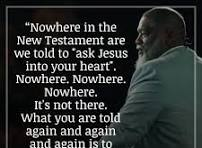
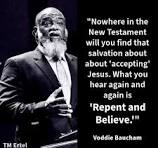
There is no “Sinner’s Prayer” in Scripture. Not in Acts. Not in the Gospels. Not in the epistles. Not in any evangelistic moment recorded in the New Testament. You won’t find Peter on Pentecost saying, “Every head bowed, every eye closed, repeat after me.” You won’t see Paul leading the Philippian jailer in a prayer formula. Why? Because the apostles didn’t treat conversion like a script, they treated it like a resurrection.
The so-called “Sinner’s Prayer” is a manmade tradition, a 20th-century invention popularized by revivalist and mass-evangelism movements, not the apostolic Gospel. And while God can use anything to draw someone, He used a thief on a cross, after all, we dare not canonize a method He never prescribed. The Gospel never said, “Recite this line and you’re in.” It says, “Repent and believe the Gospel” (Mark 1:15), “Confess with your mouth Jesus as Lord, and believe in your heart that God raised Him from the dead” (Romans 10:9). That’s not a script. That’s a surrender.
Let’s be clear: the issue isn’t prayer, true conversion will overflow in prayer. The issue is false assurance based on recitation. How many people today are clinging to a memory of a moment, not the Master Himself? How many think they’re saved because they repeated words, yet never repented of sin, never bowed to Christ’s lordship, never received the Spirit? That’s not salvation, that’s spiritual sedation. The “Sinner’s Prayer” can lull souls into thinking they’re alive while they’re still dead in trespasses (Eph 2:1).
The early church didn’t produce converts by scripting prayers, they preached Christ crucified, risen, and returning. And when conviction pierced the heart, they didn’t say “Say this line.” They said, “Repent and be baptized, every one of you” (Acts 2:38). Biblical evangelism is not about technique, it’s about truth, repentance, faith, and the new birth by the Holy Spirit. That’s not mechanical, it’s miraculous.
So should we use the Sinner’s Prayer today? Only with this warning: never substitute it for regeneration, never treat it as salvific, and never promise assurance where Scripture doesn’t. It may be a tool, but it’s a dangerous one if it replaces the call to die with Christ and rise in Him (Romans 6:3–4).
The Gospel isn’t a formula-it’s a cross. It doesn’t call us to repeat, it calls us to repent.
Let’s preach that, not a prayer.
2Ti 2:19 However, the solid foundation of God stands firm, having this seal: “The Lord knows those who are his,” [A quotation from Num 16:5] and “Everyone who names the name of the Lord must abstain from unrighteousness.”
@Johann, you brought the thunder… and rightly so. The sinner’s prayer isn’t in Acts, isn’t in the Gospels, isn’t anywhere in the early church. You won’t find Peter asking for heads bowed and eyes closed at Pentecost. He preached Christ crucified, the people were cut to the heart, and the call was clear: repent and be baptized. That’s not a script… it’s a summons to die.
Now @360watt, I hear what you’re saying. You’re emphasizing the content of saving faith… and you’re not wrong. Believing Jesus is Lord, that He died and rose again, that’s foundational. But the issue here isn’t whether someone can pray in faith… it’s whether that prayer has become a replacement for actual repentance and regeneration.
The problem with the sinner’s prayer isn’t prayer itself… it’s when the Church treats recitation like resurrection. It’s when we promise salvation because someone parroted the right words, even if their life never bowed to Christ’s lordship. The Gospel doesn’t call us to say the right thing… it calls us to surrender everything.
James 2:19 makes it painfully clear: intellectual belief isn’t saving faith. Even demons believe. The difference? They don’t submit. Real conversion is supernatural. It’s not just talking to God… it’s God raising the dead. John 3:3 doesn’t say, “Pray a prayer and be born again.” It says, “You must be born again.” That’s the Spirit’s work, not a formula.
Can a sinner cry out to God in prayer and be saved? Absolutely. The thief on the cross did just that. But his cry wasn’t recited… it was desperate. It wasn’t led by a counselor… it was wrenched from conviction. He didn’t walk an aisle or repeat a line… he begged for mercy from the crucified King and was promised paradise.
So Johann’s warning is spot-on: the danger isn’t prayer… it’s false assurance. Churches are stacked with people who had a moment but never met the Master. People who remember an aisle but can’t show a changed life. The Gospel calls us to count the cost, not repeat the words.
Let’s stop giving spiritual CPR to dead rituals and start preaching the message that actually raises the dead.
—Sincere Seeker. Scripturally savage. Here for the Truth.
There are MANY things not taught in modern churches of today that were never taught by the early church in the Bible.There are also MANY things taught in today’s churches that were never not only taught by the early church, the Apostles, Prophets or Jesus Christ. The “sinner’s prayer” usually follows the roman road method which is also man-made. These methods were employed by the thre Bs - Bill Bright, Billy Sunday and Billy Graham. They used these methods to corral large amouts of people into conversions and claim large results in numbers. The anxious bench was a similar or synonomous method.Bottom line, if you cannot show me where a method or technique was used in the Bible, then it is UN-Biblical and man made.
Fundamentally, evangelism shouldn’t be about methods or techniques at all, but proclamation of God’s Good News. When St. Paul encountered the philosophers at the Areopagus and spoke to them about the altar dedicated to the “unknown god”, this wasn’t an evangelistic gimmick, but a genuine and sincere attempt to enter into a dialogue with people of radically different mindsets than himself, to establish some common ground–it’s what he himself says in his letters “becoming all things to all people”. It’s not about scoring a conversion, but a genuine desire to proclaim the Gospel to people where they are.
The New Measures which emerged in the Second Great Awakening is, from this Lutheran’s POV, an example of what happens when instead of trusting in the power of the Gospel we think that it is up to use to create the right conditions to score a conversion. It is, in essence, the problem I have with the very concept of “soul winning”. Conversion is a work of the Holy Spirit which He accomplishes through the means of Grace, the Church’s mission is to be the Church–that means being where the word is preached and the Sacraments are administered. Not every Christian is a missionary or an evangelist; but every Christian is a disciple and witness-bearer of Jesus Christ, and that means each of does bear the Gospel to those in our midst. But our job isn’t to convert, but to be disciples, to love our neighbor, to be faithful to the word, and bear witness to our faith and hope in Christ. It is the Holy Spirit who gives belief to the unbelieving; and no amount of work we do can ever make a Christian out of a non-Christian. That’s what God does. What we can do, and what we are called to do, is love, bear witness, be faithful, and obey Jesus.
Tertullian once said that the blood of the martyrs are the seeds of the Church. It’s not merely in that the world bore witness to the Faithful of Jesus suffering and dying; it’s that they saw Christians bearing witness (the word martyr means “witness”)–and when our witness meets the harsh realities of a painful world, that’s when it shows. It’s when following Jesus costs us something where we discover what carrying our cross actually means. And there are those who take notice–and the Holy Spirit works here, giving ears to hear and eyes to see.
We don’t need to convince people to believe. We, who claim to believe, need to believe–and show it. And trust that the Gospel is the power of God to save all who believe, that the Holy Spirit works through the word of the Gospel to bring home the lost, and give life to the dead. He’s been doing it for two thousand years, He knows what He’s doing.