I’ll be posting one daily.
Shalom.
J.
Bro @Johann
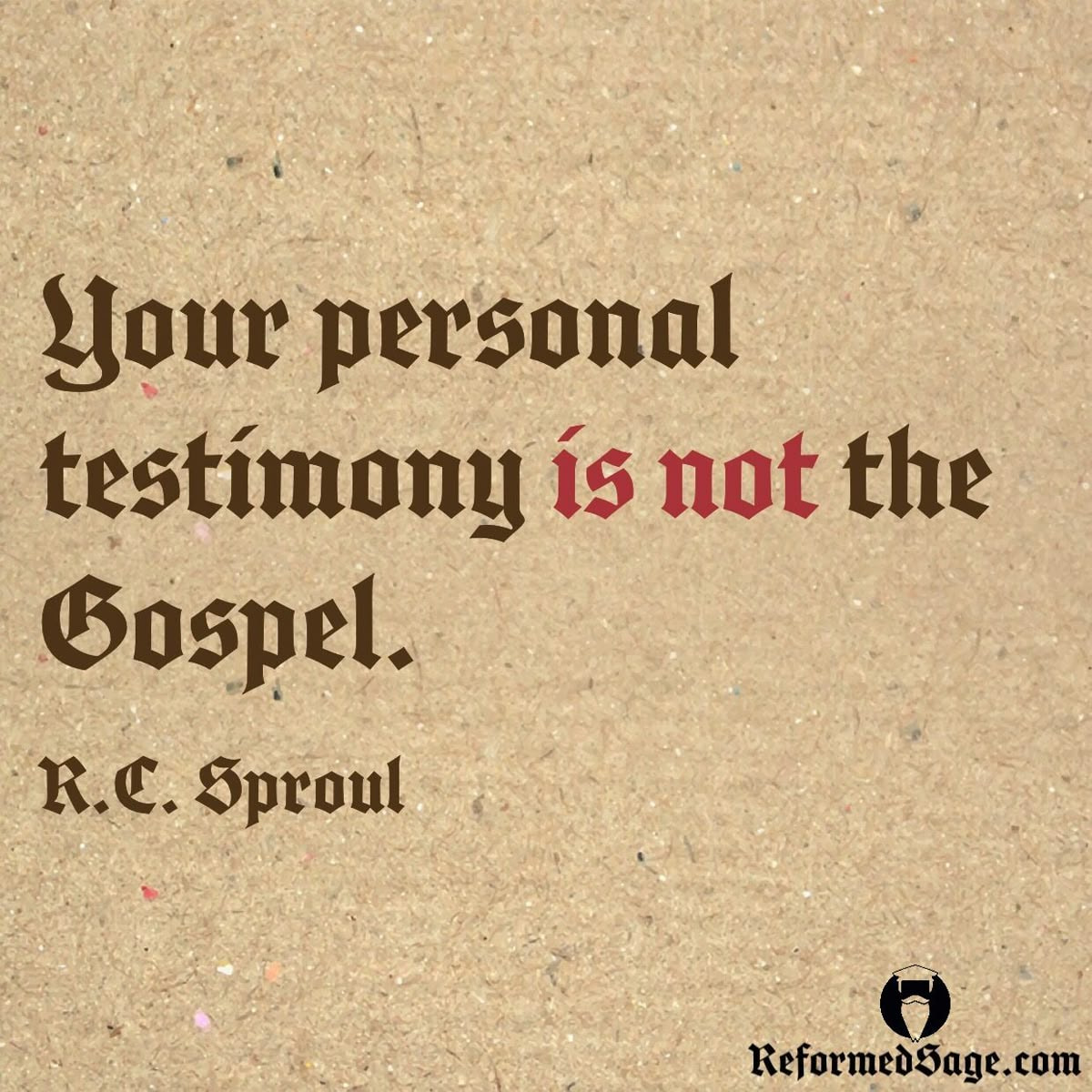
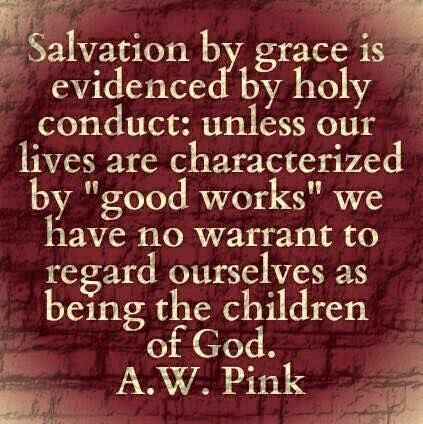
I like what you are doing here, I like reading these inspirational quotes. But, this one challenges me a bit. The way I’m thinking about it, my personal testimony should be the Gospel. My testimony is The Gospel exemplified. Isn’t it?
KP
Correct, in the church, not merely on an online forum, @KPuff
Scripture calls believers to live out their faith openly among the body of Christ and before the world:
“And let us consider how to stir up one another to love and good works, not neglecting to meet together…” — Hebrews 10:24–25 (ESV)
The Christian life was never meant to be isolated behind screens only. The early believers “devoted themselves to the apostles’ teaching and the fellowship” (Acts 2:42 ESV). Fellowship, accountability, exhortation, and visible fruit are lived out in the local assembly.
Jesus said:
“By this all people will know that you are my disciples, if you have love for one another.” John 13:35 (ESV)
And Paul writes:
“Only let your manner of life be worthy of the gospel of Christ…” Philippians 1:27 (ESV)
Forums can be useful for discussion, but they are not a substitute for the gathered church, shepherding, worship, and real discipleship within the body of Christ.
You agree?
J.
Well said.
You and I have discussed this before. I appreciate your views on this.
KP
Practical Theology for the Christian Walk
Links to articles are below or to the right.
Check out this chart on the Attributes of God online. You can’t walk with a God you don’t know.
Are you a Christian? Does your daily walk reflect what is means to be a Christian? Have you been arrested completely by Jesus Christ and his Gospel, and do you have a true and sincere love for the Lord Jesus Christ? A Christian is one who follows the teaching and way of Jesus Christ. This echoes being a follower of “The Way” as depicted in the book of Acts. “But this I confess unto thee, that after the way which they call heresy, so worship I the God of my fathers, believing all things which are written in the law and in the prophets.” (Acts 24:14). It is a disciple. “And whosoever doth not bear his cross, and come after me, cannot be my disciple,” (Luke 14:27). A person must exemplify in his or her life the teachings of Jesus Christ. “And why call ye me, Lord, Lord, and do not the things which I say?” (Luke 6:46). Such Christians are members of the ekklasia, the church, or the ones who are called out from among the world to serve the Living Christ. “…ye serve the Lord Christ,” (Col. 3:24).
The Christian’s spiritual walk is varied in every way from elect servant to elect servant. But all elect servants of Christ are being made into the likeness of Christ through sanctification. This is practical theology. As a matter of fact, every Christian is required to have a solid “theology of walking.” We are to walk in the ways of God’s word, “For we are his workmanship, created in Christ Jesus unto good works, which God hath before ordained that we should walk in them,” (Eph. 2:10). We are to walk worthily, “I therefore, the prisoner of the Lord, beseech you that ye walk worthy of the vocation wherewith ye are called,” (Eph. 4:1). We are to walk in love, “And walk in love, as Christ also hath loved us, and hath given himself for us an offering and a sacrifice to God for a sweetsmelling savour,” (Eph. 5:2). We are to walk as children of light, “walk as children of light,” (Eph. 5:8). We are to walk wisely, “See then that ye walk circumspectly, not as fools, but as wise, Redeeming the time, because the days are evil,” (Eph. 5:15-16). You can do your own in depth study of Scripture concerning what it means to have a solid theology of walking (cf. Rom. 4:12, Rom. 6:4, Rom. 8:1, 4, Rom. 13:13, 1 Cor. 3:3, 1 Cor. 7:17, 2 Cor. 5:7, 2 Cor. 6:16, 2 Cor. 10:3, Gal. 5:16, 25, Gal. 6:16, Eph. 2:10, Eph. 4:1, 17, Eph. 5:2, 8, 15, Phil. 3:16-18, Col. 1:10, Col. 2:6, Col. 4:5, 1 Thess. 2:12, 1 Thess. 4:1, 12, 2 Thess. 3:11, 2 Pet. 2:10, 1 John 1:6-7, 1 John 2:6, 2 John 1:6, 3 John 1:4, Jude 1:18, Rev. 3:4, Rev. 9:20, Rev. 16:15, Rev. 21:24).
In this section of A Puritan’s Mind you will find a wide range of articles that can help Christians along the holy walk of becoming more like Christ, less like the world, and to coin a phrase from our millennium, become radical Christians.
The Christian walk is one of the most important topics in practical theology. That is why this section of the site is dedicated to miscellaneous articles covering that topic. The links should help the Christian with various foundational thoughts as well as many helpful insights which simply promote a more thorough Christian walk with Jesus Christ. In Pilgrim’s Progress, John Bunyan’s fantastic work on the Christian journey, the main character Christian talked with Discretion, Prudence, Piety and Charity to further bolster his preparation for the long road ahead. You should do this as well!
C. Matthew McMahon, May 2016
May the Lord bless you as you read and study!
J.
The rivals of the early church begin the debate over the depravity of man.
“It is Augustine who gave us the Reformation.” So wrote B. B. Warfield in his assessment of the influence of Augustine on church history. It is not only that Luther was an Augustinian monk, or that Calvin quoted Augustine more than any other theologian that provoked Warfield’s remark. Rather, it was that the Reformation witnessed the ultimate triumph of Augustine’s doctrine of grace over the legacy of the Pelagian view of man.
Humanism, in all its subtle forms, recapitulates the unvarnished Pelagianism against which Augustine struggled. Though Pelagius was condemned as a heretic by Rome, and its modified form, Semi-Pelagianism was likewise condemned by the Council of Orange in 529, the basic assumptions of this view persisted throughout church history to reappear in Medieval Catholicism, Renaissance Humanism, Socinianism, Arminianism, and modern Liberalism. The seminal thought of Pelagius survives today not as a trace or tangential influence but is pervasive in the modern church. Indeed, the modern church is held captive by it.
What was the core issue between Augustine and Pelagius? The heart of the debate centered on the doctrine of original sin, particularly with respect to the question of the extent to which the will of fallen man is “free.” Adolph Harnack said:
“There has never, perhaps, been another crisis of equal importance in church history in which the opponents have expressed the principles at issue so clearly and abstractly. The Arian dispute before the Nicene Council can alone be compared with it.” (History of Agmer V/IV/3)
The controversy began when the British monk, Pelagius, opposed at Rome Augustine’s famous prayer: “Grant what Thou commandest, and command what Thou dost desire.” Pelagius recoiled in horror at the idea that a divine gift (grace) is necessary to perform what God commands. For Pelagius and his followers responsibility always implies ability. If man has the moral responsibility to obey the law of God, he must also have the moral ability to do it.
Harnack summarizes Pelagian thought:
“Nature, free-will, virtue and law, these strictly defined and made independent of the notion of God – were the catch-words of Pelagianism: self-acquired virtue is the supreme good which is followed by reward. Religion and morality lie in the sphere of the free spirit; they are at any moment by man’s own effort.” The difference between Pelagianism and Semi-Pelagianism is more a difference of degree than of kind. To be sure, on the surface there seems like there is a huge difference between the two, particularly with respect to original sin and to the sinner’s dependence upon grace. Pelagius categorically denied the doctrine of original sin, arguing that Adam’s sin affected Adam alone and that infants at birth are in the same state as Adam was before the Fall. Pelagius also argued that though grace may facilitate the achieving of righteousness, it is not necessary to that end. Also, he insisted that the constituent nature of humanity is not convertible; it is indestructively good. Over against Pelagius, Semi-Pelagianism does have a doctrine of original sin whereby mankind is considered fallen. Consequently grace not only facilitates virtue, it is necessary for virtue to ensue. Man’s nature can be changed and has been changed by the Fall.
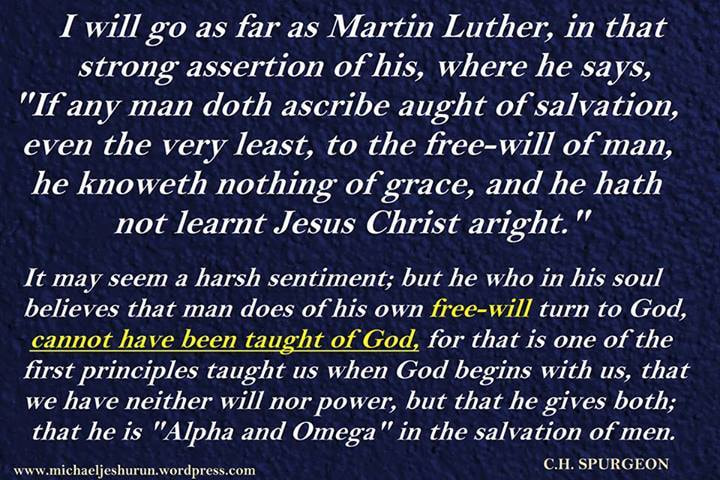
However, in Semi-Pelagianism there remains a moral ability within man that is unaffected by the Fall. We call this an “island of righteousness” by which the fallen sinner still has the inherent ability to incline or move himself to cooperate with God’s grace. Grace is necessary but not necessarily effective. Its effect always depends upon the sinner’s cooperation with it by virtue of the exercise of the will. It is not by accident that Martin Luther considered “The of the Will” to be his most important book. He saw in Erasmus a man who, despite his protests to the contrary, was a Pelagian in Catholic clothing. Luther saw that lurking beneath the controversy of merit and grace, and faith and works was the issue of to what degree the human will is enslaved by sin and to what degree we are dependent upon grace for our liberation. Luther argued from the Bible that the flesh profits nothing and that this “nothing” is not a little “something.”
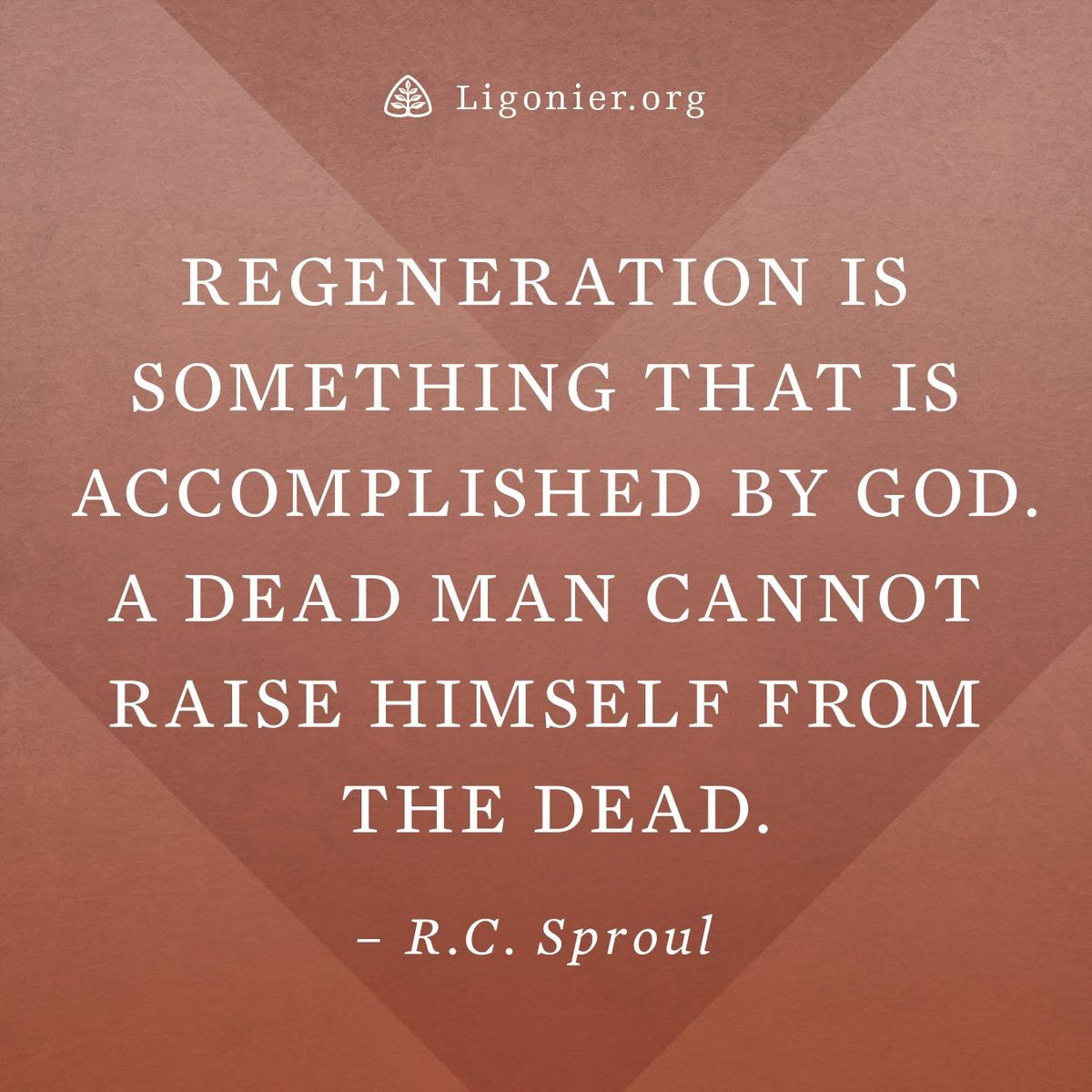
Augustine’s view of the Fall was opposed to both Pelagianism and Semi-Pelagianism. He said that mankind is a massa peccati, a “mess of sin,” incapable of raising itself from spiritual death. For Augustine man can no more move or incline himself to God than an empty glass can fill itself. For Augustine the initial work of divine grace by which the soul is liberated from the of sin is sovereign and operative. To be sure we cooperate with this grace, but only after the initial divine work of liberation.
Augustine did not deny that fallen man still has a will and that the will is capable of making choices. He argued that fallen man still has a free will (liberium arbitrium) but has lost his moral liberty (libertas). The state of original sin leaves us in the wretched condition of being unable to refrain from sinning. We still are able to choose what we desire, but our desires remain chained by our evil impulses. He argued that the freedom that remains in the will always leads to sin. Thus in the flesh we are free only to sin, a hollow freedom indeed. It is freedom without liberty, a real moral . True liberty can only come from without, from the work of God on the soul. Therefore we are not only partly dependent upon grace for our conversion but totally dependent upon grace.
Modern Evangelicalism sprung from the Reformation whose roots were planted by Augustine. But today the Reformational and Augustinian view of grace is all but eclipsed in Evangelicalism. Where Luther triumphed in the sixteenth century, subsequent generations gave the nod to Erasmus.
…
J.
Bible Arc (Arcing/Piper) - A tool and methodology for tracing the argument of Scripture. biblearc.com.
J.