The Bible says we can be proud of ourselves?

Cheers brother, I was waiting for you response, 12.53 AM here and no misunderstanding.

Your boasting is not good. Don’t you know that a little yeast affects the whole batch of dough?

For if Abraham was declared righteous by works, he has something to boast about—but not before God.

…so that what you can be proud of may increase because of me in Christ Jesus, when I come back to you.

But I have not used any of these rights. And I am not writing these things so that something will be done for me. In fact, it would be better for me to die than—no one will deprive me of my reason for boasting! For if I preach the gospel, I have no reason for boasting, because I am compelled to do this. Woe to me if I do not preach the gospel!

2Cor 9:3
(ESV) But lI am sending ▼ the brothers so that our boasting about you may not prove empty in this matter, so that you may be ready, nas I said you would be.
(NET2full) But I am sending ▼ these brothers so that our boasting about you may not be empty in this case, so that you may be ready ▼ just as I kept telling them.

Word analysis
καυχάομαι (kauchaomai) to boast (G2744)

This word occurs about 37 x
Meaning
to boast, brag about;
to rejoice in, glory in;
this can refer to proper or improper boasting, depending on the object of the boast
to glory, boast, Rom. 2:17, 23;
ὑπέρ τινος, to boast of a person or thing, to undertake a complimentary testimony to, 2Cor. 12:5;
to rejoice, exult, Rom. 5:2, 3, 11
LSJ dictionary
καυχ-άομαι,
Doric dialect καυχέομαι [Refs 3rd c.BC+]; 2nd pers. singular καυχᾶσαι in late Gr., as [NT]: future -ήσομαι [Refs 5th c.BC+]: aorist ἐκαυχησάμην [Refs 4th c.BC+]; Aeolic dialect optative καυχάσαιτο [Refs 7th c.BC+]: perfect κεκαύχημαι [NT]:—active, [Refs]:— speak loud, be loud-tongued, κ. παρὰ καιρόν [Refs 5th c.BC+], cf. Eup.[same place], etc.; boast, vaunt oneself, ἐπ᾽ αἰζηοῖσι κ. μέγα [Refs 5th c.BC+] [same place]; ἔν τινι NT.Rom.[same places]: c.accusative et infinitive, aorist or present, boast that.., [Refs 5th c.BC+] [same place], etc.: with participle, boast of doing or being, [Refs 4th c.BC+]; ὅτι.. [Refs 1st c.BC+]: with accusative, boast of, [NT+4th c.BC+]
Related words
to pray/wish for (euchomai - εὔχομαι)
to boast (katakauchaomai - κατακαυχάομαι)
pride (kauchēma - καύχημα)
pride (kauchēsis - καύχησις)
to boast (megalaucheō - μεγαλαυχέω)
http://localhost:8989/?q=version=ESV@version=NET2full@reference=2Cor.9&options=NVUGH&display=INTERLEAVED&pos=2#:~:text=Word%20analysis,-%20μεγαλαυχέω)

What you are calling a “self-interested decision” is not how Scripture frames conversion, even though the sinner is personally involved. The New Testament does not describe salvation as the self pursuing its own advantage, but as the self being exposed, judged, and surrendered under divine initiative. Conviction is not self-interest, it is self-denial.

John 16.8 KJV. And when he is come. he will reprove the world of sin. and of righteousness. and of judgment.

The verb ἐλέγξει is future active indicative, third person singular, showing that the Spirit acts upon the sinner, not the sinner acting upon himself for gain. Conviction is imposed truth, not calculated benefit.

Acts 2.37 KJV. Now when they heard this. they were pricked in their heart. and said unto Peter and to the rest of the apostles. Men and brethren. what shall we do.

The participle κατανυγέντες is aorist passive, meaning they were pierced, acted upon. This is not self-interest awakening, it is the heart being wounded by truth.

When Jesus defines discipleship, He does not describe a reordered self-interest but a decisive renunciation of self as the governing center.

Mark 8.34 KJV. And when he had called the people unto him with his disciples also. he said unto them. Whosoever will come after me. let him deny himself. and take up his cross. and follow me.

ἀπαρνήσασθαι is aorist middle infinitive. The aorist signals decisive action. The middle voice shows personal involvement. The meaning is not managing self-interest but repudiating the self as authority. A cross is not a benefit analysis, it is an execution instrument.

Even repentance itself is not framed as enlightened self-interest.

2 Timothy 2.25 KJV. In meekness instructing those that oppose themselves. if God peradventure will give them repentance to the acknowledging of the truth.

δώῃ is aorist active subjunctive. Repentance is given, not generated. Those outside Christ are described as opposing themselves, not wisely serving themselves.

Yes, the sinner desires deliverance, but that desire arises after self-deception is shattered, not because the self has found a better return on investment. Scripture never praises the self for choosing wisely. It consistently humbles the self for being blind, dead, hostile, and deceived.

Romans 3.11 KJV. There is none that understandeth. there is none that seeketh after God.

ζητῶν is present active participle, and Paul says not one. Self-interest does not seek God. God seeks the sinner.

So my statement stands. Conversion is not moderated pride, not enlightened self-esteem, and not sanctified self-interest. It is the self exposed, silenced, denied, and brought under the lordship of Christ. Any benefit that follows is grace received, not advantage secured.

That is why Scripture never speaks positively of pride. Not once. And why Paul will later say.

Galatians 6.14 KJV. But God forbid that I should glory. save in the cross of our Lord Jesus Christ. by whom the world is crucified unto me. and I unto the world.

Crucifixion is not self-interest. It is the end of it.

Goodnight.

J.
This is one strawman after another. It seems to me that you aren’t reading what I’m saying at all.

Why is that Johann?

It’s sort of a debate “tell” that when somebody deserts their argument, and begins to offer straw man arguments, it’s because their own arguments are weak, or false.

Do you understand what a “strawman” is? It’s when you imply I said something that I didn’t say, and then knock-down your implication of what I said, instead of engaging what I actually said. See above for about a dozen examples.

So, yeah - good night brother!

Some contemporary churches are billed as “seeker-friendly,” but the Bible says that “no one seeks God.” Psalm 14:2–3 pictures God searching in vain for even one heart that seeks Him: “The Lord looks down from heaven on all mankind to see if there are any who understand, any who seek God. All have turned away, all have become corrupt; there is no one who does good, not even one.” This passage is quoted in Romans 3:10–12, which says, “As it is written: ‘There is no one righteous, not even one; there is no one who understands; there is no one who seeks God.’” So, if no one seeks God, who are the “seekers” that some churches strategize to attract? Plus, how are people saved if no one is seeking God?

First we must understand human nature. Because of Adam’s disobedience in the Garden of Eden (Genesis 3:11), sin entered the world and became part of human existence. Because Adam is the common ancestor of every human being, we all inherit that sin nature. We are born with a natural desire for rebellion, self-interest, and disobedience. In Romans 7:18, Paul says, “For I know that good itself does not dwell in me, that is, in my sinful nature. For I have the desire to do what is good, but I cannot carry it out.” In ourselves, we cannot seek after God, for the simple reason that seeking God is a good and holy thing. Sinful flesh is incapable of good and holy things (Isaiah 64:6).

Jesus said, “No one can come to me unless the Father who sent me draws them” (John 6:44). In other words, the only way we can seek God is if the Holy Spirit has first stirred our hearts with a desire for God. It is God who draws us to Himself. Ephesians 2:8 underscores this truth: “By grace are you saved, through faith, and that not of yourselves. It is the gift of God.” Even the faith to believe for salvation does not originate within our fleshly nature. God enables the fallen human heart to seek Him, when in our own self-centered rebellion we would never do so. Every good thing originates with God (James 1:17). Faith in God is a good thing, and so it also originates with God.

Even our best efforts fall far short of the righteousness required by God (Romans 3:23). That’s why Scripture says that no one seeks God. We seek fulfillment. We seek pleasure. We seek escape from pain. But the pure motivation of seeking after God for Himself is a gift from God. We are not saved because we had the wisdom and insight to exercise our own faith and trust God. No one wakes up one day and, on his own, decides to seek God. That would be a salvation by our own works, and Scripture is clear we are saved only by the grace and mercy of God (Titus 3:5; Romans 11:6). We are saved when God touches our hearts and prompts us to use the faith He gives to receive His gift of salvation. Even with the knowledge of God’s existence everywhere, people naturally choose to “suppress the truth by their wickedness” (Romans 1:18–20).

Because no one naturally seeks God, God seeks us. He sought Adam and Eve as they hid in the Garden (Genesis 3:9), and He has been seeking His lost loved ones ever since. Jesus gave this as His mission statement: “The Son of Man came to seek and to save the lost” (Luke 19:10).

When God saves us, we are born again. He opens our eyes to the truth; He gives us faith and forgiveness and fellowship with Him. We become new creations in Christ (2 Corinthians 5:17). In our newness of life, we are given godly desires (Psalm 73:25), a cleansed heart (Hebrews 10:22), and a new mind (1 Corinthians 2:16). In the power of the Holy Spirit, we begin to truly seek after God.

The connection between our salvation and our seeking after God is illustrated in how God restored His people following the Babylonian captivity. The ancient Jews at first expected a speedy return to their homeland, but the prophet Jeremiah advised them to settle in: their captivity would last seventy years (Jeremiah 29:10). Lest His people despair at the thought of such a lengthy discipline, God assured them that His plans were to give them “hope and a future” (verse 11). At the appointed time, the Jews repented of their sins and began to cry to the Lord in sincerity and fervency. This is just what God had foretold: “You will seek me and find me when you seek me with all your heart. I will be found by you . . . and will bring you back from captivity. I will gather you from all the nations and places where I have banished you . . . and will bring you back to the place from which I carried you into exile” (verses 13–14). The prophet Daniel exemplified this seeking after the Lord in his prayer on behalf of God’s people (Daniel 9:1–19).

Question is, why are YOU not reading? Something is “off” here and I want no part of it.

We went from…Hello Johann!

Gal 6 - “3. If anyone thinks they are something when they are not, they deceive themselves. 4. Each one should test their own actions. Then they can take pride in themselves alone, without comparing themselves to someone else”

This is a little bit of a challenge to make solid sense of, in addition to being a passage that helps in closing some loops for us with regard to evil in the world. I do sound like a broken record, but it IS why we are on the earth.

…to a total misunderstanding?

You do realize there’s no “sinners prayer” or an “Altar call” counting heads?

J.

Powerful post @ellenvera and learned more from you than the rest on this topic.

God bless.

J.

I agree. Things to ponder.

Peter

Brother @Pater15,

You have presented us with a topic that forces us to consider how Godly wisdom resolves an apparent paradox that lives under the surface in Christian Theology involving self-interest and self-evaluation. It is not an easy consideration; not a meditation for children. Your topic asks how does our creaturely self-interest and self-protection, which are a good and healthy dimension of our bearing the image of God, dovetail into our godly admonition toward self-forgetfulness and “esteeming others better than ourselves”? How do men of faith harmonize “For no one ever hated his own flesh, but nourishes and cherishes it…” with denying that same flesh by, “denying self, and taking up our cross…”? How do God’s words that encourage us not only to do good, but to honestly and sincerely recognize, acknowledge, and properly appreciate the good we are doing by living testimonial lives, “running our race to win the prize”, work synergistically with accepting our own complete depravity and acknowledging all our works as “filthy rags”? What is the difference in the quality of pride I feel that is synonymous with “self-satisfaction, personal delight, being a “good and faithful servant”, or as some translators put it “have rejoicing in himself…” for a task well done, against the quality of pride that thinks too much of myself, that is synonymous with “conceit”, “arrogance”, “superiority”, or “egotism” all of which we acknowledge to be ungodly. The solution lies not in “compromise” or in “balance”, but in faith and walking in the Spirit. This paradox seems to be addressed in Paul’s letter to the Philippians:

“Let nothing be done through selfish ambition or conceit, but in lowliness of mind let each esteem others better than himself. Let each of you look out not only for his own interests, but also for the interests of others.”

Paul did not tell the Philippians to annihilate their own self-interest, but to “look out” also for the interests of others. It seems Paul is saying caring for the interests of The body of Christ involves caring for yourself and for others. This is in contrast to ONLY caring for yourself. Paul is suggesting that caring only for yourself is the default, it is unavoidable, and proper, but is to be used as a measuring stick against how we care for others.

“Do unto others as you would have them do unto you”.

Then he tells us How we are to accomplish this.

“Let this mind be in you which was also in Christ Jesus, who, being in the form of God, did not consider it robbery to be equal with God, but made Himself of no reputation, taking the form of a bondservant, and coming in the likeness of men. And being found in appearance as a man, He humbled Himself and became obedient to the point of death, even the death of the cross.” (Philippians 2:3-8)

Jesus did not consider himself to be worthless in order to save mankind, he “took on the form of a servant”, He “humbled himself”, and “He became obedient”. These are good marching orders for His Ecclesia. You are not worthless because you are made in the image of God. You represent that image when you care for your own interests in not a greater way than you care for the interests of others. To do this we will need to become servants, humble ourselves, and become obedient, even obedient to death. Self-sacrifice is not the sacrifice of nothing, but the sacrifice of something very valuable. Self-sacrifice is a willing acceptance of death of something good. The death we bear is surely death to godless self-aggrandizement, death to godless selfish-ambition, death to godless self-importance, and for some, even death to this mortal coil.

“Let this mind be in you which was also in Messiah Jesus.”
“We walk by faith, not by sight”
“Walk in the Spirit and you will not fulfill the lusts of the flesh”

Appreciating this thought puzzle, thanx Pater15
KP

1 Like

Well, thank you as well for this thoughtful and comprehensive answer!

Well done sir - a reflection of God’s wisdom.

Your brother

There’s Pride–vanity, self-exaltation, the antithesis of humility; this is what Scripture condemns. Vanity leads us to exalt ourselves over others, to indulge in the deception that what we do is better than what others do, and to think our value is greater than the value of others.

I can be proud of my work, for example when I have put in a hard day of work for my job. That is, I can feel a sense of healthy satisfaction–not in that I am better, more valuable, or greater than another or have done greater than another–but can be satisfied in a good and hard day’s work. This can apply in many other areas of life. There is a healthy satisfaction we can experience that doesn’t lead us to vanity; the problem is the vanity and self-exaltation. Which is why humility can keep us sober in our works, a humble and happy satisfaction where we don’t boast or exalt ourselves.

When we, then, also give glory to God for His gifts, that when we do good it is not out of our own greatness, but is a reflection of God’s goodness which He has vested in us, then we can demonstrate humility, meekness, and joy in the good that we all, together, bring to each other. For it is not our good work itself which is praiseworthy, but that it is good done for others. Even in the small things, such as our 9-5 job.

1 Like

To: @Pater15

I appreciate that you braved this subject. Pride and boasting are ideas that we prefer to put either in the “good” bucket or in the “bad” bucket. Your prompt brought me new insight from the passage:

“Let this mind be in you which was also in Christ Jesus, who, being in the form of God, did not consider it robbery to be equal with God, but made Himself of no reputation, taking the form of a bondservant, and coming in the likeness of men. And being found in appearance as a man, He humbled Himself and became obedient to the point of death, even the death of the cross.” (Philippians 2:3-8)

The apostle softens, and cleverly rectifies the negativity of pride with his carefully chosen phrase, Jesus “did not consider it robbery to be equal with God”. An unspiritual man would exclaim: “The Audacity! This overt arrogance is nothing less than the sin of pride!”, and he would be partially correct (IMHO). Partially because, no doubt, what he is describing is technically “pride” (self-awareness), but it is definitely not “sinful”. It is the same as me saying “I am a child of God” or as the apostle John writes “Behold what manner of love the Father has bestowed on us, that we should be called children of God! (1 John 3:1). When I say this, the world exclaims: “The Audacity! This boasting arrogance is nothing less than pride! You think you are a child of God?”. I agree, it is audacious, and I am unabashedly proud to proclaim it. I cannot keep the pride of the idea from welling up inside me. I am proud to be called God’s son. Behold!!! Can you imagine the depth of Love God Himself has conferred on me; that He would call a penniless, orphaned, ragamuffin like me His own beloved Child? Unimaginable! It must be Christmas!

I appreciate that in English, proud can mean “not ashamed”.

For both He who sanctifies and those who are being sanctified are all of one, for which reason He is not ashamed (or you might say, “proud”) to call them brethren, (Hebrews 2:11)

But now they desire a better, that is, a heavenly country. Therefore God is not ashamed (or you might say, “proud”) to be called their God, for He has prepared a city for them. (Hebrews 11:16)

To the rest:

Before the precision-mongers jump in to correct my liberality, I concede that the Bible has nothing good to say about the word translated “pride” in our Bibles. Pride “comes before destruction”, God has “scattered the proud in the imagination of their hearts”, and according to several Biblical witnesses, God “resists the proud”, etc. In the New Testament these are referred to as the (Gk: huperéphanos) i.e the “hyper-illuminated”, or those who are “by far too shiny”; they simply think too much of themselves. In fact, except for the “Christian Standard Bible” or “Today’s English Version” of Gal 6:3 as submitted by the OP, I cannot find another single example in the Bible where the English word “pride” is used in any positive sense. Where we see this specific word, it always refers to something ungodly, and we understand it as such. Traditional versions of The Old Testament actually translate several Hebrew words as “pride”. But when the translators need to portray a positive sense of the same Hebrew words, they have carefully chosen other English words like “Excellency” (see Deut. 33:26 & 29; Ps. 68:34), “Majesty” (Isa 24:14), or “highness”. These same Hebrew words are often translated as “pride” or “proud” in many other passages.

So, like other languages, English uses the one word in two very contrasting senses; I may be sinfully proud, haughty, and arrogant, or I may be honorably proud of my Honor-roll student. It is this strange linguistic phenomenon that our OP has tried to reveal to us, and for that I am in his debt.

KP

Do not spoil my Thursday, @KPuff -let the “precision mongers” stay with the “precision mongers”, and let the “pride filled” remain with the “pride filled”, I have no interest in mixing what Scripture itself keeps separate.

J.

So sorry, I had no intention of offending (of course). I wasn’t speaking of you particularly, (I didn’t have you in mind). I was only admitting that precisely speaking, (to those who point out the precise usage) the word is always used in a negative sense. I see that. There is no need to feel your Thursday is ruin.

Sorry again brother.
KP

P.S. (Now my Thursday is spoiled to think I offended you, my brother.)

Ha ha there’s an age-old question - “when you throw a rock into a pack of coyotes, which one yelps??”

Answer - “The one that you hit.”

One coyote to another - have a nice Thursday. (Since Christmas isn’t in your Bible).

Join another forum, I don’t “yelp” friend.

J.

@Pater15
Ha ha, I’ve never heard that idiom before, but now, I’ll never forget it.

(who am I fooling. I forget almost everything)
I love the thought.

KP

Did Jesus tell you to say that?

Yup me too! It’s a little scary!

hyperéphanos G5244 [arrogant, proud],
hyperéphania G5243 [arrogance, pride]

A. Secular Usage. hyperephanos means “outstanding,” “distinguished,” but both the adjective and the associated noun may also be used censoriously to denote arrogance or boasting.
B. The Greek OT. In the Greek OT the words occur mostly in Psalms and the Wisdom literature. God is against pride in Pro_3:34. The righteous prays that God will destroy the proud in Psa_94:2. Maccabees characterizes Gentiles and foreign rulers as “insolent” (1Ma_1:21; 2Ma_9:4, etc.). The enemies of the righteous are arrogant (Psa_17:10 etc.). Pro_13:10 warns against the evil result of an arrogant attitude.
C. Hellenistic Judaism. Hellenistic Judaism adopts the OT development of the concept. Arrogance derives from a spirit of error or from Satan. It is a mark of the great peoples of history. God himself punishes it. Josephus refers to the arrogance of Nero in Jewish War 3.1. Self-control guards against pride (Epistle of Aristeas 211), and a recognition of human equality protects kings against it (263).
D. The NT. The NT, which makes a sparing use of the terms, follows OT usage. Paul puts hyperephanos in the list of pagan vices in Rom_1:30. The three terms “insolent,” “arrogant,” and “boastful” go together. “Boastful” precedes “arrogant” in 2Ti_3:2; the two terms describe different aspects of pride. In Mar_7:22 “arrogance” comes between “blasphemy” and “folly.” It contrasts with proper submission to God and involves a haughty disdain for others. In Luk_1:51 God scatters the proud in their imaginings, topples the mighty, and exalts the lowly. 1Pe_5:5 enjoins humility to others. The arrogant, thinking they need no forgiveness, run up against God’s opposition, but grace is given to the humble.
E. Early Church Usage. Christ is an example of humility in 1Cl. 16.2 and insolence is rejected in 30.1. Christians must resist arrogance, for it is contrary to love (49.5). It is one of the sins on the way to death (Did. 2.6; cf. Ba. 20.1). Similar warnings against it appear in Hermas Mandates 6.2.5 and Ignatius Eph_5:3. Tatian Address to the Greeks 3.1 calls Heraclitus “arrogant.”
[G. BERTRAM]
Reference To:
hypernikao
nikao
hyperperisseuo
hyperperissos
perisseuo
hyperpleonazo
pleonazo
hypekoos
akouo

BOASTING

These Greek terms, kauchaomai, kauchēma, and kauchēsis, are used thirty five times by Paul and only twice in the rest of the NT (both in James). Its predominate usage is in 1 and 2 Corinthians.

There are two main truths connected to boasting.

A. no flesh shall glory/boast before God (cf. 1 Cor. 1:29; Eph. 2:9)

B. believers should glory in the Lord (cf. 1 Cor. 1:31; 2 Cor. 10:17, which is an allusion to Jer. 9:23-24)

Therefore, there is appropriate and inappropriate boasting/glorying (i.e., pride).

A. appropriate

  1. in the hope of glory (cf. Rom. 4:2)

  2. in God through the Lord Jesus (cf. Rom. 5:11)

  3. in the cross of the Lord Jesus Christ (i.e., Paul’s main theme, cf. 1 Cor. 1:17-18; Gal. 6:14)

4. Paul boasts in

a. his ministry without compensation (cf. 1 Cor. 9:15,16)

b. his authority from Christ (cf. 2 Cor. 10:8,12)

c. his not boasting in other men’s labor (as some at Corinth were, cf. 2 Cor. 10:15)

d. his racial heritage (as others were doing at Corinth, cf. 2 Cor. 11:17; 12:1,5,6)

e. his churches

(1) Corinth (2 Cor. 7:4,14; 8:24; 9:2; 11:10)

(2) Thessalonika (cf. 2 Thess. 1:4)

(3) his confidence in God’s comfort and deliverance (cf. 2 Cor. 1:12)

B. inappropriate

  1. in relation to Jewish heritage (cf. Rom. 2:17-23; 3:27; Gal. 6:13)

  2. some in the Corinthian church were boasting

a. in men (cf. 1 Cor. 3:21)

b. in wisdom (cf. 1 Cor. 4:7)

c. in freedom (cf. 1 Cor. 5:6)

  1. false teachers tried to boast in the church at Corinth (cf. 2 Cor. 11:12)
    Bob Utley.

Appropriate boasting does not remove or threaten your libertine boasting, it simply refuses to baptize it, because Scripture permits boasting only when its object is the Lord and His work, and nowhere authorizes boasting that terminates on the self.

J.

Yes, @Johann. Excellent commentary. I think we all agree on these points, as far as I can tell. These fundamental ideas were never in question in my mind. They always bear repeating, so thanx.

KP

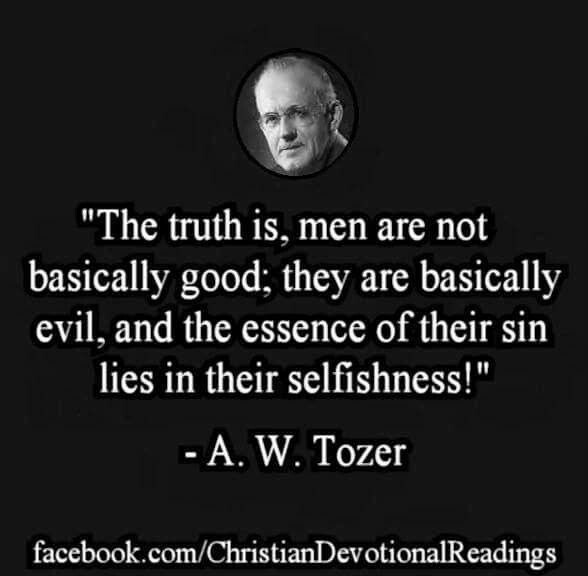
Well said Tozer!

J.

Great!
BTW, is the line "“Appropriate boasting does not remove or threaten your libertine boasting, it simply refuses to baptize it, because Scripture permits boasting only when its object is the Lord and His work, and nowhere authorizes boasting that terminates on the self.” a quote by Pastor Doug Wilson, from his book “Future Men”? It sounds familair.

KP