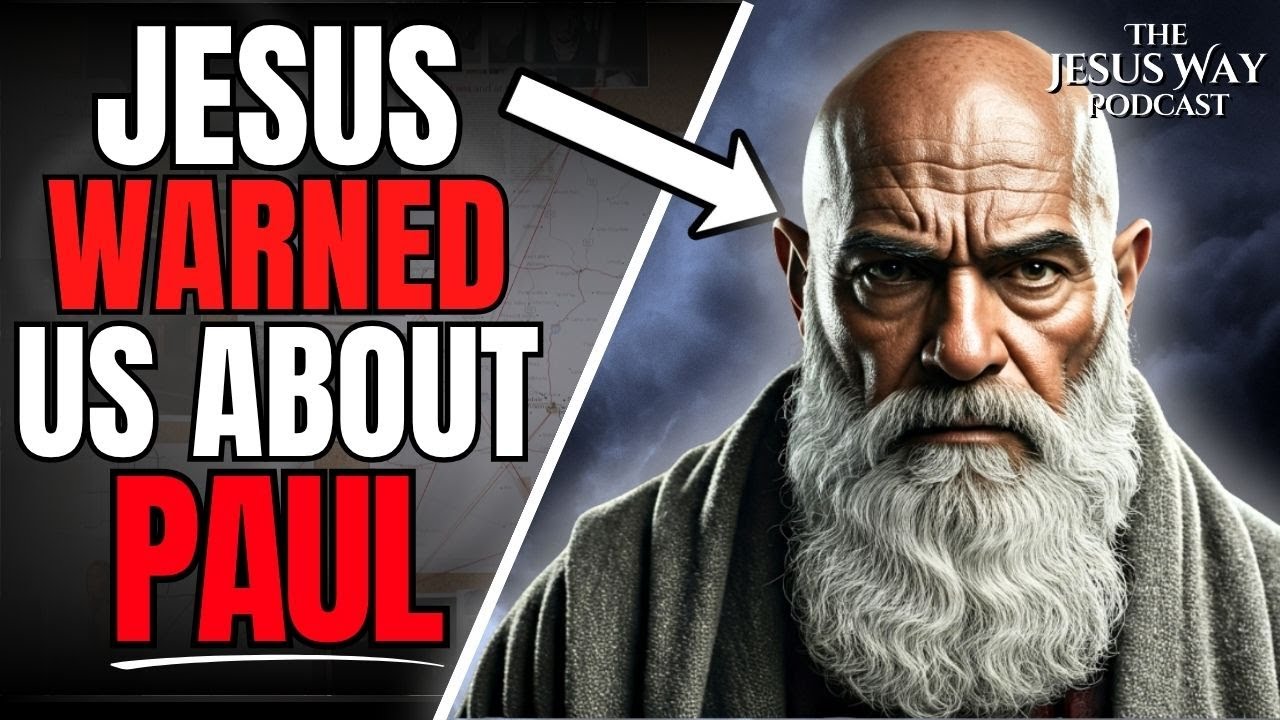
Your thoughts?

And on this?
Thanks.
J.
Your thoughts?
And on this?
Thanks.
J.
No, Paul was not a false prophet. Scripture itself affirms his apostleship and divine commission directly from Jesus Christ. “Paul, an apostle, not from men nor through man, but through Jesus Christ and God the Father, who raised him from the dead, (Galatians 1:1). In fact, Paul calls himself a “servant of Christ Jesus through a dispensation of God” (Romans 1:1).
Ananias heard from the Lord in Acts 9:15 that “He is a chosen vessel of Mine to bear My name before Gentiles, kings, and the children of Israel.” God Himself bears witness that Paul was an apostle. And the same Spirit who worked powerfully in Peter and John also empowered Paul (Acts 10:38). Whenever false teachers tried to discredit Paul, he pointed to the evidence of the Spirit’s power: “The signs of a true apostle were performed among you with all perseverance, by signs and wonders and mighty deeds” (2 Corinthians 12:12).
The word apostolos means “one who is sent.” Paul was not self-sent, but Christ sent him, which is why his letters have divine authority. Peter even called Paul’s letters “Scripture” (graphē - holy Scripture) (2 Peter 3:16), putting them on par with the Old Testament.
A false prophet is not subject to the oversight of God, but Paul would never have said about himself, “I am not under the authority of God” (Romans 3:3). If anyone were to call Paul a false prophet, they would not be merely attacking a man. They would be despising the very Word of God itself. For Jesus said, “He who hears you hears Me, he who rejects you rejects Me, and he who rejects Me rejects Him who sent Me” (Luke 10:16). Paul is sent by Christ, and to reject his Spirit-breathed writings is to reject Christ’s very voice speaking through them.
Oh man…what are you sayin, @Johann ?
I will only engage with members of the community who actually take the time to listen to the video clips I’ve shared.
J.
funny…  anyways…I have some thoughts on this…
What are some of the criticisms you’ve personally heard about St. Paul in your ministry work?
I mean beyond what’s floating around on Youtube or in debates with atheists, more like one-on-one or real-life interactions.
I watched the first video, and honestly, I couldn’t stop laughing  . After about ten minutes, my neighbor actually came over and asked, “What happened? Why are you laughing so loudly?”
The level of seriousness they had, as if they were discussing alien theories! I admire the confidence, but to me, it felt like they still have milk teeth — they need milk, not solid food. Two hours of pure gibberish!
I will say Paul seems to be a little more in line with capitalist thinking than the original disciples and Jesus. No, he was not a false prophet.
Paul’s name was Saul. He had both names because he had dual citizenship. He was both Roman and Jewish. As a Roman he was Paul. The videos are wrong here where they say Paul’s name means “Least” and he is named as a false prophet. I could do a lot more. I will as time goes on. This is my first response to the video posted above.
Ok Johann per your rules:
The first video is not biblical for many reasons, but most of all, it denies the foundation of God’s Word by calling Paul a false apostle who was not sent by Jesus Christ. On the contrary, the Bible proves Paul’s divine calling by the very testimony of Scripture. In Acts 9: 15, Jesus declared to Ananias, “He is a chosen vessel unto Me, to bear My name before the Gentiles, and kings, and the children of Israel.” The word chosen is eklogēs, which means personally selected or appointed. Paul was not self-appointed, but rather chosen by God. To deny Paul’s apostleship is to deny the authority of Christ who called him by name and sent him to the Gentiles.
The video falsely accuses Paul of preaching a “different gospel” from Jesus. Paul’s gospel of grace through faith (Ephesians 2: 8–9) is not different, but completely consistent with the teaching of Jesus in John 6:29, “This is the work of God, that you believe in Him whom He sent.” Both passages declare faith as the means of salvation, not works. The word for “believe” is the Greek pisteuō, which means to trust or rely upon. It is the same faith Jesus required and Paul proclaimed. The two passages are in complete harmony; they are one under the same Spirit.
The video’s accusation that Paul contradicted Jesus is in complete disregard of 2 Peter 3: 15–16 where Peter declares Paul’s writings to be “Scripture.” The Greek word graphē refers to sacred writings from God (2 Peter 1:20–21). Peter clearly affirms that the same Holy Spirit who inspired the Old Testament also gave Paul’s letters to the churches. 2 Timothy 3: 16 states that “All Scripture is God-breathed” (theopneustos), which literally means “breathed out by God.” Paul’s letters are part of Scripture, and Peter calls them Scripture. Rejecting Paul’s writings is rejecting the very Word of the Spirit.
The video takes passages like Matthew 7:15 out of context by saying Jesus warned about Paul. But the “false prophets” in Matthew 7: 15–20 are not identified by a name, but by their fruits of lawlessness and deception. Paul’s life bore the exact opposite fruit of holiness, persecution, repentance, and obedience (Acts 20:20–21; 2 Corinthians 11:23–27). Jesus said, “You will know them by their fruits” (Matthew 7:16). The Greek word karpos means evidence or result. Paul’s fruit—souls won, churches planted, and truth proclaimed, proves his apostleship came from God.
To even suggest that Paul was “deceived by a demon” is blasphemous and contrary to the Bible. Jesus said, “Every kingdom divided against itself is brought to desolation” (Matthew 12:25). Paul’s ministry could not be from God and from Satan at the same time. Satan could not cast out Satan, as the video claims. The miracles, power, and conversions in Paul’s life and ministry are evidence of the Holy Spirit, not demonic deception.
To summarize, the video contradicts the Bible by denying and distorting what Scripture plainly affirms: Paul was a true apostle of Jesus Christ, his writings are inspired Scripture, and his gospel is the same gospel of grace which Christ himself preached. By Sola Scriptura, any teaching that says Paul is false or his writings are not Scripture, is itself rejecting the very Word of God.
My thoughts @Johann…hmmmm
Readers, here’s my two cents, the argument I usually use when someone questions St. Paul.
Critics: Jesus upheld the Mosaic law without change, “Do you think that I have come to abolish the Law or the Prophets; I have not come to abolish them but to fulfil them” (Matt 5:17), while Paul says believers are not under the law but under grace (Rom 6:14), and that the Law brings death (Rom 7:5-6, Gal 3:10-13). This is seen as Paul inventing law-free Christianity…
Refute it, my brothers and sisters, this above criticism misreads both Jesus and Paul through a flat, ahistorical lens, ignoring the covenantal shift from old to new. Orthodox theology teaches that Jesus fulfilled the Law as the perfect sacrifice, inaugrating the New Covenant prophesied in Jer 31:31-34 and Ezek 36:26-27, where God writes His law on hearts via the Spirit. Jesus’ ministry occurred under the Old Covenant (Gal 4:4-5), so He affirmed the Law’s role for Israel at that time, but He also hinted at its transformation (Mark 7:18-19, declaring all foods clean, Matt 12:1-8, prioritising mercy over strict sabbath observance).
Paul, writing after the cross and resurrection, explains this fulfilment, for The Law was a guardian until Christ came (Gal 3:23-25), cursing those who fail to keep it perfectly (Deut 27:26, Gal 3:10) but Jesus bore that curse (Gal 3:13). Believers are freed from the Law’s condemnation not to live lawlessly but to fulfill its righteous requirements through the Spirit. This is similar to Jesus’ emphasis on internal heart obedience (Matt 5:21-48). Far from contradiction, Paul defends Jesus’ missions: the Cross renders the ceremonial law obsolete (Col 2:13-17, Heb 8:13) while moral principles endure (Rom 13:8-10). Historic Catholic figures like St. Augustine and St. Aquinas affirm this as the Law’s end goal, in Christ. This argument is nothing, but cherry-picking verses and taking them out of context.
Critics: Jesus taught salvation involves doing the Father’s will with parables like the sheep and goats (matt 25:31-46) stressing works of mercy and commands to obey commandments for eternal life. Paul, however, insists on justification by faith apart from works of the law, (Rom 3:28, Eph 2:8-9).
Doctrine of salvation harmonizes this, through the distinction between justification (initial declaration of righteousness by faith) and sanctification (ongoing growth in holiness evidenced by works). Jesus’ teachings, addressed to Jews under the Law emphasize covenant faithfulness but presuppose faith (Matt 7:24-27, builds on hearing and believing His words). He forgave sins by faith alone (Mark 2:5, Luke 7:50) and His parables illustrate kingdom ethics for believers.
paul clarifies the mechanism that Faith unites us to Christ’s perfect obedience, imputing His righteousness (Rom 5:18-19, 2 Cor 5:21), while works flow as fruit (Eph 2;10, Titus 2;14). This aligns with Jesus’ wine and branch metaphor (John 15:1-8), where abiding profuces fruit. James, often cited against Paul, actually complements him by showing that genuine faith produces works (Jam 2:14-26), echoing Paul’s own warnings (Gal 5:19-21, 6:7-8). The Council of Trent and Reformed confessions affirm faith as sole instrument of justification, with works as evidence, not cause. Critics create a false dichotomy. Paul quotes Jesus implicitly (Rom 13:9 ~ Matt 22:37-40) and applies His teaching post-resurrection, where the Spirit empowers obedience (Rom 8:9-11, cf John 14:26, 16:13). |
Critics:
Jesus proclaimed the “kingdom of God” (Mark 1:14-15; Matthew 4:17), with ethical teachings like the Sermon on the Mount, rarely mentioning His death and resurrection for sins. Paul centers on justification by faith in Christ’s cross and resurrection (1 Corinthians 15:1-4; Romans 1:16-17), seldom quoting Jesus and allegedly inventing a new religion detached from Judaism
This ignores the redemptive-historical context, Jesus’ earthly minstry announced the Kingdom’s arrival in His person (Luke 17:20-21) but its full revelation awaited His atoning work (Luke 24:25-27, 44-47). He predicted His death repeatedly (Matt 16:21, 20:28-19) and post-resurrection, commissioned preaching repentance and forgiveness based on it (Luke 24:46-48). Paul received this directly from Christ (Gal 1:11-12; 1 Cor 11:23-26) and the Apostles (gal 2:1-10) preaching the Kingdom’s consummation (Acts 28:23, 30-31) while explaining its mystery form in the Church age (Eph 3:1-6, Col 1:26-27).
Orthodox eschatology sees this kingdom as already/not yet, inaugrated by jesus and expanded through Paul’s Gentile mission. Paul’s gospel of frace is the same as Jesus’ (Acts 20:24, John 1:16-17), fulfilling prophecies (Rom 1:1-4). he doesnt quote Jesus extensively because his audience (Gentiles) needed application, not repetition, but allusions abound (Rom 12:14 ~ Matt 5:44). The early Church Fathers like Irenaeus, defended Paul’s continuity with Jesus against Marcionites.
Critics:
Paul’s self-appointment (Acts 9; Galatians 1:1), noting his pre-conversion persecution (Acts 8:1-3) and disputes with Peter (Galatians 2:11-14), suggesting he’s a fraud or heretic who hijacked Christianity.
rthodox ecclesiology affirms apostleship by divine call, not human selection (Acts 1:21-26 for Matthias was pre-Pentecost). Paul was chosen sovereignly by Christ (Acts 9:15; 26:16-18), confirmed by signs (2 Corinthians 12:12), and recognized by the Twelve at the Jerusalem Council (Acts 15:1-29; Galatians 2:7-9, where Peter affirms grace salvation). The Galatians 2 confrontation wasn’t doctrinal contradiction but Peter’s hypocrisy in practice, resolved in unity (Acts 15:11). Paul’s past as a persecutor highlights God’s mercy (1 Timothy 1:12-16), paralleling forgiven sinners like David or Peter. The Nicene Creed and patristic tradition (e.g., Clement of Rome, 1 Clement) treat Paul as equal to the apostles. Rejecting him undermines the New Testament, as Luke (Acts) and Peter endorse him. This argument stems from anti-Pauline biases (e.g., in some Jewish-Christian sects), but orthodox Christianity sees his ministry as the extension of Jesus’ Great Commission to all nations (Matthew 28:19; Romans 15:15-16).
These are my arguments on the topic, Paul and the Law, (I have added my views as well) which makes up a section of this video. I’ll discuss Revelation as a refutation of Paul, Paul’s disrespect of Yeshua’s 12 disciples, Paul’s false prophecies, and Paul’s Narcissism later.
Why would you post these videos is beyond me. Surely you don’t believe them?
The second video is not biblical because it affirms fundamental errors that the Bible plainly denies. The video teaches several unbiblical theories, including that Paul contradicted Jesus and that the original followers of Christ rejected Paul. These are entirely false claims, according to the Bible itself.
Acts 9:15 says that Scripture plainly teaches that Paul was personally chosen by Jesus Christ, “But the Lord said unto him, Go thy way: for he is a chosen vessel unto me, to bear my name before the Gentiles.” The Greek word for “chosen” (eklogēs) means to pick out by one’s own will. Paul was not self-appointed; he was appointed by Jesus. Any teaching that denies Paul’s direct calling by the Lord is contrary to the words of the Lord Himself.
The video also teaches the unbiblical idea that Paul actually preached a “different gospel.” But Galatians 1:11–12 makes it clear he did not: “The gospel which was preached by me is not according to man. For I neither received it from man, nor was I taught it, but it came through the revelation of Jesus Christ.” The Greek word euangelion (“good news”) is the same word used for the message that Jesus preached (Mark 1:14–15). Paul’s gospel was not a new one, it was the old gospel of grace that Jesus perfectly fulfilled.
The video also claims that Paul’s apostleship was self-proclaimed, not recognized by the other apostles. But that is not biblical either. In fact, the other apostles recognized Paul. Galatians 2: 9 says, “James, Cephas, and John, who seemed to be pillars, perceived the grace that was given unto me, they gave to me and Barnabas the right hands of fellowship.” Peter also explicitly recognizes the authority of Paul’s letters as “Scripture” (graphē in Greek, meaning sacred writings that are inspired by God and not man) in 2 Peter 3:15–16. Paul’s letters are therefore inspired by God, not just man-made opinions.
The video also teaches false doctrine that denies the eternal divinity of Jesus, teaching that He was merely “adopted” as the Son of God at the point of baptism. That denies the clear teaching of John 1:1–3, which says, “In the beginning was the Word, and the Word was with God, and the Word was God.” The Greek word logos (“Word”) is not used for a created being, but the eternally divine Son of God. Hebrews 13: 8 also says, “Jesus Christ is the same yesterday, and today, and forever.”
The video further misuses Jeremiah 8:8 to claim that the “lying pen of the scribes” means that the Torah itself was falsified. But the verse does not mean that God’s Word was corrupted. It is not referring to the Word of God, but to hypocritical teachers who perverted God’s law while pretending to wisdom. Psalm 12: 6 makes it clear that the words of the Lord are actually pure: “The words of the Lord are pure words: as silver tried in a furnace of earth, purified seven times.” God’s Word can never be falsified because it is God-breathed (2 Timothy 3:16).
Finally, the video presents rejecting animal sacrifices as the mark of true faith. But Scripture actually teaches the opposite. Animal sacrifices were a shadow that pointed to the ultimate sacrifice of Christ on the cross (Hebrews 10:1–10). To reject animal sacrifices in total is to turn your back on what Jesus came to fulfill.
In summary, the video is not biblical because it contradicts the plain teachings of Scripture. The transcript denies that Paul was directly called by Jesus, misrepresents the true gospel of grace, denies the eternal deity of Christ, and takes a passage of Scripture way out of context to support a human theory. The Bible is not contradictory or confusing; it is completely harmonious and self-confirming. “All Scripture is given by inspiration of God… that the man of God may be complete” (2 Timothy 3:16–17). If a teaching or teaching method contradicts that, it is false no matter how scholarly it might sound.
I usually stay busy, but I’ve taken the time to watch one of the videos (partially)—over an hour (when its actually 2 hrs). They are filled with misreadings, distortions, and attempts to appeal to a so-called “fourth density consciousness,” a term that sounds mystical but masks error. I cannot stop giggling. This is exactly the pattern we see in false teachers throughout Scripture. It reminds me strongly of Felix Manalo, who twisted Scripture to craft a false gospel and led many astray. Abke follows a similar trajectory, repackaging ideas that deviate from the gospel of Christ, confusing new believers, and promoting a hybrid of mystical speculation and pseudo-Christian philosophy. Both prioritise clever frameworks and human wisdom over the plain testimony of God’s Word.
False teachers beware, tools of the evil one, remember, their master isn’t God, but the liar, believers, be vigilant.
Who said I believe them @bdavidc ?
J.
No one knows whose who..
I agree, calling Paul a false prophet denies the plain testimony of Scripture. Jesus Himself called Paul a “chosen vessel” (Acts 9:15), and Paul didn’t preach a new gospel, but the same Christ crucified and risen. His life bore the marks of true apostleship..faithfulness, suffering, and thefruit of the Spirit. If we trust the Bible, we have to take Paul’s authority seriously.
Well said @bdavidc and appreciate your contribution to this topic.
J.
Looking forward to hearing more from you, @ccrussell. I hold firmly that the gospel of Christ Jesus is under attack, and there’s a growing trend of people reading only the “red letters,” claiming Paul was an imposter.
J.

J.
Well, you posted them and did not say you did not?
I beg your pardon?
J.